
https://www.nice.org.uk/guidance/ng241
What you need to know
- Men and people born with male reproductive organs have a genetic risk of carrying a pathogenic variant associated with ovarian cancer and other cancers
- If a person had a direct-to-consumer genetic test and is reported to have a pathogenic variant for which NHS testing is offered, liaise with a regional NHS genetics service to discuss whether referral is appropriate
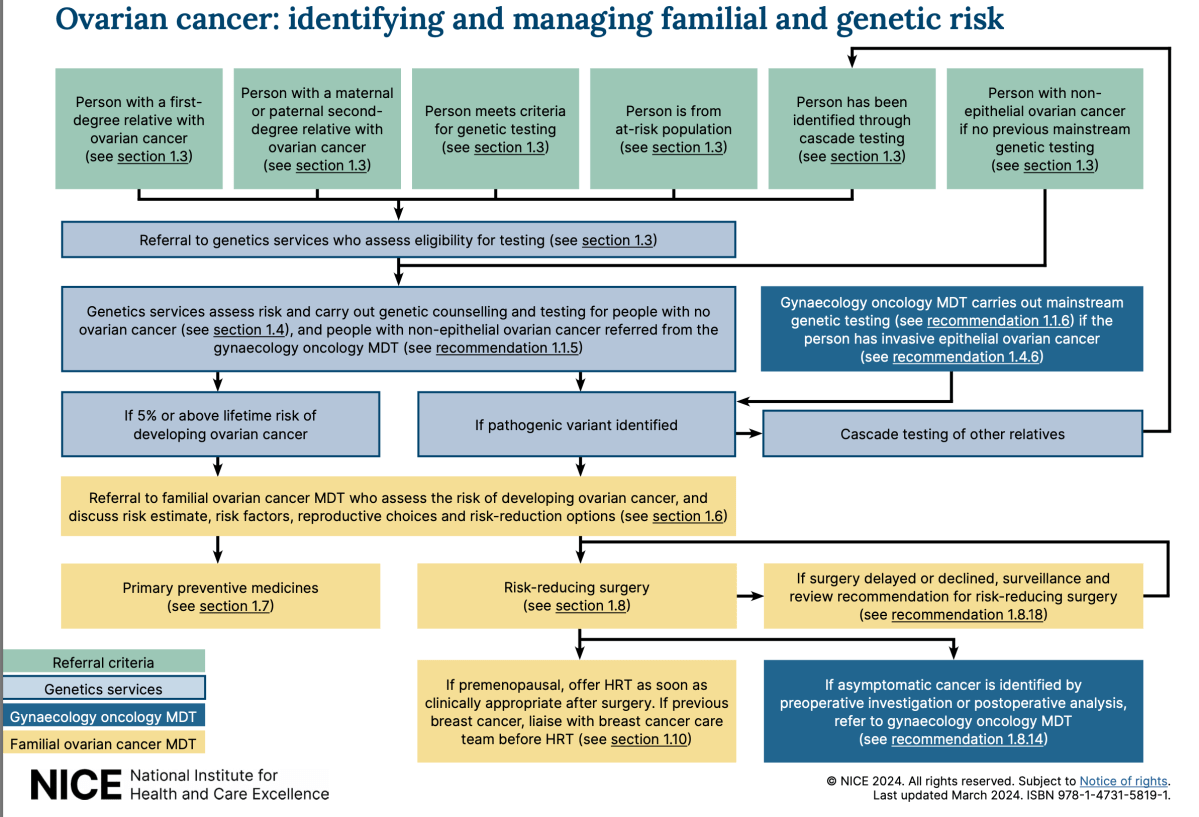
- Refer for genetic counselling and testing people who have a first or second degree relative diagnosed with ovarian cancer, those from high risk groups, anyone identified through cascade testing, or those diagnosed with ovarian cancer linked to pathogenic variants
- For women, trans men, and non-binary people born with female reproductive organs who are at increased risk of ovarian cancer, risk reducing surgery that is age appropriate for their pathogenic variant or family history is the most effective way to reduce the risk of ovarian cancer
 Lynch Syndrome Ireland