
Conclusion:
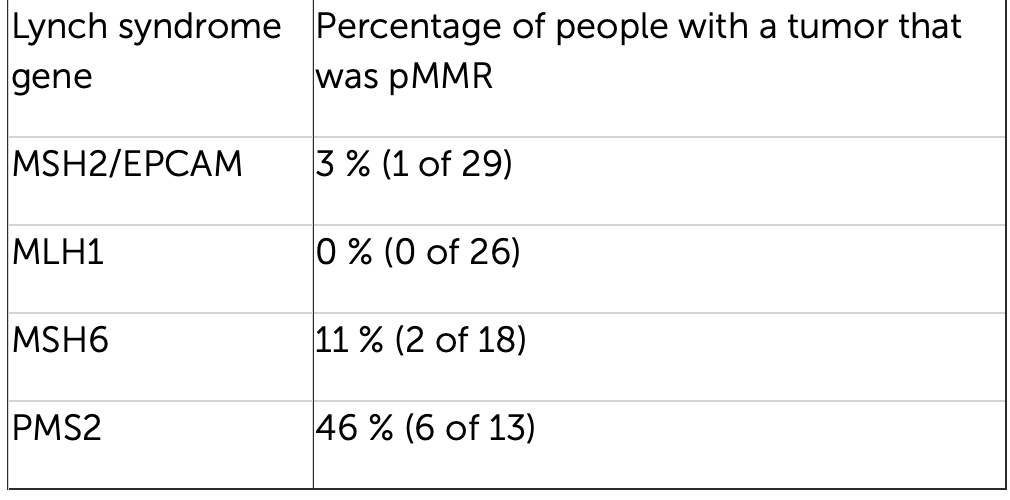
Patients with LS remained at risk for MMR-P(proficient) CRC, which was more prevalent among patients with MSH6 and PMS2 variants. MMR-P CRC was later onset and more commonly metastatic compared with MMR-D(deficient) CRC. Confirmation of tumour MMR/MSI status is critical for patient management and familial risk estimation.
When people with Lynch syndrome develop cancer, their tumours typically have a related set of features or biomarkers known as deficient mismatch repair (dMMR) and high microsatellite instability (MSI-High). However, occasionally people with Lynch syndrome have cancers that are proficient in mismatch repair (pMMR or MMR-P) and have microsatellite stability (MSS or MSI-Low) –more like the colorectal cancers found in people without Lynch syndrome. This study shows that 10 percent of people with Lynch syndrome may have these types of cancers.
 Lynch Syndrome Ireland