
https://jamanetwork.com/journals/jamanetworkopen/fullarticle/2850967
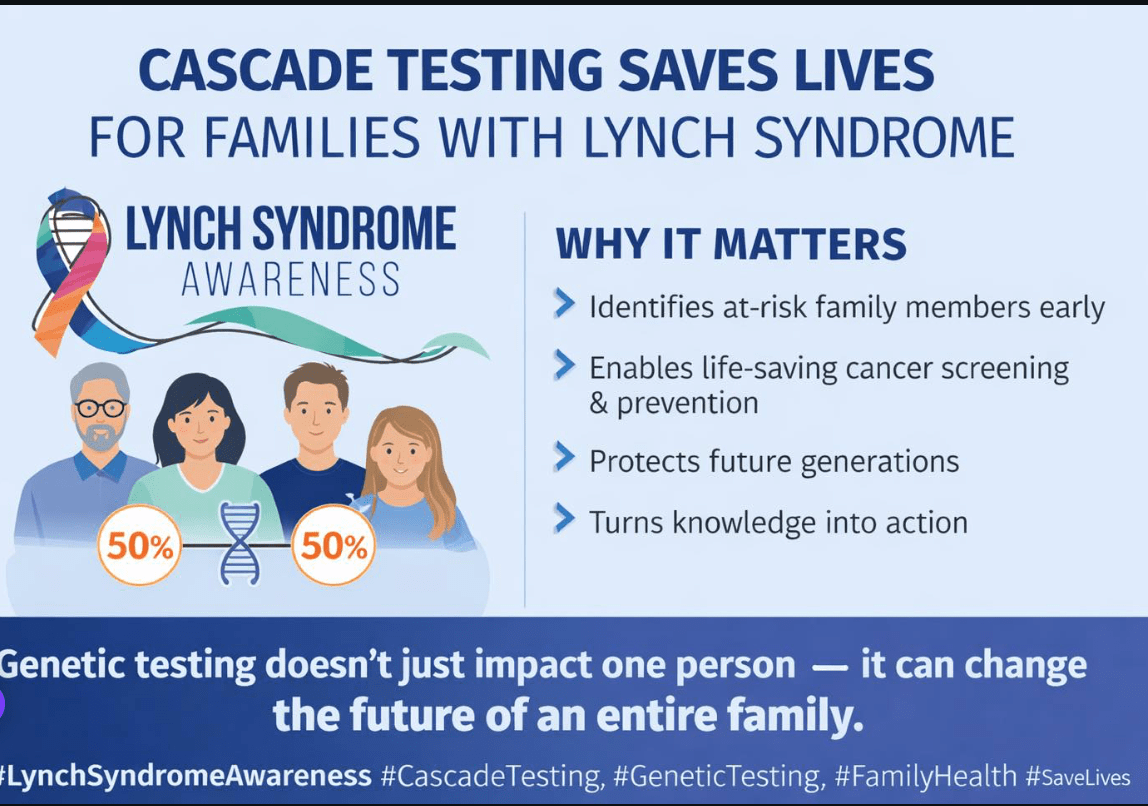
The article discusses cascade genetic testing, which means offering genetic testing to close relatives of someone who has already been found to carry an inherited disease-causing gene mutation. e.g. Lynch Syndrome
The idea is simple: if one person has a harmful inherited gene linked to cancer, their parents, siblings, and children may also have it. Finding these relatives early allows them to take steps to prevent cancer or detect it at an early, more treatable stage.
What did the study find?
The researchers looked at nearly 23,000 people who were found to have an inherited cancer-related gene mutation.
The disappointing finding was:
- Only about 24% (roughly 1 in 4) had even one family member go on to have genetic testing.
- That means more than 3 out of 4 people had no relatives tested, despite relatives potentially being at high risk.
The real number may be slightly higher because the study only counted relatives tested through the same laboratory.
The study shows that cascade genetic testing is not reaching enough families. Even when testing is free, most at-risk relatives are never tested. Improving communication, reducing social and cultural barriers, and developing better systems for notifying families could help identify more people at risk and ultimately save lives through earlier detection and prevention of inherited cancers.

