
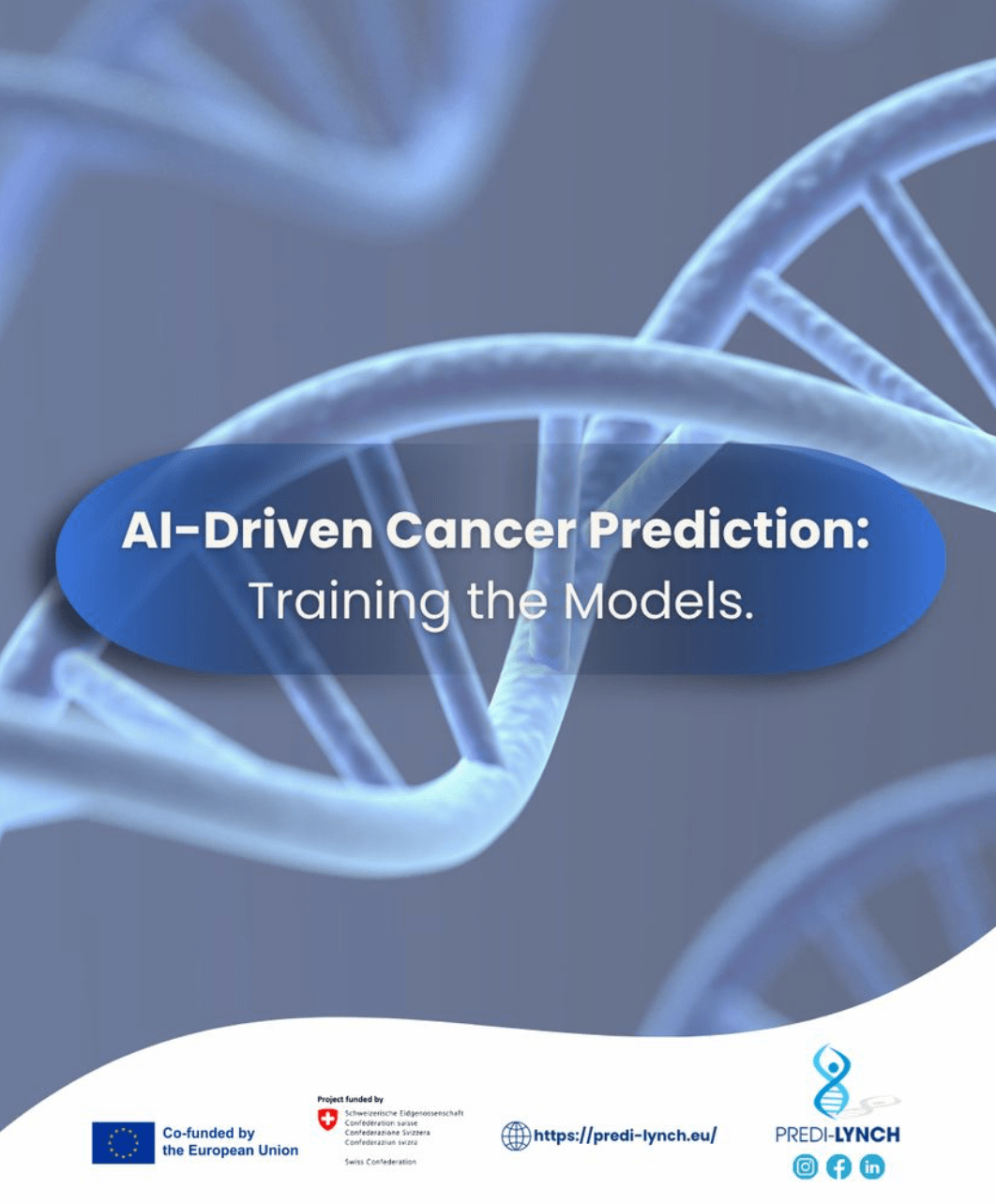
The PREDI-LYNCH project is dedicated to advancing early detection and personalised prevention of Lynch syndrome, a hereditary condition that predisposes individuals to colorectal, endometrial, and several other types of cancer.
Through collaboration with leading medical institutions and researchers, the project aims to refine risk assessment tools that combine genetic markers, family history, and lifestyle factors. This holistic approach enables healthcare providers to offer tailored screening and prevention strategies, ultimately reducing cancer incidence and improving long-term patient outcomes.
AI models are exceptionally good at finding subtle, hidden correlations within vast datasets—clues that might be impossible for the human eye to spot. Within the PREDI-LYNCH project, we feed our algorithms integrated clinical, lifestyle, and molecular data from thousands of historical cohorts.
Over time, the AI learns to identify exactly which combinations of factors indicate a higher risk of early-onset colorectal or endometrial cancers.
The result? A highly personalised risk score that empowers doctors to adapt surveillance schedules before a tumour even has the chance to develop.
PREDI-LYNCH also emphasises patient education and accessibility, ensuring that risk prediction tools are user-friendly and available to diverse populations. By bridging the gap between research and clinical practice, the project strives to empower individuals and clinicians alike with actionable insights for precision medicine in hereditary cancer prevention.

