
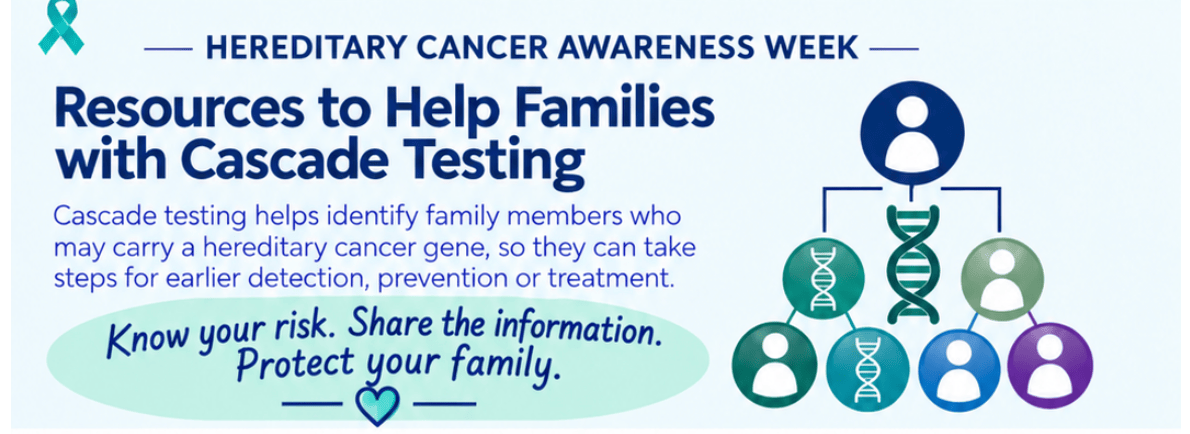
Cascade testing: testing family members after a cancer-related gene mutation is identified in a relative. Done well, it catches at-risk individuals before cancer develops, enabling earlier surveillance and better outcomes.
Studies suggest the problem isn’t that patients won’t share results, it’s that sharing doesn’t reliably lead to relatives testing.
Studies found that genetic counsellor involvement improved outcomes, whether measured by patient communication or actual testing.
Takeaway: Across both studies, cascade testing fails less because people don’t want to test, and more because the system doesn’t support the “last mile,” turning a patient’s willingness to share results into a relative’s completed test. Closing that gap, especially for underserved populations, will likely require more structured clinician involvement and better tools for ongoing family communication.

