
What is a variant of uncertain significance?
We all carry thousands of small differences in our DNA. Most are harmless and simply part of what makes each of us unique. A small number can change how a gene works and cause a health condition or increase the risk of one.
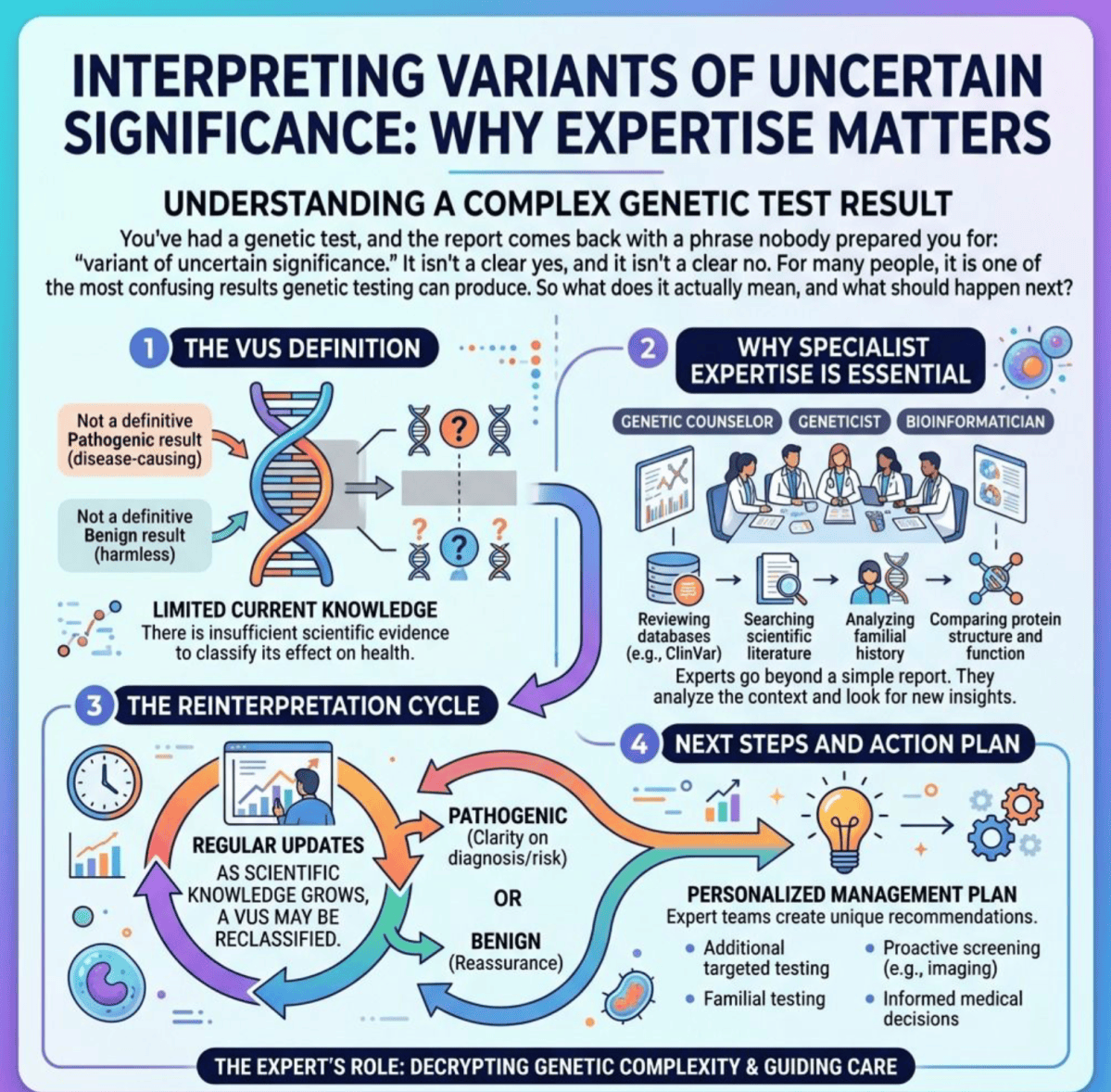
When a laboratory finds a genetic change, it classifies it using international guidelines. Variants are sorted into five groups: pathogenic, likely pathogenic, uncertain significance, likely benign and benign. A variant of uncertain significance, often shortened to VUS, sits right in the middle. It means there isn’t yet enough evidence to say whether the change is linked to disease.
VUS results are common, especially with larger panels that look at many genes at once. Receiving one is not unusual, and it is not a sign that something has gone wrong with your test.
• A VUS is not a diagnosis, and medical decisions shouldn’t rest on it alone
• Personal and family history still guide care
• Many VUS results are reclassified over time, most often to benign

