The Cancer Biobank is a collection of clinical samples used in research to study how cancer develops and progresses and responds to treatment.
Engaging the patient voice in our work, and communicating our research to the public is vital to developing relevant research and education programmes.
The Cancer Centre works with cancer charities, patient advocacy groups, and scientific public education initiatives to acheive this.
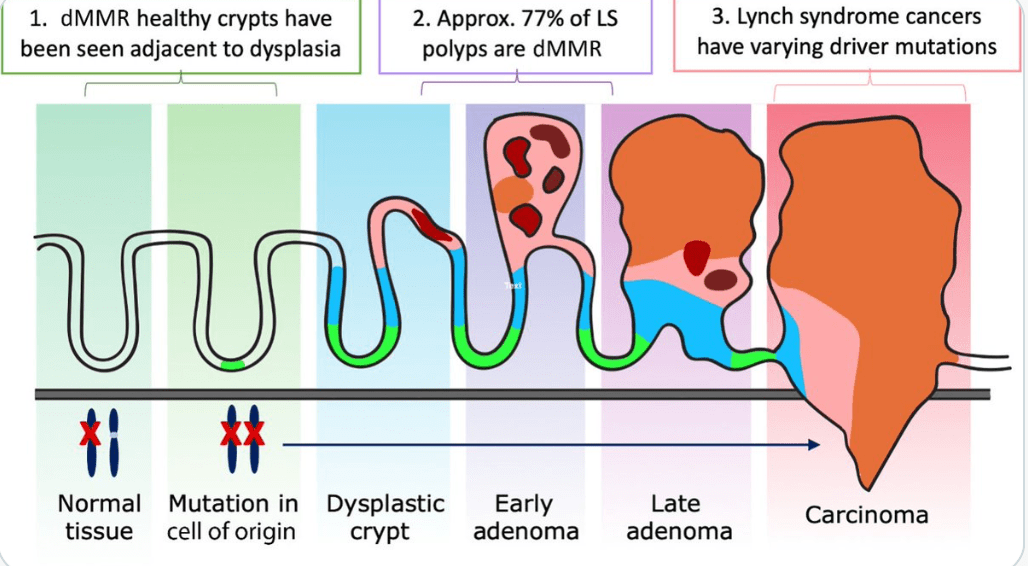
In this review, they focus on two of the best characterised syndromes, Lynch syndrome (LS) and familial adenomatous polyposis (FAP).
The increasing knowledge of precancer lesions and their biology may aid novel strategies for individualized prevention.It is essential to consider the adverse effects of such interventions when weighed against quality of life, particularly considering the age at which medication may begin.
Exciting advancements are being made in the field of cancer vaccination against LS colorectal cancer, however until trials show their validity the recommended surveillance protocols must be upheld.
Extrapolating information from these hereditary colorectal cancer studies can also help pinpoint how certain sporadic cancers evolve and offer opportunities for cancer prevention.
The two best defined syndromes are Lynch syndrome (LS) and familial adenomatous polyposis (FAP). Studying these groups on regular cancer surveillance provides insight into the tumor biology, potential avenues for prevention, and their effectiveness. In this article, we will review some of the lessons that can be learned from these conditions which may afford opportunities for cancer prevention.
Conclusions
Hereditary syndromes provide an opportunity to study early precancer evolution surveillance and interventions to prevent cancer. Understanding genotype and phenotype in colorectal cancer susceptibility syndromes allows for customized clinical trials in preventive medicine to be highly effective in their outcomes.
The increasing knowledge of precancer lesions and their biology may aid novel strategies for individualized prevention. It is essential to consider the adverse effects of such interventions when weighed against quality of life, particularly considering the age at which medication may begin.
Exciting advancements are being made in the field of cancer vaccination against LS colorectal cancer, however until trials show their validity the recommended surveillance protocols must be upheld. Extrapolating information from these hereditary colorectal cancer studies can also help pinpoint how certain sporadic cancers evolve and offer opportunities for cancer prevention.
Taking a supplement of 30 grams of “resistant starch” a day – about the amount in two slightly unripe bananas – reduced the risk of multiple forms of cancer in people with a rare genetic condition.
Consuming resistant starch – a dietary fibre found in oatmeal, beans and bananas – reduces the risk of upper gastrointestinal cancers by nearly 50 per cent in people with Lynch syndrome. This is the first time a nutrient has been shown to prevent these cancers in people with the condition.
The nutrient supplement finding is significant because upper gastrointestinal cancers tend to be the deadliest for people with Lynch syndrome, says Matthew Yurgelun at the Dana-Farber Cancer Institute in Boston, Massachusetts, who wasn’t involved in the work.
By providing evidence and insights into patient experiences without bias, RWE research is a valuable resource that complements RCT(randomised control trial) data.
The success of RWE research depends upon the active engagement of patients and their carers. Alongside education regarding the disease and its treatment, participation in RWE research may help empower patients with mCRC and other cancers to influence decisions concerning their own treatment. There is potential for increased patient engagement to help improve overall management of the disease. To increase the numbers of patients and carers participating in RWE studies, improved understanding and awareness of RWE research is needed, and clinicians are well placed to encourage this process. Engaging patients and carers throughout disease management is key to unlocking the potential for RWE to improve outcomes in mCRC.
It is now imperative that policy makers consider the value of this in their assessment and inclusion of treatments.
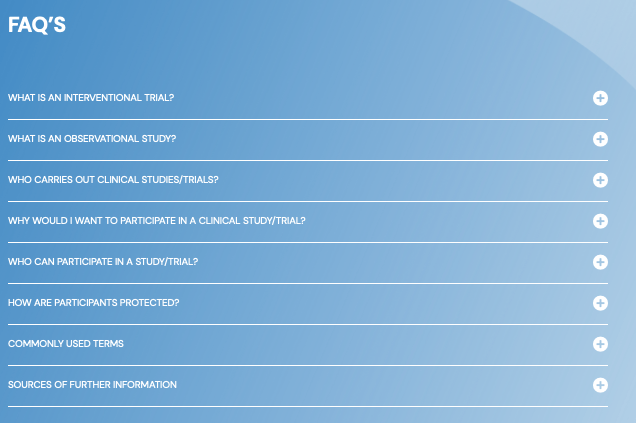
Deciding to take part in a clinical study is an important personal decision. This section aims to help you understand more about clinical research and how you can get involved.
Clinical research is research involving humans, their bio samples (e.g. blood sample) or their data. Clinical research is carried out with the aim of improving existing healthcare for the benefit of current and future patients.
A research study/trial can involve ‘healthy participants’ (i.e. people who do not have an underlying medical condition) but more often, studies/trials involve patients with a specific health condition that we want to study. Research studies are designed to answer specific questions on how to prevent, diagnose or treat a particular disease.
There are two main types of clinical studies: Interventional trials and Observational studies.
The next big advance in cancer treatment could be a vaccine that can shrink tumours and stop cancer from returning, US experts have said.
More than ever, scientists understand how cancer hides from the body’s immune system. Cancer vaccines, like other immunotherapies, boost the immune system to find and kill cancer cells. Some new ones use mRNA, which was developed for cancer but was first used for Covid-19 vaccines.
People with the inherited condition known as Lynch syndrome have a 60 per cent to 80 per cent lifetime risk of developing cancer. Recruiting them for cancer vaccine trials has been remarkably easy, said Dr Eduardo Vilar-Sanchez of MD Anderson Cancer Centre in Houston, who is leading two government-funded studies on vaccines for Lynch-related cancers.
‘Research into the methods used in the design, conduct, analysis and reporting of clinical trials is essential to ensure that effective methods are available and that clinical decisions made using results from trials are based on the best available evidence, which is reliable and robust.’
Patient, Public Involvement brings a pragmatism, external perspective and opinions on the uncertainties that methodologists wrestle with as part of the decision making within their work. It is precisely in this space that the contributions can be so valuable. Equally for those us who get involved it provides an opportunity to learn more about health research methods and helps us ask better questions with other projects.
The team at thisisGO.ie recognises the importance of having access to the latest scientific research.
See a sample of recent scientific papers pertinent to gynaecological cancers and summaries the key points from each of the papers referenced below.
If this is of interest to you, you can find lots more articles, disease specific, when you “Create a Profile”. Once logged in just search ‘Decoding the Science’.
Immunotherapy represents a new paradigm in cancer care. It’s really an entirely new mechanism for treating cancer. We’re not targeting the tumor cells; instead, we’re targeting the immune system.
I encourage patients to talk with their physicians about innovative treatment options and consider participating in clinical trials so we can move the field forward. Together, we can unlock the promise of immunotherapy.




 Lynch Syndrome Ireland