The Art of Distraction

UCAN Ireland notes with concern the comments attributed to Prof. Michael Barry in today’s RTÉ article by Fergal Bowers.

We are a grassroots, independent advocacy movement driven by one goal — to ensure that Irish cancer patients have timely and equitable access to the best available treatments, in line with European standards.

Prof. Barry’s remarks risk undermining the integrity of clinicians and advocates who have, in good faith and with full transparency, called attention to delays and shortcomings in the drug reimbursement process in Ireland. Suggesting that clinicians are somehow compromised by industry involvement is a deeply unfair and unsubstantiated claim. These are healthcare professionals who see first-hand the consequences of delayed access — and they are speaking out because their patients cannot afford to wait.

It is also important to point out that such comments serve as a distraction from the real issue: Ireland’s reimbursement system is not fit for purpose. By international comparison, we are among the slowest in Europe when it comes to approving access to innovative cancer therapies for public patients. This is not a matter of perception — it is borne out by the data and by the lived experience of patients across the country.

UCAN Ireland will continue to advocate, without fear or favour, for a reformed and patient-centred reimbursement system that serves the needs of those it is supposed to protect.

https://www.rte.ie/news/health/2025/0701/1521161-drug-payments-ireland/

Everything you do has value and worth.

Everything you do has value and worth.

Even if society doesn’t value all my work, it is reminder that caring for others matters, running a household matters, building community matters and speaking up matters.

Many advocates are planting seeds for flowers they may never see fully blossom, whether it is with influencing positive health care change, or raising other human beings. But the planting matters.

https://www.suerobins.com/post/patient-advocate-resumé

EU-CIP: Cancer Information Portal

The EU Cancer Information Portal will bring high quality, easy to understand, information for cancer patients and their families.

EU-CIP will also raise awareness of the EU Cancer Mission and Europe’s Beating
Cancer Plan.

They are building a home for reliable cancer information in the European Union.

Their goal is to facilitate access to general and personalised knowledge on cancer prevention, diagnosis, and treatment options.

They will create a common Library of Contents available to all EU Member States.

EU-CiP is for everyone! Cancer patients,Survivors,Families,Caregivers
and Healthcare staff.

https://www.europeancancer.org/resource/strategy-2024-2027.html

Hospitals now have more consultants, but each specialist sees fewer outpatients than nearly a decade ago

Is this a fair Headline?

https://www.independent.ie/irish-news/hospitals-now-have-more-consultants-but-each-specialist-sees-fewer-outpatients-than-nearly-a-decade-ago/a688061544.html

It is a step in the right direction to publish this data. The dashboard is here: https://app.powerbi.com/view?r=eyJrIjoiNTFmZjkyOWEtYWQyOS00ZTUzLWIzNjctM2M2MGVhNzIzZDgxIiwidCI6ImYwNTQ1MjZhLTZiY2MtNGE3OC05OTg0LWZhYTNmZjQ1NTViMCIsImMiOjl9

@mccarthymt7 I presume the dataset is complete and accurate. For some context, 15 years ago, in a public hospital clinic, for example, a consultant and 3 NCHDs would have an OPD of 60-80 people to see “scheduled” for a 3-4 hour clinic, that would routinely run for 6 hours. The consultant gave an opinion, and dictated a letter.

Today, many new consultants are in the clinic alone. They see all the patients, type their own letters, book the scans, request the molecular tests, arrange the follow up visits, and organise the interventions (e.g. chemotherapy appointments) by themselves. Being a consultant has become a different job.

https://app.powerbi.com/view?r=eyJrIjoiNTFmZjkyOWEtYWQyOS00ZTUzLWIzNjctM2M2MGVhNzIzZDgxIiwidCI6ImYwNTQ1MjZhLTZiY2MtNGE3OC05OTg0LWZhYTNmZjQ1NTViMCIsImMiOjl9

“Prevention is better than cure – vaccination for Lynch syndrome”. Dr David Church

David Church is an Associate Professor, Cancer Research UK Advanced Clinician Scientist Fellow and group leader at the Centre for Human Genetics, University of Oxford, an Honorary Consultant Medical Oncologist at the Oxford Cancer Centre, and clinical lead for the NHSE Lynch Syndrome Transformation Project across the Central and South GMSA (population 10.5m).

His group’s research focuses on the identification and characterisation of novel biomarkers and therapeutic targets in endometrial and colorectal cancer, especially those relating to hyper/ultra-mutation and the anti-tumour immune response.

He leads the Genomics England 100K Genomes Project endometrial cancer domain and is a member of several clinical trial translational research groups including TransSCOT and TransPORTEC.

2025 LS UK Conference + 2024 event

Hereditary Cancer Syndrome Carriers: Feeling Left in the Corner

Objectives: There is limited evidence on health promotion interventions in people with hereditary cancer syndromes or on their main sources of support and information. This study aimed to understand these patients’ experiences and needs, including their information needs, their views on prevention and mental health, and the support they want from nurses. (small study)

Conclusions: People with hereditary cancer syndromes need professionals to be involved in their long-term management and to provide reliable information. As genomics are increasingly integrated in oncology, the need for professionals to support these populations will increase.

Implications for nursing practice: Nurses are crucial for promoting self-management and advocating for patient decision-making; however, they need skills and knowledge to do so. There is a need for nurses to get more involved in understanding hereditary cancer syndromes and an opportunity to take the lead in the care of these people.

https://pubmed.ncbi.nlm.nih.gov/38575458/

https://pubmed.ncbi.nlm.nih.gov/39313415/

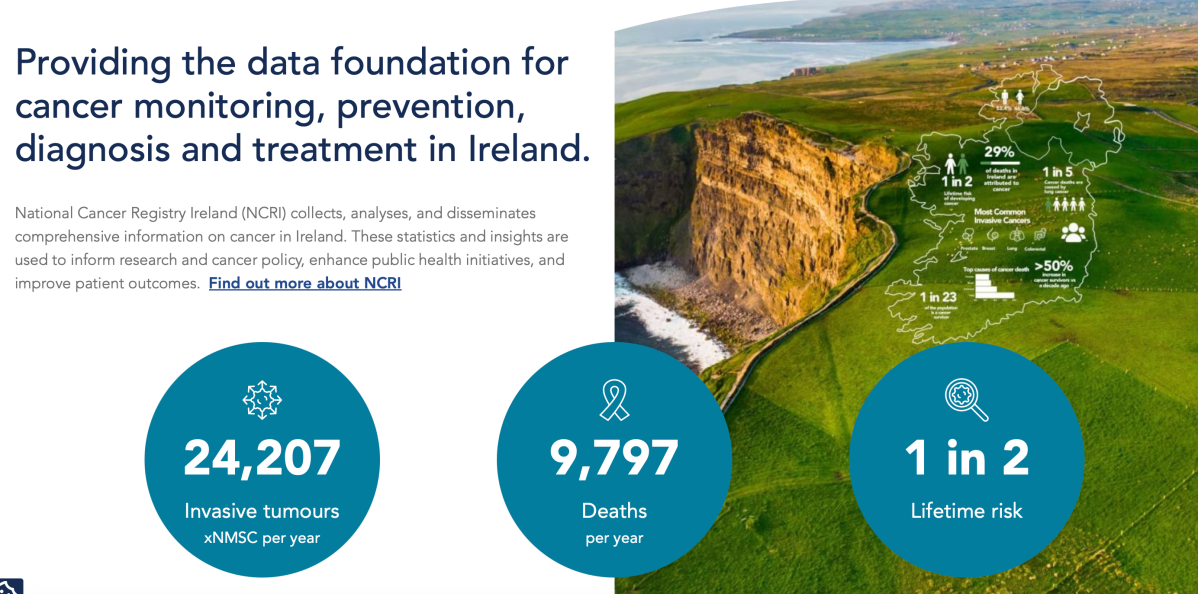
National Cancer Registry Ireland

The National Cancer Registry Ireland (NCRI) has just launched its new website. This redesigned platform offers a user-friendly experience and improves access to essential cancer data and resources. This significant update reflects the NCRI’s commitment to enhancing the accessibility and presentation of vital information on cancer statistics and research in Ireland. 

Key features include simplified navigation, enhanced mobile compatibility, and interactive tools for data visualisation. This new website will better serve the cancer community and stakeholders by providing clear and comprehensive information on cancer statistics in Ireland.

https://www.ncri.ie/en

Anti-cancer drug reimbursement in Ireland…..the balance is not right.

Until relatively recently, the role of a medical oncologist was to weigh up the probable benefits and toxicities of the best available anticancer therapy, and offer professional advice, based on data and experience on the best possible option.

At the threat of being sued if they made a bad decision. Increasingly, the best possible treatment option is not available to medical oncologists as an option.

The best possible treatment option is a question relating to published clinical trial data, international clinical guidelines, and professional opinion, for specific cancer patients.

All of the people currently charged with the responsibility of making reimbursement decisions for new cancer drugs in Ireland have a very difficult job. As difficult as that job is, they do not have to sit in front of someone who has cancer now, requiring a clinical treatment decision.

Tomorrow, again, I will politely ask a drug company for free drug supply.

Michael McCarthy @mccarthymt7 Consultant Medical Oncologist @ University Hospital Galway

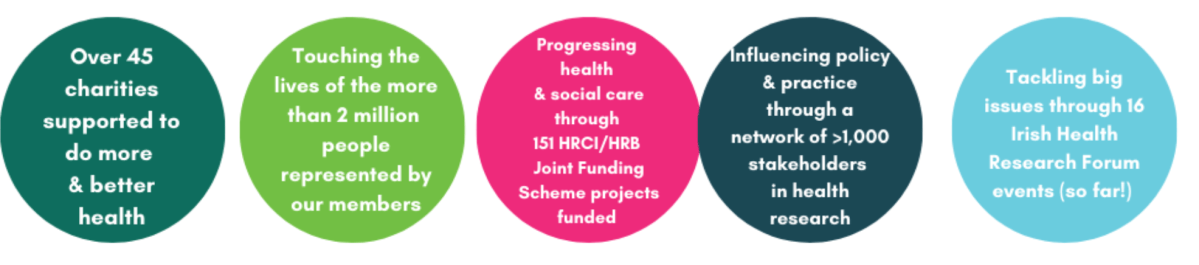
Health Research Charities Ireland(HRCI)

Health Research Charities Ireland (HRCI) is the national umbrella organisation of charities engaged in health, medical and social care research, collectively representing over 2 million people in Ireland. We champion our members’ interests, to enhance the environment for health research in Ireland. We empower them to realise our shared vision of improving lives through impactful research.
We offer our members the potential for matched research funding through the Joint Funding Scheme, run in partnership with the Health Research Board. We also run the Irish Health Research Forum, bringing together all stakeholders to improve health research in Ireland.