Supporting patient pathway though gynaecological cancer

Women themselves may be unaware of the sometimes symptoms or may be too embarrassed to consult a doctor, and there remains a stigma associated with these diagnoses in some quarters. This reticence needs to be overcome and a more positive message developed to improve the prevention, screening, treatment and care of gynaecological cancers so that women throughout Europe have the best chance of survival and quality of life.

Ovarian, uterine, cervix and other gynaecological cancers are among the most common cancers to affect women, but collectively attract less attention than they deserve from the public and policy makers.

WHAT SHOULD YOU ASK THE DOCTOR?

Useful information before, during, and after your meeting with your doctor(s)

Brochure from ENGAGe (The European Network of Gynaecological Cancer Advocacy Groups is an ESGO network of European patient advocacy groups representing all gynaecological cancers)

https://engage.esgo.org/brochures/what-should-you-ask-the-doctor/
Tackling the Impact of Cancer on Health, the Economy and Society: Ireland

Despite advances, cancer remains a significant public health challenge in Ireland

Despite advances, cancer remains a significant public health challenge in Ireland.

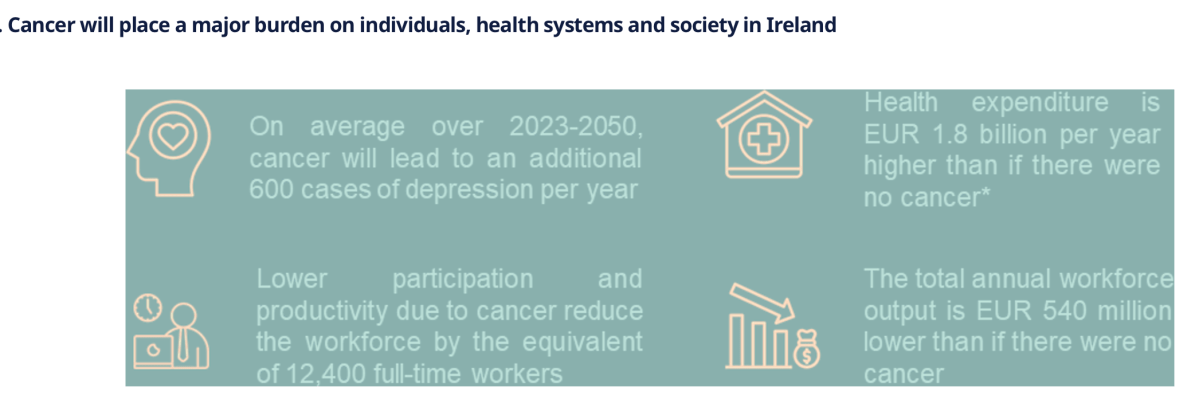
Cancer is the leading cause of mortality in Ireland, and one in three premature (before the age of 75) deaths (30%) will be due to cancer between 2023 and 2050.

In total, there will be an estimated 3 500 premature deaths from cancer every year, and the average population life expectancy will be 2.1 years lower than if there were no cancer.

https://www.oecd.org/en/publications/tackling-the-impact-of-cancer-on-health-the-economy-and-society_40335421-en/ireland_7eaa3751-en.html

Tackling the Impact of Cancer on Health, the Economy and Society: Ireland

Action on key cancer risk factors would reap a wide range of benefits

Meeting international policy targets on major cancer risk factors would prevent around 10% of all cancer cases, avert 16% of premature deaths due to cancer, and reduce the burden of cancer on health expenditure by 12% in Ireland.

https://www.oecd.org/en/publications/tackling-the-impact-of-cancer-on-health-the-economy-and-society_40335421-en/ireland_7eaa3751-en.html

Access to oncology medicines in EU and OECD countries

Ensuring equal access to the latest cancer medicines is one of the most pressing challenges facing OECD health systems today.

Despite the emergence of new oncology drugs, disparities in patient access—particularly through clinical trials and early access programs—remain a critical issue.

Rising costs are also straining even the most affluent healthcare systems, making affordability a concern for all.

This working paper examines various aspects of inequalities in access to cancer medicines, covering key stages in a medicine’s life cycle, from marketing authorisation to reimbursement decisions and uptake in clinical practice.

The analysis draws on original findings from the 2023 OECD Policy Survey on Cancer Care Performance. It also explores potential strategies to stimulate competition among oncology medicine producers, which could create significant budget headroom, allowing reinvestment in new cancer medicines that offer substantial clinical benefits to patients.

https://www.oecd.org/en/publications/access-to-oncology-medicines-in-eu-and-oecd-countries_c263c014-en.html

National Cancer Registry Ireland

NCRI collects information on the diagnosis and primary treatment of the patient’s cancer. Data is collected on primary treatments that take place within approximately 12 months of diagnosis. 

Between 85% and 90% of all new tumour registrations are registered electronically from pathology reports shortly after the patient’s diagnosis. Other electronic data sources such as HIPE(collects demographic, clinical and administrative data on discharges from, and deaths in, acute public hospitals nationally), radiotherapy and death certificates may also create a small number of new tumour registrations.

One of the primary ways to share NCRI data is through reports and publications. These reports compile the latest statistics and analyses, and highlight many topics including:  

  • emerging cancer trends
  • the effectiveness of prevention and treatment initiatives
  • cancer disparities
  • areas where prevention efforts are needed  

These reports provide stakeholders with the necessary insights to guide decision-making. 

https://www.ncri.ie/en/data-collection/the-data-journey/the-patient

When “Look on the bright side!” feels wrong

Nobody wants to say the wrong thing to any newly-diagnosed patient, but that perky “good kind of cancer” comment can land with a hollow thud. 

Yale University professor of psychology Dr. Laurie Santos calls this cheerfully minimizing response to a cancer patient as “the kind that decides ‘bad’ negative emotions could be fixed if only we had a more ‘look on the bright side!’ attitude.”

https://myheartsisters.org

Neoadjuvant and adjuvant therapy: What’s the difference?

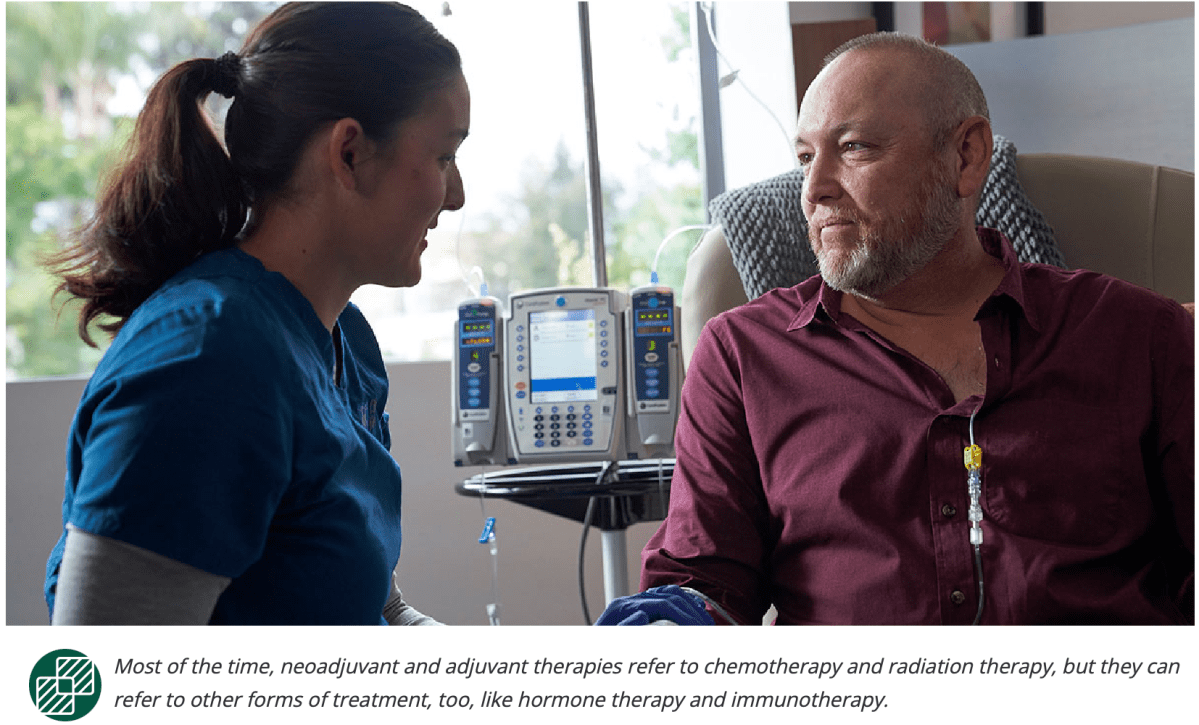
Adjuvant and neoadjuvant therapies are treatments delivered before or after the primary treatment—in most cases, surgery—to help increase its chance of success and decrease the risk of cancer recurrence.

  • Neoadjuvant therapy is given to a patient before surgery to help shrink a tumor or stop disease spread to optimize the main treatment’s success rate and, if possible, make it less invasive.
  • Adjuvant therapy is delivered after surgery to kill any remaining cancer cells in the area and lower the risk of the cancer coming back.

https://www.cancercenter.com/community/blog/2024/01/neoadjuvant-vs-adjuvant

UCAN Ireland

United Cancer Advocates Network is a network of advocates across the Island of Ireland.

They represent a broad range of cancers and locations.

Traditionally they have been advocating in their our own disease areas, now they come together to speak as one voice on key issues that impact the whole cancer community.  

Their focus is on raising awareness and bringing solutions to resolve key systemic issues.

https://www.ucanireland.ie/

NCCP calls for more ‘in-house’ compounding of anti-cancer therapies

“Building greater resilience in hospitals can be achieved by increasing in-house compounding of SACT(Systemic Anti-Cancer Therapy) within dedicated aseptic compounding units (ACUs)”.

This “helps mitigate the risks associated with relying on outsourced supply chains, which are often fragile and vulnerable to disruptions”.

@mcacrthymt7 “The advantage of on-site compounding is that dose changes or treatment change decisions can be made in real time. Outsourcing to private companies in most cases means ordering SACT 2 weeks in advance. It increases inflexibility in the system. The objective should be to increase efficiency. Maximise onsite SACT compounding.”