Outcomes with immunotherapy between Lynch syndrome vs non-Lynch syndrome microsatellite instability-high colorectal cancer.

Conclusions: In this study, we found that patient treated with ICIs have similar outcomes in the presence of germline vs. somatic MMR mutations in MSI-H CRC. The presence of an associated BRAF V600E mutation, which occurs in non-LS MSI-H CRC conferred worse outcomes.

https://ascopubs.org/doi/10.1200/JCO.2024.42.3_suppl.175

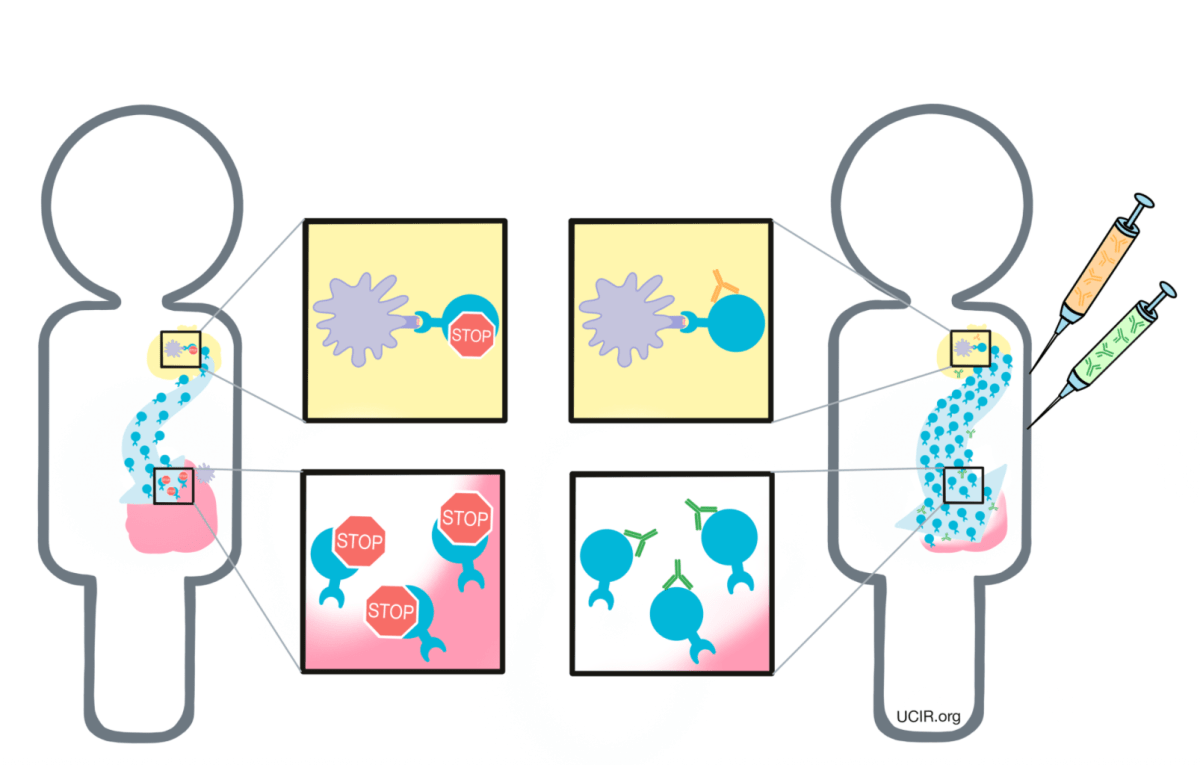
Immunotherapy increases the body’s ability to identify and attack these cells, and cancers that have high microsatellite instability actually help this effort. As the cells continue to mutate and replicate DNA several times, they create more and more proteins that the body doesn’t recognise as normal. 

Before immunotherapy, MSI used to be very bad news for patients with advanced cancers. Because they can mutate rapidly, cancer cells can begin to differentiate from each other and change significantly. Cancer can, for example, gain the ability to metastasize to a different organ or better evade the immune system. With advances in immunotherapy, that prognosis is changing, but that is a very recent shift in just the last few years. Now we know that if you have cancer with MSI, even if it’s late stage, it has a good chance of responding to immunotherapy.  

PREDI-LYNCH project

PREDI-LYNCH sets out to make a difference for people with Lynch syndrome (LS) by developing and implementing novel, non-invasive early detection methods for colorectal, endometrial and urothelial cancers in patients with LS. The research team addresses an unmet medical need in providing an innovative approach to biomarker discovery for early-stage cancers in LS patients.

PREDI-LYNCH will focus on improving cancer surveillance in LS to detect cancers at an early stage, utilising effective and minimally invasive strategies, so as to improve patient outcomes and compliance.

  • Develops non-invasive liquid biopsy tests for early cancer detection in individuals with Lynch syndrome.
  • Combines artificial intelligence, biomarker technology, and clinical expertise to improve the quality of life and healthcare for at-risk groups.
  • Is a collaborative consortium involving 28 organisations from 16 European countries.
  • Received €13.6 million in Horizon Europe funding. Horizon Europe is the EU’s key research and innovation funding programme aimed at promoting scientific breakthroughs and collaborations to solve global challenges.
  • The project will begin in June 2025 and end in summer 2031.

https://www.tuni.fi/en/news/eu13-6-million-funding-early-detection-lynch-syndrome-cancers?fbclid=IwY2xjawKT0iVleHRuA2FlbQIxMQBicmlkETB6S0xyT01CVGNNS3pubzNoAR5xf-m1Gz3nRhAwvE0zjXVTKt0ezvczsWLjlt3rXOdSbn7Jx0NB9MVAKvSqqA_aem_QF6PsggOnwwwuCV_2Y-E6A

Assessing preventive gynecologic decisions in individuals with Lynch syndrome

Highlights
  • Current Lynch syndrome guidelines for managing gynecologic risks are vague and often left to a clinician’s discretion.
  • Among 115 patients with intact uterus and/or ovaries upon Lynch diagnosis, 71 (61.8 %) underwent risk-reducing surgery.
  • Older age, lower education, completed childbearing, and history of non-gyn cancer were associated with having surgery.
  • Patients felt anxiety and frustration with the lack of provider knowledge and support to manage gynecologic cancer risks.

https://www.sciencedirect.com/science/article/abs/pii/S0090825825008297

Neoplasia risk in patients with Lynch syndrome treated with immune checkpoint blockade(2023)

Metastatic and localised mismatch repair-deficient (dMMR) tumours are exquisitely sensitive to immune checkpoint blockade (ICB). The ability of ICB to prevent dMMR malignant or pre-malignant neoplasia development in patients with Lynch syndrome is unknown.

The data has implications for immunopreventative strategies and provide insight into the immunobiology of dMMR tumours.

It would be beneficial to evaluate the immunoediting effects of immunotherapy treatment amongst patients with LS and the implications they may have for future vaccine and immune intervention studies.

https://pubmed.ncbi.nlm.nih.gov/37845474/

InSight

The International Society for Gastrointestinal Hereditary Tumours (InSiGHT) is a multidisciplinary scientific organisation, whose mission is to improve the care of patients and families worldwide with any hereditary condition resulting in gastrointestinal tumours.

They have nearly 300 members, including scientists, clinicians and other healthcare professionals, from all parts of the world.

Lynch Syndrome Risks

The Prospective Lynch Syndrome Database (PLSD) now provides the most accurate estimates of cancer risks in LS, both in individuals who have yet to develop a cancer and those who have survived a cancer. An individual’s risks can be found according to their age, gender and the underlying gene.

Lynch syndrome-related tumours include:

  • Colon and rectal cancer
  • Endometrial cancer
  • Small intestine cancer (MSH2 & MLH1)
  • Hepato-biliary and pancreatic cancer (MSH2 & MLH1)
  • Gastric cancer (MSH2 & MLH1)
  • Ovarian non-serous cancer (MSH2 & MLH1)
  • Renal pelvis and ureter cancer (MSH2 & MSH6)
  • Bladder cancer(MSH2 & MSH6)
  • Sebaceous gland cancer (and adenoma – Muir-Torre syndrome)
  • Prostate cancer (MSH2)
  • Breast cancer (MLH1)
  • Central nervous system cancer

The risks associated with some EPCAM deletions appear not to be restricted to GI cancers.

https://www.insight-group.org/about/

Eating a nutritious diet is essential during cancer

It is important to remember that keeping well-nourished is vital for recovery, can help you feel better, and your body stays strong and yields many physical and mental benefits.

There is no scientific evidence that following any diet can cure cancer or replace cancer treatment. In recent years there has been a lot of interest in diet and cancer. Complementary or alternative fad diets are often restrictive and make false claims about curing or treating cancer.

After cancer treatment, it is helpful to maintain a healthy body weight to reduce your risk of cancer recurrence, diabetes, and heart disease. If you are considering following a particular diet, discuss it with your doctor or a dietitian.

You can find evidence-based information, resources and recipes to support people with cancer who are in active treatment or post treatment here

https://breakthroughcancerresearch.ie/cancer-diet/

Nouscom Presents Positive Final Results from Completed Phase Ib/II Study of Neoantigen Immunotherapy NOUS-209 at AACR 2025, Demonstrating a Highly Potent and Durable Immune Response in Lynch Syndrome Carriers

  • Lynch Syndrome (LS) is a common hereditary condition that significantly increases the lifetime risk of cancer, especially colorectal and endometrial, to as high as 80%

  • NOUS-209 is an off-the-shelf immunotherapy designed to harness the power of the immune system to recognize and eliminate cancer cells before tumours develop

  • Final results from a Phase Ib/II study of NOUS-209 monotherapy in LS carriers confirm its safety and immunogenicity, supporting advancement to a potentially registration-enabling study for cancer interception

The completed Phase Ib/II trial evaluated safety and immunogenicity in 45 LS carriers

  • T cells induced by NOUS-209 were shown to directly kill tumour cells ex vivo, confirming functional anti-cancer activity

NOUS-209 is a pioneering approach to cancer interception comprising two proprietary viral vectors that deliver 209 shared FSP neoantigens and train the immune system to recognise and attack cancerous and pre-cancerous cells before tumours can fully develop.

“Currently, individuals with Lynch Syndrome rely on frequent screenings, such as colonoscopies, to manage their markedly increased risk of developing cancer. These latest data are a step toward a completely new approach – leveraging the immune system for cancer interception,” said the study’s principal investigator, Eduardo Vilar-Sanchez, M.D., Ph.D., Professor of Clinical Cancer Prevention at The University of Texas MD Anderson Cancer Center.

https://www.globenewswire.com/news-release/2025/04/29/3070727/0/en/Nouscom-Presents-Positive-Final-Results-from-Completed-Phase-Ib-II-Study-of-Neoantigen-Immunotherapy-NOUS-209-at-AACR-2025-Demonstrating-a-Highly-Potent-and-Durable-Immune-Response.html

Using Only Immunotherapy Successfully Treats Several Cancers With MMRd Mutation, Improves Quality of Life

Immunotherapy drugs work by helping the immune system find and attack cancer cells. They work best when the cells are easier for the immune system to find.

Cancer cells that are MMRd look more foreign to the immune system. That makes them easier for immune cells to find. The checkpoint inhibitor drugs are more likely to work.

This therapy “unmasks” tumor cells, making it easier for the patient’s own immune system to recognise and kill cancer cells.

The treatment has proved particularly helpful for people whose tumors are caused by Lynch syndrome, an inherited condition that makes people much more likely to develop colorectal and other cancers.

“People with Lynch syndrome usually don’t respond well to chemotherapy, so this gives them an important new option for treatment of early-stage disease,” says Dr. Cercek.