How does Lynch syndrome affect my family?

Genes are inherited in pairs. You inherit one from your mother and one from your father. If someone has Lynch syndrome, one copy of a mismatch repair (MMR) gene is altered and is not working properly. A mismatch gene is a gene involved in making repairs to errors in DNA. If a parent has Lynch syndrome, they can pass the affected gene on to their children. This means that each of their children have a 1 in 2 chance of also having Lynch syndrome.

Knowing this information means you can take steps to reduce your risk of developing cancer. Ask your healthcare provider about where you can get support to talk to your family.

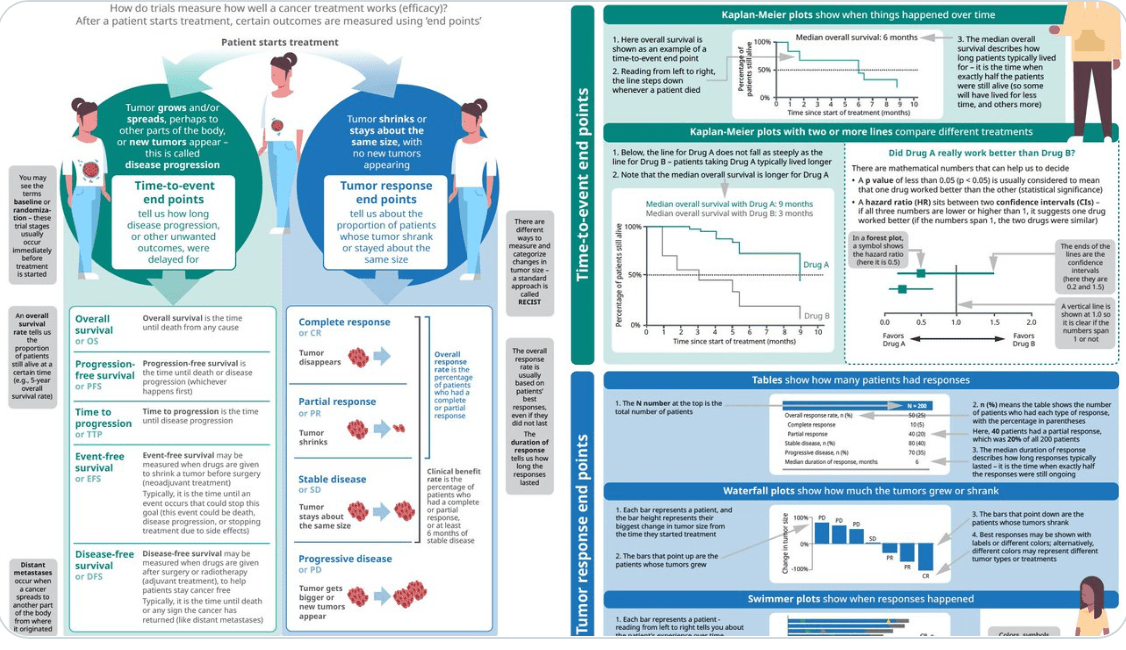
Decoding clinical trial jargon: helping people understand the efficacy end points used in cancer trials

People living with cancer should have access to clear and comprehensible treatment information to empower informed decision-making.

This podcast highlights the need to support this aspect of health literacy by bringing together the perspectives of a patient, a patient advocate and a medical oncologist.

Accompanied by two visual, plain-language guides designed to help general audiences understand the key efficacy end points that are commonly used in trials of solid tumor treatments.

https://www.tandfonline.com/doi/full/10.1080/14796694.2024.2433411?scroll=top&needAccess=true#abstract


Outcomes of 10 years of PSA screening for prostate cancer in Norwegian men with Lynch syndrome

Pathogenic germline variants in the mismatch repair (MMR) genes(Lynch syndrome) are associated with an increased risk of prostate cancer.

This is a prospective observational study of 225 male MMR carriers who were recommended annual PSA screening.

Conclusions:

The results of this long-term prospective observational study indicate that the MMR genes and especially MSH2 and MSH6 are associated with a significantly increased incidence of PCa compared to men in corresponding age groups and birth cohorts without any known genetic predisposition, and with a high number of cancers showing aggressive characteristics. While we still do not know whether screening has led to an improved prognosis, we conclude that our findings support continued PSA screening of MSH2 and MSH6 carriers. Further studies are needed to provide optimal recommendations for PSA threshold and to clarify whether such screening is not indicated in MLH1 and PMS2carriers.

https://onlinelibrary.wiley.com/doi/10.1002/pros.24711

Understanding the treatment experiences of adults diagnosed with early-onset colorectal cancer: A qualitative study

Early-onset colorectal cancer (CRC) incidence in adults aged under 50 is increasing. There is a critical lack of knowledge regarding the challenges faced by early-onset CRC patients and their experiences of treatment.

Conclusions

The small(21)study highlights numerous unique issues experienced by the early-onset CRC patient group during treatment. There is a need for change in clinical practice, along with the development of international guidelines and tailored resources for both patients and healthcare professionals, in order to improve care.

https://onlinelibrary.wiley.com/doi/10.1002/pon.6367

A patient- led survey on information and communication needs of patients with metastatic breast cancer in Ireland and Northern Ireland

https://www.sciencedirect.com/science/article/pii/S0960977624001681

Conclusion

Currently the needs of MBC patients in Ireland and Northern Ireland have many unmet needs. The routine early provision of palliative care, psycho-oncology, medical social worker and dedicated liaison nurse supports guided by national guidelines and education for healthcare professionals, integrated with living well with cancer clinics and a dedicated medically verified website would provide an ecosystem where MBC care could be optimised for patients and their families.

NATIONAL MEN’S HEALTH ACTION PLAN HEALTHY IRELAND – MEN (HI-M) 2024-2028

WORKING WITH MEN IN IRELAND TO ACHIEVE OPTIMUM HEALTH AND WELLBEING

There continues to be significant differences in health outcomes; not only between men and women, but between different population groups of men.