
Category: Uncategorized
We need to remember what sits behind every number:
Wide variations in delivery of cancer treatment, data shows.
From the patient side, these aren’t just percentages or performance indicators, BUT they are people waiting for treatment, living with uncertainty and wondering when their care will begin.
https://www.rte.ie/news/health/2026/0826/1589223-cancer-treatments-ireland
Why We Advocate….

After being diagnosed, Jennifer and Thrisha quickly realized a shocking truth—finding a doctor who is knowledgeable about Lynch Syndrome is extremely difficult. Both have encountered medical professionals who:
- Provided inaccurate information about proper screening protocols for Lynch Syndrome.
- Had to look up information about Lynch Syndrome during their appointments.
- Medical team is simply unfamiliar with the condition altogether.
This lack of awareness, even among healthcare professionals, is frightening. The knowledge gap in the medical community is putting lives at risk. That’s why Lynch Syndrome Awareness isn’t just about educating the public—it’s also about educating healthcare professionals.
Many Cancers begin with vague, non-specific symptoms

Why Do Cancer Risks Differ Between People With The Same Lynch Syndrome Gene Variant? 🧬
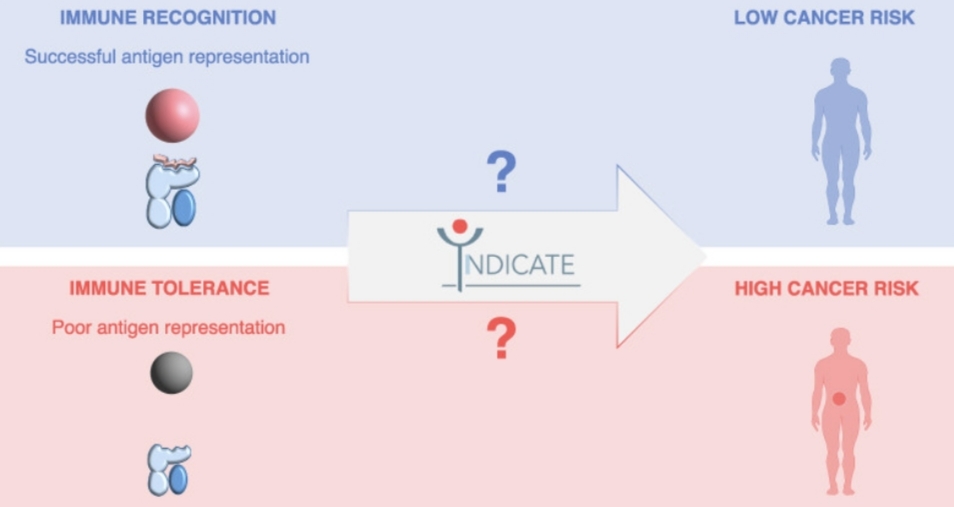
The INDICATE study explores whether HLA type, a key factor in immune recognition, may influence cancer risk and age of onset in Lynch syndrome
ABSTRACT
Lynch syndrome (LS) is the most common inherited cancer syndrome. It is inherited via a monoallelic germline variant in one of the DNA mismatch repair (MMR) genes. LS carriers have a broad 30% to 80% risk of developing various malignancies, and more precise, individual risk estimations would be of high clinical value, allowing tailored cancer prevention and surveillance. Due to MMR deficiency, LS cancers are characterized by the accumulation of frameshift mutations leading to highly immunogenic frameshift peptides (FSPs). Thus, immune surveillance is proposed to inhibit the outgrowth of MMR-deficient cell clones. Recent studies have shown that immunoediting during the evolution of MMR-deficient cancers leads to a counter-selection of highly immunogenic antigens. The immunogenicity of FSPs is dependent on the antigen presentation. One crucial factor determining antigen presentation is the HLA genotype. Hence, a LS carrier’s HLA genotype plays an important role in the presentation of FSP antigens to the immune system, and may influence the likelihood of progression from precancerous lesions to cancer. To address the challenge of clarifying this possibility including diverse populations with different HLA types, we have established the INDICATE initiative (Individual cancer risk by HLA type, http://indicate-lynch.org/), an international network aiming at a systematic evaluation of the HLA genotype as a possible cancer risk modifier in LS. Here we summarize the current knowledge on the role of HLA type in cancer risk and outline future research directions to delineate possible association in the scenario of LS with genetically defined risk population and highly immunogenic tumors.
Full paper – https://onlinelibrary.wiley.com/doi/full/10.1002%2Fijc.34312
UKCGG One-page Gene-Specific Management Guidelines – (inc) Lynch Syndrome

These guidelines from the UK Cancer Genetics Group were developed using data from individuals ascertained as carriers of cancer susceptibility genes through diagnostic, family history or other clinical pathways where evidence supports standard actionability of the identified variant.
These recommendations are based on evidence around the likely benefits of proposed interventions weighed against any possible harms for standard penetrance in clinically ascertained cohorts.
The risks and benefits of these interventions for individuals identified as carriers of cancer susceptibility genes through other routes, such as incidental findings or population screening have not been clearly established. Clinical judgement needs to be exercised when counselling and implementing on-going surveillance, early detection and prevention interventions where penetrance may be lower than expected and personalised more conservative management may be considered (e.g. surveillance versus irreversible risk-reducing surgery).
https://www.ukcgg.org/information-education/ukcgg-leaflets-and-guidelines
AI assistance does not improve adenoma detection in Lynch syndrome, trial finds

What was studied: Researchers tested whether adding artificial intelligence (AI) to colonoscopy helps doctors find more precancerous growths (adenomas) in people with Lynch syndrome — an inherited condition that greatly raises the risk of colorectal cancer and requires regular colonoscopy screening.
How it was done: About 750 adults with Lynch syndrome at nine specialist centres in Belgium, Germany, the Netherlands and Spain were randomly assigned to have either a standard high-definition colonoscopy or the same procedure with an AI system (CAD EYE) that flags suspicious areas on the screen in real time. The AI was also tested on its ability to tell, on the spot, whether a growth was precancerous or harmless.
What was found:
- Adenomas were found in 34% of patients with AI vs 31% without — a difference too small to be meaningful.
- No advantage for AI in any other measure, including flat growths, advanced adenomas, or cancers detected.
- Procedure times (about 26 minutes) and patient comfort were the same in both groups.
- For identifying growth types on sight, the AI performed slightly worse than the expert doctors, and both struggled with a tricky lesion type called sessile serrated lesions.
- Safety was similar; three minor complications occurred in the AI group, none clearly caused by the AI.
What it means: In expert centres where doctors are already highly skilled and take their time, adding this AI tool didn’t improve results. Careful technique, good bowel preparation and adequate inspection time still matter most.
Important caveats: The study wasn’t designed to prove the two approaches are equivalent — only that AI wasn’t better in this setting. AI could still help in less specialised clinics where detection rates vary more, and future AI trained specifically on the subtle, flat lesions typical of Lynch syndrome might perform better.
Bottom line for patients: A high-quality standard colonoscopy at an experienced centre remains appropriate care — you’re not missing out if your clinic doesn’t use AI.
Published in The Lancet Gastroenterology & Hepatology (CADLY2 trial; first author Dr Robert Hüneburg, University Hospital Bonn).
Can Lifestyle Alter Genetic Risk? What the science says.

Lynch syndrome confers an inherited genetic predisposition — but environmental and lifestyle factors also influence how that risk is expressed.
Current evidence indicates that chronic inflammation may contribute to tumour development in mismatch repair-deficient cells. Modifiable factors — including regular physical activity, avoiding tobacco, and a diet high in fibre and low in processed meat — may therefore support risk reduction.
These measures complement, but do not replace, established clinical surveillance.
Endometrial Cancer Risk in Lynch Syndrome:Early Signs Matter.

In Lynch syndrome, colorectal cancer receives the most attention — but gynaecological risk requires equal clinical vigilance.
For women with Lynch syndrome, the lifetime risk of endometrial cancer is substantially elevated and varies according to the gene affected, reaching up to 40–60% in carriers of pathogenic MLH1 and MSH2 variants. Endometrial cancer is frequently the first, or ‘sentinel’, cancer diagnosed.
Awareness of early symptoms — including abnormal or postmenopausal bleeding — together with adherence to established surveillance guidelines, supports earlier diagnosis. PREDI-LYNCH incorporates gynaecological clinical data so that predictive models reflect risk in women accurately.
New Research | The Lasting Physical Impact of Cancer Survivorship

As more people survive cancer and live longer, understanding the long-term effects of cancer and its treatment becomes increasingly important.
Using data from The Irish Longitudinal Study on Ageing (TILDA), researchers from the Trinity St James’s Cancer Institute, School of Medicine, Trinity College Dublin and TILDA examined physical function among community-dwelling adults aged over 50 with and without a history of cancer.
🔵 Recent cancer survivors were almost twice as likely to report a physical performance limitation.
🔵 Long-term cancer survivors had more than twice the risk of osteoporosis, highlighting an increased risk of falls, fractures, and loss of independence.
🔵 Cancer survivorship has a lasting burden on functional independence that persists past diagnosis and treatment.
https://www.sciencedirect.com/science/article/pii/S1879406826001918

