
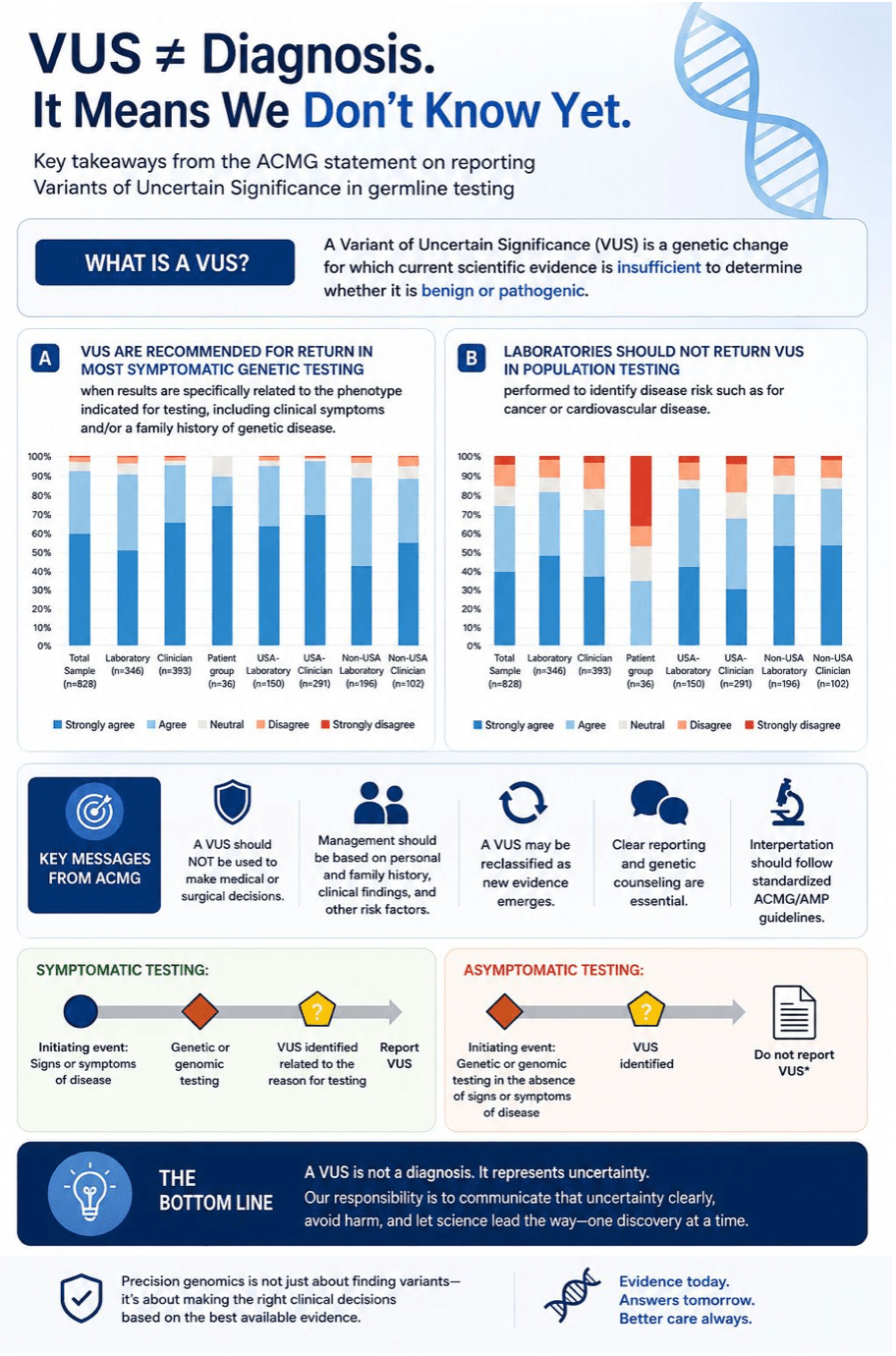
A Variant of Uncertain Significance (VUS) is one of the most misunderstood outcomes in genetic testing.
It doesn’t mean a person has a disease, nor does it mean they are disease-free-it simply means that current scientific evidence is insufficient to determine whether the variant is benign or pathogenic.
The recent American College of Medical Genetics and Genomics (ACMG) statement reinforces several important principles:
✅ A VUS should not be used to guide medical or surgical decisions.
✅ Clinical management should be based on the individual’s personal and family history, not on a VUS alone.
✅ As scientific knowledge grows, a VUS may be reclassified over time, highlighting the importance of periodic review.
✅ Clear communication between laboratories, clinicians, and patients is essential to avoid misinterpretation.
As genomics becomes increasingly integrated into healthcare, understanding the difference between finding a variant and understanding its clinical significance is more important than ever.
Genetics isn’t just about finding answers—it’s also about knowing when the evidence isn’t there yet. “Dr. Jiny Nair-LinkedIn”

