
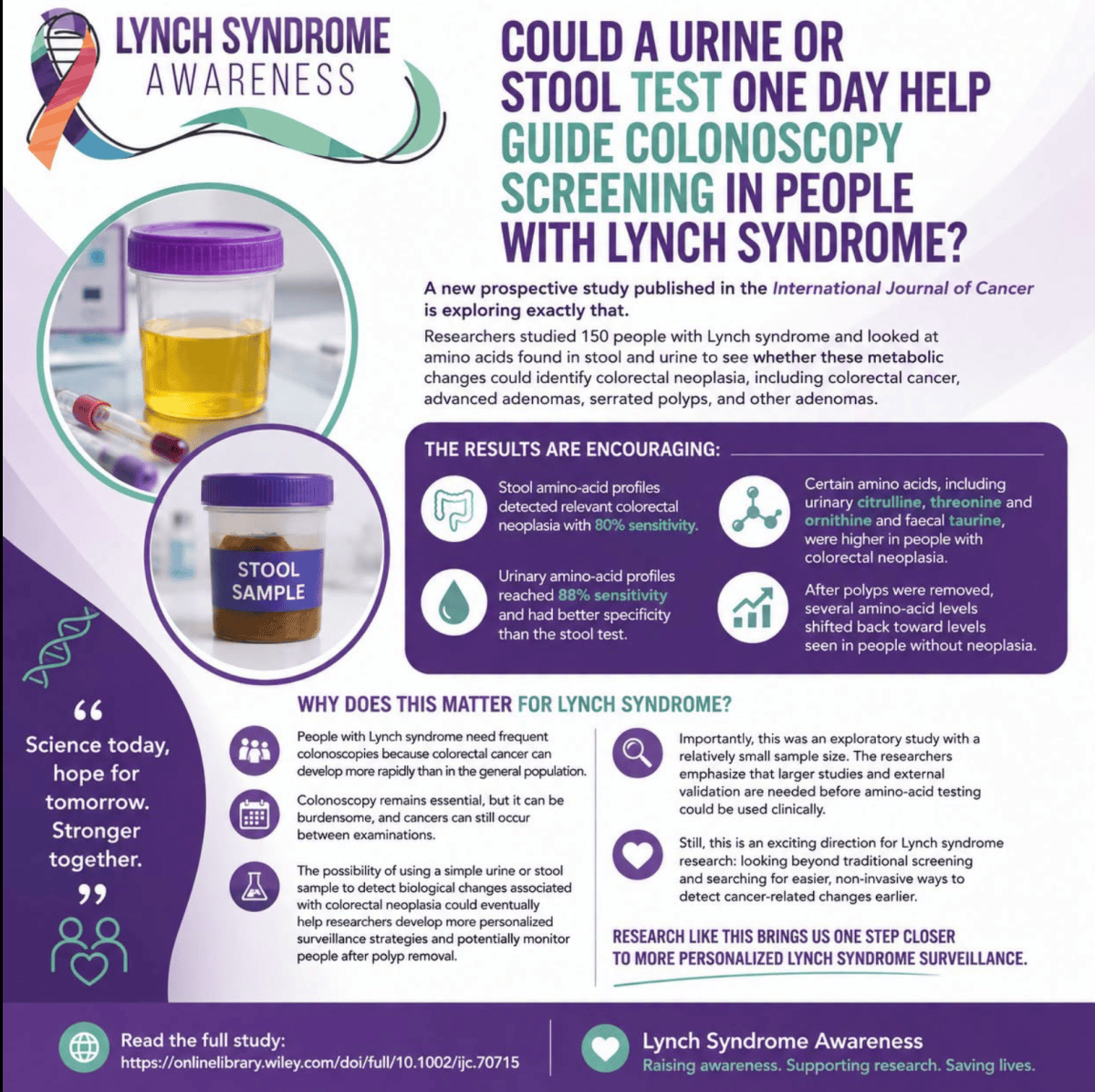
People with Lynch syndrome have a higher risk of developing colorectal cancer, so they need regular colonoscopies. Although colonoscopy is effective, it is invasive and inconvenient, and some cancers can still develop between examinations.
This study explored whether certain substances called amino acids, measured in stool and urine, could help identify people who have colorectal abnormalities. The researchers studied 150 people with Lynch syndrome who provided stool and/or urine samples before and after their surveillance colonoscopy.
They found that:
- Certain amino acids were present at higher levels in the stool or urine of people with colorectal abnormalities, including cancer, advanced polyps, and other adenomas.
- Stool amino acids detected about 80% of people with relevant abnormalities.
- Urine amino acids detected about 88% of these people and were better at identifying people without abnormalities than stool testing.
- Adding the usual faecal immunochemical test (FIT) to the amino-acid tests did not improve their accuracy.
- After polyps were removed, several amino-acid levels moved closer to those seen in people without abnormalities, suggesting that these markers may reflect the presence of polyps.
Overall, the results suggest that measuring amino acids in stool or urine could eventually provide a less invasive way to help decide when colonoscopy is needed or to monitor people after polyp removal. However, this was an early exploratory study, and the findings need to be confirmed in larger, independent studies before these tests can be used in routine care.

