What Is Peripheral Neuropathy?

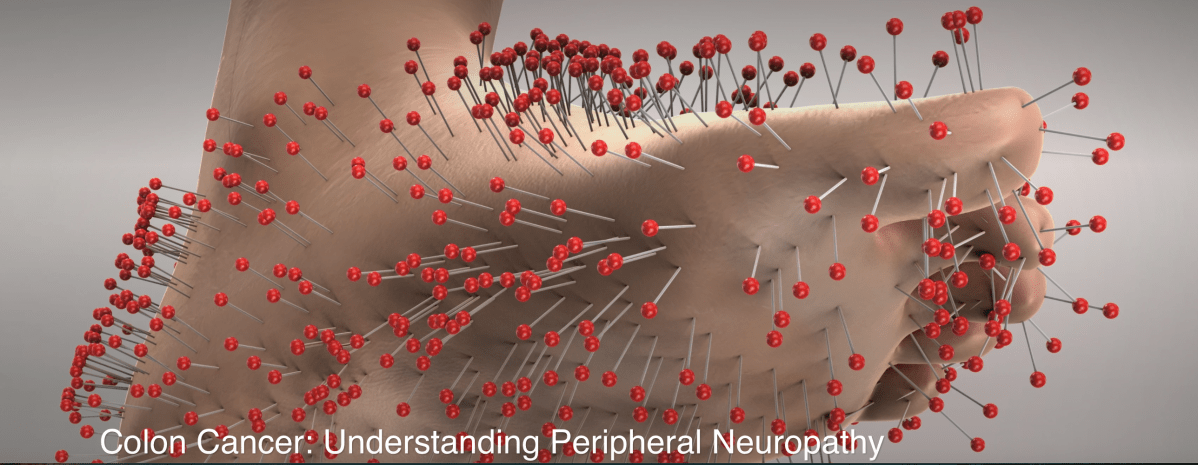
If you’ve received chemotherapy as part of your colon cancer treatment, one of the side effects you may experience is numbness and tingling in you extremities, also known as peripheral neuropathy. It is damage to the nerves that transmit signals between the extremities and the central nervous system.

If you have numbness and tingling in your fingers or toes, notify your doctor immediately. Addressing peripheral neuropathy at the onset of symptoms can prevent a long-term problem. The numbness and tingling are the symptoms most often associated with peripheral neuropathy, though other symptoms exist. These include weakness, pain in the arms, hands, legs and/or feet, and abnormal sensations such as burning, tickling, pricking or tingling

Oxaliplatin chemotherapy, as well as other drugs for the treatment of colon cancer may cause peripheral neuropathy. 

https://news.cancerconnect.com/colon-cancer/colon-cancer-understanding-peripheral-neuropathy
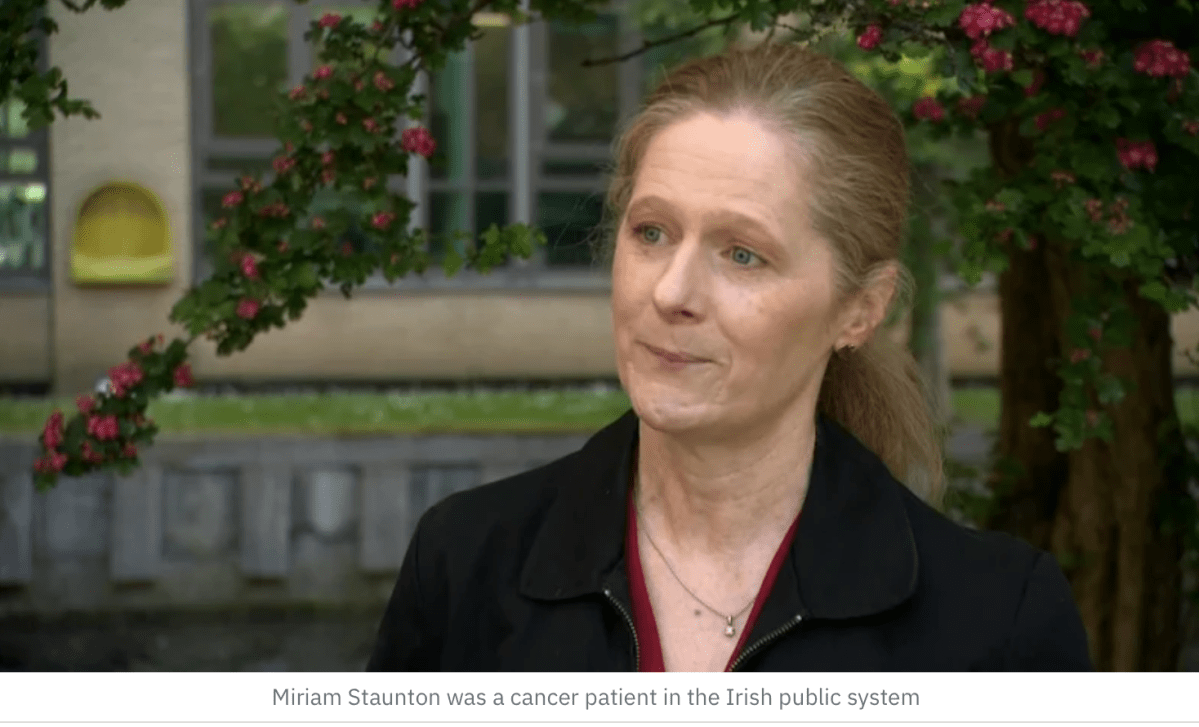
“Patients will die waiting for cancer treatment” – advocate

A study showed Ireland has the lowest availability for new cancer medicines in Western Europe. Of the 56 oncology medicines which were granted a European Medicines Agency (EMA) licence since 2020, only 14, or 25%, are currently available in Ireland.

It comes as figures show Ireland has the lowest availability for new cancer medicines in Western Europe, according to the Irish Pharmaceutical Healthcare Association (IPHA).

The United Cancer Advocates Network (UCAN) said there is no early access scheme in Ireland, so Irish patients are forced to wait for full assessments and negotiations with drug companies to take place.

“Medical Oncologists have a very peripheral role (and very little influence) in the HSE system for drug reimbursement. So far, to my knowledge, every approach made by medical oncologists to the HSE to address this issue has been listened to but ignored fully.” @mccarthymt7

https://www.rte.ie/news/health/2025/0507/1511477-cancer-drugs-ireland/

Neoplasia risk in patients with Lynch syndrome treated with immune checkpoint blockade(2023)

Metastatic and localised mismatch repair-deficient (dMMR) tumours are exquisitely sensitive to immune checkpoint blockade (ICB). The ability of ICB to prevent dMMR malignant or pre-malignant neoplasia development in patients with Lynch syndrome is unknown.

The data has implications for immunopreventative strategies and provide insight into the immunobiology of dMMR tumours.

It would be beneficial to evaluate the immunoediting effects of immunotherapy treatment amongst patients with LS and the implications they may have for future vaccine and immune intervention studies.

https://pubmed.ncbi.nlm.nih.gov/37845474/

InSight

The International Society for Gastrointestinal Hereditary Tumours (InSiGHT) is a multidisciplinary scientific organisation, whose mission is to improve the care of patients and families worldwide with any hereditary condition resulting in gastrointestinal tumours.

They have nearly 300 members, including scientists, clinicians and other healthcare professionals, from all parts of the world.

Lynch Syndrome Risks

The Prospective Lynch Syndrome Database (PLSD) now provides the most accurate estimates of cancer risks in LS, both in individuals who have yet to develop a cancer and those who have survived a cancer. An individual’s risks can be found according to their age, gender and the underlying gene.

Lynch syndrome-related tumours include:

  • Colon and rectal cancer
  • Endometrial cancer
  • Small intestine cancer (MSH2 & MLH1)
  • Hepato-biliary and pancreatic cancer (MSH2 & MLH1)
  • Gastric cancer (MSH2 & MLH1)
  • Ovarian non-serous cancer (MSH2 & MLH1)
  • Renal pelvis and ureter cancer (MSH2 & MSH6)
  • Bladder cancer(MSH2 & MSH6)
  • Sebaceous gland cancer (and adenoma – Muir-Torre syndrome)
  • Prostate cancer (MSH2)
  • Breast cancer (MLH1)
  • Central nervous system cancer

The risks associated with some EPCAM deletions appear not to be restricted to GI cancers.

https://www.insight-group.org/about/

Primary care: the ‘linchpin’ in Lynch syndrome

In most cases, a person will be diagnosed with Lynch syndrome following a cancer diagnosis.

People may also be identified with Lynch syndrome after a family member has been diagnosed with the condition (for example, cascade testing), or, less frequently, for those with a strong family history, by referral for genetic testing from their GP. 

Following a diagnosis of Lynch syndrome and treatment of any cancers, most of the contact for patients will be with the NHS Bowel Cancer Screening Programme and their primary care team.

Fragmentation of Lynch syndrome care

A persistent challenge reported by people with Lynch syndrome is a lack of consistent and coordinated health care to help support them to manage their condition generally.

Improved communication from secondary and tertiary care is needed to enable consistent coding of Lynch syndrome on patient health records and for primary care to fulfil its role as the ‘linchpin’ of comprehensive care.

https://bjgp.org/content/75/754/198

Lynch Syndrome: Similarities and Differences of Recommendations in Published Guidelines

ABSTRACT:

Background: In this review, we aimed to compare the recommendations for Lynch syndrome (LS).

Methods: We compared the LS’s guidelines of different medical societies, including recommendations for cancer surveillance, aspirin treatment, and universal screening.

Results: Most guidelines for LS patients recommend intervals of 1–2 years for performing colonoscopy, though there is disagreement regarding the age to begin CRC screening (dependent on status as a MLH1/MSH2 or MSH6/PMS2 carrier). There are inconsistencies between LS guidelines for gastric cancer surveillance. Most guidelines do not recommend routine surveillance of the pancreas and small bowel. Most but not all of the guidelines support endometrial and ovarian surveillance with trans- vaginal ultrasound and endometrial biopsy. Only two societies recommend urological surveillance, while others recommend surveillance among high-­ risk carriers with family history only. There is significant disagreement between the guidelines about the recommendation for limited or extended bowel resection among patients with CRC. Aspirin use is recommended by most societies, though some with reservations, and most of them recommend universal screening.

Conclusions: There are significant disparities and disagreements in the guidelines and recommendations for patients with LS, causing confusion and difficulties for clinicians. Harmonisation and cooperation are needed between the societies creating LS guidelines.

https://onlinelibrary.wiley.com/doi/pdf/10.1111/jgh.16881

Digital for Care 2030 Overview

With the focus on the evolving needs of patients and their families, Digital for Care 2030 will ensure that healthcare professionals have access to modern digital tools for delivering better, safer care. Explore more by clicking on the tiles below to discover the key elements of Digital for Care. 

The aim is to implement the work outlined collaboratively by both the Department of Health and the HSE to digitally transform our health services into a modern, integrated care system which will:    

  • Improve delivery of safe patient care. 
  • Deliver better health outcomes and access to care.  
  • Make all relevant data available to patients to manage their health more effectively. 
  • Allow for more capacity in our health services. 
  • Reduce hospital admissions. 
  • Reduce the cost of care. 

https://www.ehealthireland.ie/technology-and-transformation-functions/digital-for-care-2030/digital-for-care-2030-overview/

Eating a nutritious diet is essential during cancer

It is important to remember that keeping well-nourished is vital for recovery, can help you feel better, and your body stays strong and yields many physical and mental benefits.

There is no scientific evidence that following any diet can cure cancer or replace cancer treatment. In recent years there has been a lot of interest in diet and cancer. Complementary or alternative fad diets are often restrictive and make false claims about curing or treating cancer.

After cancer treatment, it is helpful to maintain a healthy body weight to reduce your risk of cancer recurrence, diabetes, and heart disease. If you are considering following a particular diet, discuss it with your doctor or a dietitian.

You can find evidence-based information, resources and recipes to support people with cancer who are in active treatment or post treatment here

https://breakthroughcancerresearch.ie/cancer-diet/

Nouscom Presents Positive Final Results from Completed Phase Ib/II Study of Neoantigen Immunotherapy NOUS-209 at AACR 2025, Demonstrating a Highly Potent and Durable Immune Response in Lynch Syndrome Carriers

  • Lynch Syndrome (LS) is a common hereditary condition that significantly increases the lifetime risk of cancer, especially colorectal and endometrial, to as high as 80%

  • NOUS-209 is an off-the-shelf immunotherapy designed to harness the power of the immune system to recognize and eliminate cancer cells before tumours develop

  • Final results from a Phase Ib/II study of NOUS-209 monotherapy in LS carriers confirm its safety and immunogenicity, supporting advancement to a potentially registration-enabling study for cancer interception

The completed Phase Ib/II trial evaluated safety and immunogenicity in 45 LS carriers

  • T cells induced by NOUS-209 were shown to directly kill tumour cells ex vivo, confirming functional anti-cancer activity

NOUS-209 is a pioneering approach to cancer interception comprising two proprietary viral vectors that deliver 209 shared FSP neoantigens and train the immune system to recognise and attack cancerous and pre-cancerous cells before tumours can fully develop.

“Currently, individuals with Lynch Syndrome rely on frequent screenings, such as colonoscopies, to manage their markedly increased risk of developing cancer. These latest data are a step toward a completely new approach – leveraging the immune system for cancer interception,” said the study’s principal investigator, Eduardo Vilar-Sanchez, M.D., Ph.D., Professor of Clinical Cancer Prevention at The University of Texas MD Anderson Cancer Center.

https://www.globenewswire.com/news-release/2025/04/29/3070727/0/en/Nouscom-Presents-Positive-Final-Results-from-Completed-Phase-Ib-II-Study-of-Neoantigen-Immunotherapy-NOUS-209-at-AACR-2025-Demonstrating-a-Highly-Potent-and-Durable-Immune-Response.html