
Author: Lynch Syndrome Ireland
Randomised Trials and Their Role in Modern Healthcare!

A free online course in Randomised Trials and Their Role in Modern Healthcare! – No prior knowledge needed – At your own pace and takes approximately 5 hours – This course is free to access on FutureLearn Learn more/enrol at:
https://www.futurelearn.com/courses/randomised-trials-and-their-role-in-modern-healthcare
How old would you be if you didn’t know how old you are?

We are pretty new at all of this, but we can do better.
Honoring and embracing those with more wisdom and experience seems like a win-win.
Fighting and fearing a natural process that only occurs if we have been fortunate enough to stay living, in spite of near misses and close calls and the dangerous risks we have been known to take, holds us all back.
20 Sleep Hacks For A Better Night’s Rest

Practical tips to help restore energy and wellbeing.
Storytelling for human well-being
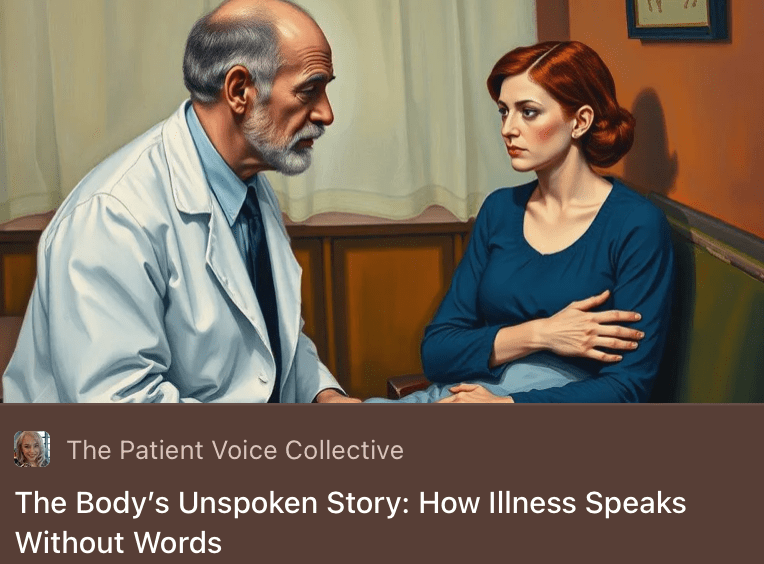
When we attend to both the story and the body that tells it, we move beyond treating disease. We accompany people. We don’t just understand symptoms — we begin to understand lives.
Illness lives in the body — and so does the story of it. You can hear it in a pause before someone answers. You can see it in the way they shift in a chair, the tightness in a jaw, the way breath catches or slows. These are not incidental details. They are part of the narrative, carrying meaning that lab results and scan reports can’t capture.
This is embodied storytelling: when words and the body work together to communicate the lived experience of health and illness.
https://journalofethics.ama-assn.org/article/narrative-embodiment-and-health/2025-06
Who is responsible?

Is there anyone responsible for figuring this out, or is the whole system just going to drift into the future?
Overall, the National Development Plan is not heavy on specifics. While it refers to the Government’s commitment to health digitalisation, there is no detail.
As regards healthcare, more detail and a clearer sense of long-term ambition will be essential if this plan is to deliver meaningful and lasting reform.
Stories must inform decisions,

Empathy, the ability to understand and share the feelings of another, has significant implications for epistemology, the study of knowledge. Exploring the relationship between empathy and epistemology reveals that empathy can be a valuable tool for understanding others’ perspectives and even shaping our own knowledge.
A Closer Look: From Empathy to Epistemology
At its core, narrative medicine is not just about empathy—it is about epistemology: how we know what we know in medicine.It challenges the idea that data alone is the truth. It values subjective experience as evidence.
It reminds us that meaning—grief, identity, uncertainty—is not noise in the signal; it’s part of the diagnosis.The most powerful implication of this is shared authority. When patients’ stories are treated as essential sources of knowledge—not anecdotal extras—we begin to shift the asymmetry that defines much of clinical care.This is why narrative medicine can be uncomfortable. It doesn’t just ask clinicians to listen; it asks systems to change.
So, Has Narrative Medicine Left the Margins?
In scholarship? Yes.
In spirit? Often.
In systems? Not yet.
If we want systems that truly centre patient voices, we have to move from metaphor to mechanism.
Not just asking for stories—but being changed by them.
https://patientvoicecollective.substack.com?utm_source=navbar&utm_medium=web
OUR HEALTH SYSTEM – “Surely not”

How patients can use medicines before authorisation

In Ireland, medicines need to be authorised before a patient can use them.
Sometimes, there is no authorised medicine available to treat a patient’s illness or to meet their medical needs. When this happens, a patient may be able to get access to medicines by the following two ways:
1.Clinical trials
2.Exempt Medicinal Products (EMP)
 Lynch Syndrome Ireland