Lynch Syndrome Booklet -Eve Appeal(UK)

Lynch Syndrome and understanding your options

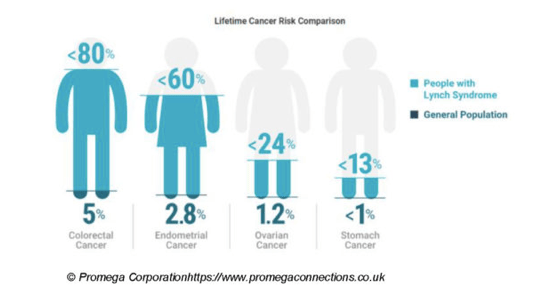
People with Lynch Syndrome are at a higher risk than the general population of developing some cancers. Identifying people who have Lynch Syndrome can have important benefits, including prevention of cancer, spotting it early and helping doctors decide on the best treatment for people who do develop cancer.

This booklet aims to help you understand more about the syndrome, what your options are

Lynch Syndrome: A Single Hereditary Cancer Syndrome or Multiple Syndromes Defined by Different Mismatch Repair Genes?

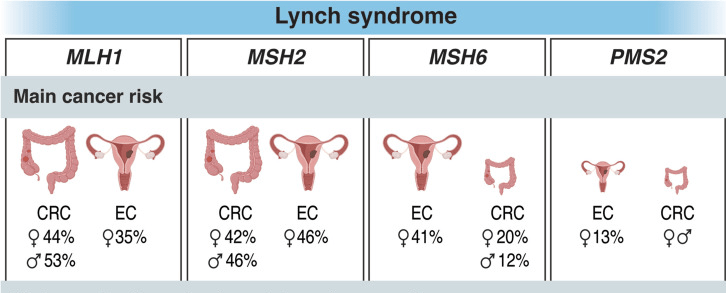
The risks of cancer (cumulative risks for various cancer types) differ among Lynch syndrome patients based on the specific altered MMR gene.

It may be appropriate to consider categorising Lynch syndrome as 4 distinct syndromes based on the specific altered MMR gene.

The varying carcinogenic mechanisms and associated cancer risks indicate the need for gene-specific surveillance recommendations in Lynch syndrome.

Moreover, the growing understanding of gene-specific differences will likely affect treatment options and efficacy of Lynch syndrome vaccines.

Studies of larger sample series are needed to definitively confirm the differences in mutational features identified across Lynch syndrome tumors and to evaluate the associated clinical consequences.

https://www.gastrojournal.org/article/S0016-5085(23)00696-0/fulltext

Hereditary Cancer Model of Care launched yesterday in Ireland

This provides the blueprint for the necessary development of hereditary cancer services in Ireland.

Lynch syndrome quick guide for Primary Care clinicians

7 things men should know about genetic testing and cancer

While the cause of most cancers is unknown, about one in 10 cancers are caused by changes in genes that can be passed down in families.

The lifetime risk of developing colorectal cancer is up to 52% for people with a gene mutation associated with Lynch syndrome, compared to about 4% for the general population.

These people also tend to get cancer at an earlier-than-average age. It’s estimated that less than 10% are aware of their status.

#MensHealthWeek

NCCN: Genetic/Familial High-Risk Assessment: Colorectal (01.2023)

NCCN⁩ expanding genetic testing to “Any Lynch related cancer” instead of colon and endometrial cancer as one of the testing criteria

Lynch syndrome: from detection to treatment

Lynch syndrome is encountered by many clinicians at some stage in their practice and yet remains under-diagnosed with historically limited success in risk stratification and management.

The PLSD(http://plsd.eu) international database continues to expand our knowledge of LS-associated cancer risk. However, we have yet to obtain international consensus on the optimal surveillance strategies, which will be essential among a population of patients who are living beyond their index cancer.

The advent of NGS(next generation sequencing) into clinical practice will undoubtably improve detection rates and allow for more effective, precise, and personalised management programmes for patients with LS.

Finally, over the next decade it will be exciting to see improvements in the preventative strategies that can be offered to patients in the form of aspirin, or even anti-cancer vaccines, as we continue to attempt to disrupt the natural history of this prevalent cancer predisposition syndrome.

Performance of the Fecal Immunochemical Test(FIT) in Detecting Advanced Colorectal Neoplasms and Colorectal Cancers in People Aged 40–49 Years: 

Recently, the cases of colorectal cancers has been rising in younger age (<50) individuals. Although current guidelines recommend colorectal cancer screening should be initiated at age 45 instead of 50, the optimal approach of colorectal cancer screening is not clear.

This article investigates the efficacy of fecal immunochemical test (FIT), which detects occult blood in stool, in predicting advanced colorectal polyps and tumors among people aged 40–49.

The findings suggest FIT is useful to identify such people with high risk to have advanced colorectal lesions. Hence, FIT may be considered as the first-line screening tool for these people, and further comparative study between FIT and colonoscopy will be of great value.

The detection rate of ACRN(advanced) and CRC based on FITs in individuals aged 40–49 years is acceptable, and the yield of ACRN might be similar between individuals aged 45–49 and 50–59 years. Further comparative and cost-effective analysis of colonoscopies is mandatory to guide its use in EOCRC screening.

https://www.mdpi.com/2321922

How to detect colon cancer without a colonoscopy

A colonoscopy is the gold standard test in the United States for colon cancer screening, but there are other tests available. Some of these include:

  • Fecal immunochemical test (FIT):
  • Stool FIT/DNA test:
  • Virtual colonoscopy:

Watch out for these colon cancer symptoms

If you experience blood in your stool, abdominal pain or a change in bowel habits, see your doctor right away. These could be the first symptoms of colon cancer.

“The most common symptom of colon cancer is no symptom at all, until late-stage colon cancer,”

https://www.mdanderson.org/cancerwise/how-to-detect-colon-cancer-without-a-colonoscopy.h00-159617856.html