How I Deal With My Lynch Syndrome Diagnosis

“Being proactive with my daily health has been important throughout my Lynch journey. Taking control of my health by exercising, maintaining my weight and eating well is essential and helps me feel like I can control some aspects of my life. “

“Living with Lynch syndrome can be challenging, but prioritising self-care, seeking professional support, connecting with others, and practicing mindfulness and stress reduction techniques have helped me manage the emotional impact of this condition.”

https://www.curetoday.com/view/how-i-deal-with-my-lynch-syndrome-diagnosis

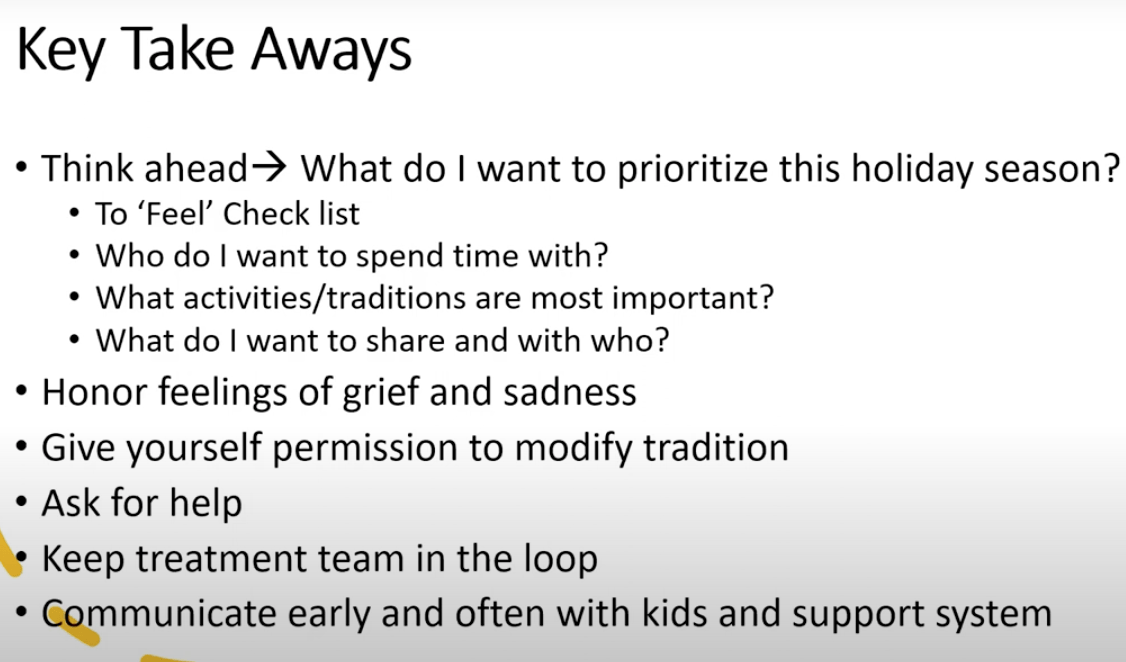
Coping Through the Holidays and Cancer: Presented by the Young-Onset Colorectal Cancer Center(Dana Faber)

Guidance on faecal immunochemical testing (FIT) to help diagnose colorectal cancer among symptomatic patients in primary care

A new guideline around faecal immunochemical testing (FIT) in patients with signs or symptoms of suspected colorectal cancer (CRC). NHS England has subsequently written to all GP practices in England recommending they implement this guideline ‘in full’.

Symptoms alone have a poor sensitivity for CRC, meaning a high volume of secondary care investigations are required to detect cases if symptom-based criteria alone guide referrals. Endoscopy services in the UK have been struggling to keep up with referral demands, and waiting times for a colonoscopy lengthened during the COVID-19 pandemic. It is in this context that the role of FIT has been recently evaluated, to determine whether it can safely triage referrals and better identify high-risk patients than symptoms and non-specific blood tests alone.

CONCLUSION

FIT offers a non-invasive, community-based opportunity to help improve triage of the large number of patients seen in primary care with lower GI symptoms. Patients with a negative FIT, particularly in the context of a normal examination and other investigations, are low risk and may be managed in primary care if symptoms resolve. However, CRC pathways must permit the referral of people with a negative FIT and persistent and concerning symptoms or rectal bleeding for urgent assessment.

https://bjgp.org/content/73/731/283

Diagnosis and management of Lynch syndrome

https://fg.bmj.com/content/13/e1/e80

A personalised approach to lifelong gene-specific management for people with LS provides many opportunities for cancer prevention and treatment.

What surveillance should these patients undergo?

  • Colonoscopic surveillance should be performed every 2 years starting at age 25 years for MLH1, or MSH2 pathogenic variant carriers, or age 35 years for MSH6, or PMS2 pathogenic variant carriers.
  • Endoscopic lesions can be difficult to recognise due to a high frequency of flat non-polypoid morphology, and high-quality colonoscopy is essential.
  • Gynaecological surveillance has no proven benefit.
  • Aspirin reduces long-term colorectal cancer (CRC) risk by approximately 50%. Recommended doses include 150 mg ODonce daily or 300 mg ODonce daily for patients with BMIbody mass index >30.

What surgical treatments are recommended?

  • Women should be counselled on prophylactic hysterectomy and bilateral salpingo-oopherectomy from age 40 years (MLH1, MSH2 and MSH6 variant carriers).
  • There is a gene-specific approach to surgical management of CRC which takes in to account other patient factors.

What systemic oncological treatments are recommended?

  • Chemoprophylaxis with daily aspirin for at least 2 years is recommended in patients <70 years old diagnosed with LS to reduce long-term CRC risk.
  • Personalised systemic anticancer therapy is feasible for locally advanced or metastatic disease associated with LS, and may respond very well to relatively novel checkpoint inhibition immunotherapy.

Understanding Lynch Syndrome and Associated Cancer Risk: Epidemiology

Lynch syndrome is the most commonly inherited colon cancer syndrome, and it accounts for approximately 3% of all newly diagnosed cases of colorectal cancer.

The genetics of both the tumor and the germline have an important role in the development and diagnosis of Lynch syndrome. 

Mortality by age, gene and gender in carriers of pathogenic mismatch repair gene variants receiving surveillance for early cancer diagnosis and treatment:

A report from the prospective Lynch syndrome database: The PLSD(www.PLSD.eu) is a prospective observational study without a control group that was designed in 2012 and updated up to October 2022. Data for 8500 carriers of path_MMR variants from 25 countries were included, providing 71,713 years of follow up.

Interpretation

The current study found low CRC mortality in path_MMR carriers who receive colonoscopy surveillance while some extracolonic cancers were associated with high mortality. Further improvement of survival in LS may require a focus on the prevention and treatment of non-colorectal cancers, likely including approaches based upon the immune response to MSI pre-cancerous lesions and cancers.

https://www.thelancet.com/journals/eclinm/article/PIIS2589-5370(23)00086-X/fulltext#secsectitle0095

Know Your Biomarker

The Know Your Biomarker Advocacy Toolkit was created to help you join the global effort to ensure all colorectal cancer patients have access to biomarker testing.

Biomarkers and biomarker testing are a fundamental part of precision medicine for colorectal cancer. Biomarkers provide vital information used to determine prognosis and risk of recurrence, guide treatment decisions, evaluate treatment response, and monitor for recurrence after treatment. Biomarker testing can help assess the need for adjuvant chemotherapy after surgery.

We have information about

• what a biomarker is
• how biomarkers are used in colorectal cancer care
• who should have biomarker testing

• specific colorectal cancer biomarkers  • the impact each biomarker can have on treatment

What Are the Early Signs of Colorectal Cancer in Young Adults?

The study, which was published in the Journal of the National Cancer Institute, found that there are four symptoms that can be early warning signs for colorectal cancer:

  • Abdominal pain
  • Rectal bleeding
  • Ongoing diarrhea
  • Iron deficiency anemia

According to the study, these symptoms appeared at least two years before a colorectal cancer diagnosis.

https://www.verywellhealth.com/4-early-symptoms-of-colon-cancer-7496596?utm_source=twitter&utm_medium=social&utm_campaign=shareurlbuttons via @verywell

Is There a Lynch Syndrome Vaccine on the Way?

Lynch Syndrome, a genetic condition affecting around 1 million Americans annually, increases a person’s risk of developing colorectal cancer (CRC) to 20% – 80%.

As a result, Lynch Syndrome patients must complete yearly preventive screenings. However, developing a Lynch Syndrome vaccine could change the narrative for patients, reducing screenings and – more importantly – lowering risks for Lynch Syndrome-related cancers. 

“The advances in vaccine technologies, such as Lynch Syndrome, is a promising field of research that has the potential to reduce the risk of developing cancer, thereby preventing disease and modifying surveillance regimens for high-risk patients,” said David Fenstermacher, Senior Director of Research & Medical Affairs at the Colorectal Cancer Alliance.

https://www.ccalliance.org/blog/research/is-there-lynch-syndrome-vaccine

Lynch Syndrome

Key Points

  •  Lynch syndrome is a rare, inherited condition that increases your risk of developing bowel cancer and sometimes other cancers. 
  • Lynch Syndrome accounts for about 3% of all bowel cancer.  
  • Regular bowel screening by colonoscopy can prevent bowel cancers developing.  
  • Bowel Screening usually starts from the age of 25 years and is performed on a yearly basis.  
  • People with Lynch Syndrome are also at increased risk of developing certain other cancers such as uterine (womb), urinary tract, ovary and small bowel.  
  • Women should consider screening of the uterus and ovaries from the age of 30-35 years.  
  • Genetic testing is available for families with this syndrome.  
  • When you have Lynch Syndrome, each of your children have a 1 in 2 (50%) chance of inheriting it.  

https://www.nzfgcs.co.nz/Syndromes/Lynch-Syndrome