Prospective Lynch Syndrome Database

Aims of PLSD

Based on the observation that removal of adenomas with colonoscopy did not reduce CRC incidence as assumed, in 2012 the European Hereditary Tumor Group (EHTG), at that time denoted the Mallorca Group, decided to compile information on follow-up of path_MMR carriers across multiple specialist centres to answer three questions:

  • To what degree does colonoscopy surveillance reduce CRC incidence in path_MMR carriers?
  • What is the penetrance and expressivity of pathogenic variants in each of the four Lynch syndrome-associated genes?
  • What is the survival of carriers when followed-up as recommended, to facilitate early diagnosis and treatment?

path_MMR carriers: Inherited predisposition to colorectal, gynaecological, urinary tract, upper gastrointestinal and other cancers may be caused by pathogenic variants of mismatch repair (path_MMR) genes and commonly referred to as Lynch syndrome.

http://www.plsd.eu

A booklet with information on the different types of surgery you may have to treat bowel cancer.

This guide (by Bowel Cancer UK) describes the different types of surgery for cancer in the colon and rectum, and explains open, keyhole and robotic-assisted surgery.

It covers how to prepare for your operation and what you can expect after your operation, including having a stoma fitted. It also provide tips to help you recover at home.

https://www.bowelcanceruk.org.uk/about-bowel-cancer/our-publications/your-operation/

Lynch syndrome is the most common cause of inherited colorectal cancer

How Is Lynch Syndrome Diagnosed?

Lynch syndrome is diagnosed by genetic testing of a blood sample and often involves testing for multiple gene variants.

Prior to genetic testing for Lynch syndrome, individuals should be counseled about screening benefits (early initiation of cancer screening if Lynch syndrome is diagnosed or reassurance if Lynch syndrome is ruled out) and risks (potential difficulty with insurability and psychological consequences of being diagnosed with a genetic disease).

How Is Lynch Syndrome Diagnosed?

Lynch Syndrome

Lynch syndrome is an autosomal dominant hereditary cancer syndrome, associated with a 40%–80% lifetime risk of developing colorectal, endometrial and other cancers.

Lynch syndrome may be suspected from a family history of bowel cancer and other Lynch syndrome-related cancers, triggering genomic testing in the family.

Lynch syndrome is an autosomal dominant condition, so that each child (son or daughter) and each sibling (brother or sister) of an affected individual has a 50% (1-in-2) chance of inheriting the condition.

It is important to remember that chance has no memory, and the 1-in-2, or 50%, chance of inheriting the altered gene for the condition applies to each child, irrespective of whether or not the parents have already had children with, or without, the condition.

https://www.genomicseducation.hee.nhs.uk/genotes/

“Prevention is better than cure – vaccination for Lynch syndrome”

LS UK Conference 2024 – Dr David Church

Lynch Syndrome Conference 2024

Check out the presentations on YouTube.

Up to date information on Lynch Syndrome

The Beginning

Why am I back? Well, I got cancer. 

If you are like me or close to someone like me, I wish to lighten your load with this blog and maybe give you a laugh every now and then.

https://peakd.com/hive-187189/@clodaghdowning/the-new-me

Adventures in Annual Endoscopies

Today was the day of my annual endoscopies – a flexible sigmoidoscopy, a gastroscopy, and a capsule endoscopy placed via gastroscopy.

Every little win is a win. There’s no point just bouncing onto the next worry, especially if it might never come.

Find joy now, in getting at least one out of three clear tests, and freedom to eat an ice cream sandwich.

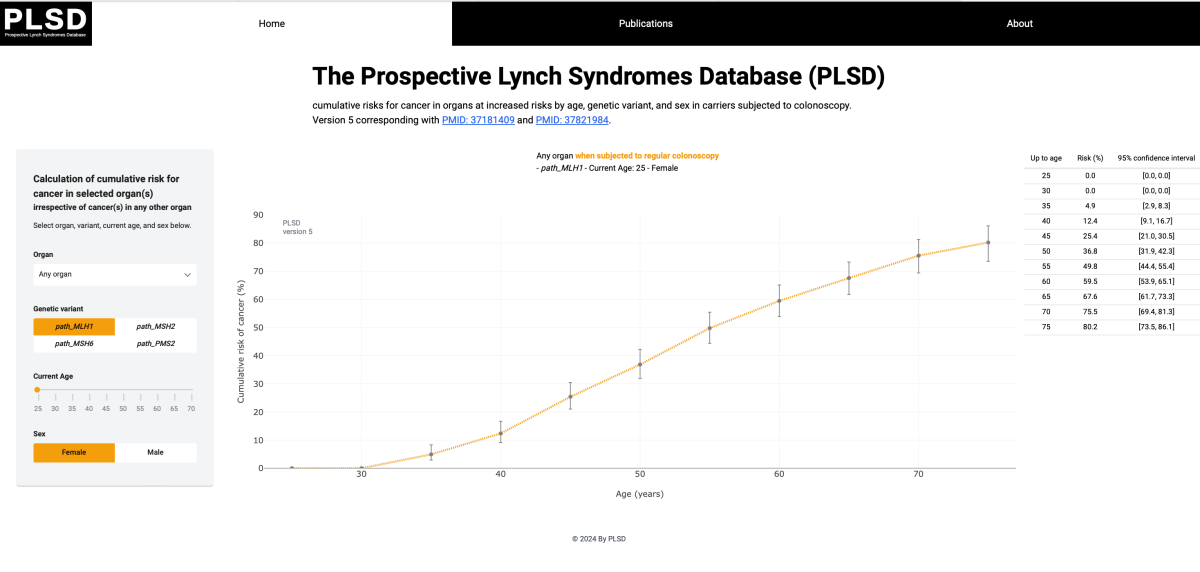
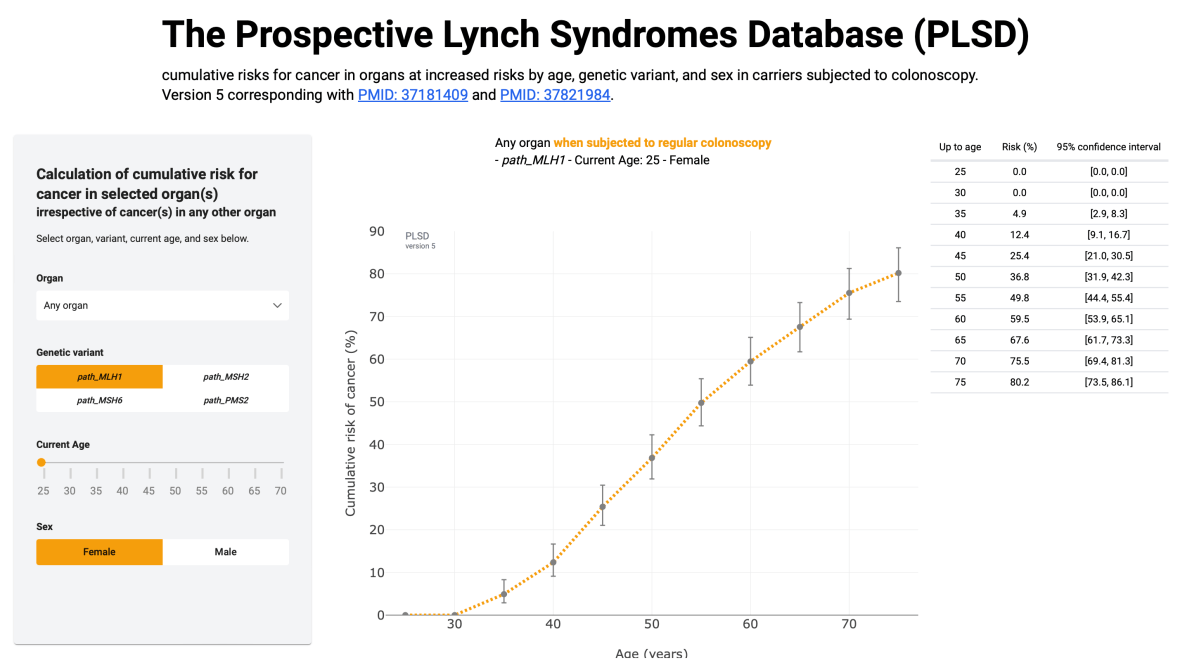
The Prospective Lynch Syndromes Database (PLSD)

cumulative risks for cancer in organs at increased risks by age, genetic variant, and sex in carriers subjected to colonoscopy.

Version 5 corresponding with PMID: 37181409 and PMID: 37821984.

Aims of PLSD

Based on the observation that removal of adenomas with colonoscopy did not reduce CRC incidence as assumed, in 2012 the European Hereditary Tumor Group (EHTG), at that time denoted the Mallorca Group, decided to compile information on follow-up of path_MMR carriers across multiple specialist centres to answer three questions:

  • To what degree does colonoscopy surveillance reduce CRC incidence in path_MMR carriers?
  • What is the penetrance and expressivity of pathogenic variants in each of the four Lynch syndrome-associated genes?
  • What is the survival of carriers when followed-up as recommended, to facilitate early diagnosis and treatment?

http://www.plsd.eu

New bowel cancer screening launches for Lynch syndrome patients in England

new NHS testing programme for bowel cancer has been launched for people with Lynch Syndrome, following an initiative to increase genomic testing for the condition.

 Around 10,000 people with Lynch syndrome will start receiving invitations to take part this year.

Dr Kevin Monahan, who led the NHS England Lynch syndrome transformation project, said: “Incorporating people with Lynch syndrome into the national colonoscopy screening programme is game-changing and will save many lives each year.

It will deliver prevention and early diagnosis of bowel cancer through timely and high-quality colonoscopy. Now diagnosis of this hereditary condition in England will be linked to lifelong patient-focused care.