Knowing your family history

Knowing your family history of cancer is a critical aspect of cancer prevention and early detection.

Many types of cancer, including Lynch syndrome-related cancers, have a hereditary component. This means that individuals with a family history of cancer may be at increased risk for developing the same or related types of cancer.

The more you know about your family’s cancer history, the better equipped you will be to make informed decisions about your own health and to take proactive steps to reduce your risk of cancer.

https://www.aliveandkickn.org/knowing-your-family-history

Womb Cancer: Risk Factors and Prevention

Lynch syndrome may affect up to 175,000 people in the UK and is linked to 3% of cases of womb cancer. To develop Lynch syndrome, you need to have one parent that carries the gene. Someone diagnosed with Lynch syndrome has up to 60% chance of developing womb cancer in their lifetime. Lynch syndrome is also associated with an increased risk of bowel cancer. Those diagnosed with Lynch syndrome undergo regular tests to check for bowel cancer and womb cancer, many will be offered a hysterectomy (operation to remove the womb) to prevent womb cancer once they feel their family is complete.

Lynch syndrome is often diagnosed when a strong family history of bowel or womb cancer is noted. If you feel this may apply to you, please speak to your doctor about being referred to a genetics service. More information on Lynch syndrome can be found here.

https://peachestrust.org/womb-cancer/risk-factors-prevention/

Inaugural Cancer Genetic Counselling Conference: Connecting Research and Practice

Date and time: Thu, 14 Nov 2024 09:00 – 16:00 GMT
Location: Guinness Enterprise CentreTaylor’s Lane Level 4, Conference room 1-2 Dublin 8

Join us for a day filled with insightful discussions, networking opportunities, and the latest advancements in cancer genetic counselling.

Don’t miss this chance to connect with experts in the field and learn about cutting-edge research that can enhance your practice.

Secure your in person or online attendance now!

https://www.eventbrite.ie/e/inaugural-cancer-genetic-counselling-conference-connecting-research-and-practice-tickets-959444734027?aff=oddtdtcreator

2024 IGCS-IGCAN Gynecologic Cancer Survivor-Caregiver Summit – Dublin

Initiatives Promoting Equity, Diversity, and Inclusion in Patient Outreach Projects (IGCS Grant Recipients)

  • HER REASON FOR BEING: A Multifaceted Community-Based Project to Advance Cervical Cancer Prevention and Awareness
  • Nan men gran m’et la: Pilot Palliative Care Intervention for Vulnerable Women with Advanced Cervical Cancer in Haiti
  • Acceptability of Self-Sampling for Cervical Screening in the LGBTQIA+ Population – The Alternative Cervical Screening (ACES) LGBTQIA+ 2 Study

Empowered by Experience: Insights on Cancer Survivorship

  • The Public Narrative: Using your Lived Experiences to Call for Action
  • Key Findings from the IGCAN Survivorship + Caregiver Survey
  • Voices of Resilience: Survivorship Panel Discussion

Agents of Change: Patient Advocacy Organizations in Action

  • Every Woman Study™ LMIC Edition: World Ovarian Cancer Coalition
  • Ovarian Cancer Australia

A Clinical Perspective: Genetics & Clinical Trial Updates

  • Genetics in Gynecologic Cancer: Enhancing Understanding and Treatment
  • Recent Discoveries in Gynecologic Cancer Clinical Trials

What is DNA Methylation?

Researchers have linked abnormal DNA methylation to several adverse outcomes, including human diseases.

So far, much of this research has been focused on cancer and tumour suppressor genes, since hypermethylation often results in the silencing of tumour suppressor genes in cancerous cells.

Compared to normal cells, the genomes in cancer cells have also been shown to be hypomethylated over all, with hypermethylation only occurring in the genes involved in tumour cell invasion, cell cycle control, DNA repair and other processes where silencing would lead to the spread of cancer.

In colon cancer, it is possible to detect hypermethylation early on in the course of disease, meaning hypermethylation may serve as a biomarker for the condition.

https://www.news-medical.net/life-sciences/What-is-DNA-Methylation.aspx

Talking to Loved Ones About Increased Cancer Risk

After learning you inherited a higher risk of cancer, you may want to share your news and feelings with friends and family. Ask your loved ones to listen and support you. Let them know this information gives you the opportunity to take proactive control over your health.

https://www.everydayhealth.com/breast-cancer/how-to-talk-to-family-and-friends-about-hereditary-breast-cancer-risk/

Genetic Testing for Hereditary Cancer

Am I required to have genetic testing if I see a genetic counsellor?

No. Genetic counselling involves a detailed evaluation of your family history and family medical records as well as education about hereditary cancer.

Following the initial consultation, some people decide to pursue genetic testing to learn more about the level of cancer risk in their family. Others learn that their family history is not suggestive of an inherited predisposition, or they choose to not pursue genetic testing at this time. These families can still benefit from receiving education about cancer risk, as well as personalized cancer screening and prevention guidelines.

Why is genetic counselling an important part of genetic testing?

There are many different genetic tests, so the counsellor will help each person choose the test that is most appropriate based on their family history and type of information they are looking for. Also, genetic tests that are currently available cannot explain the strong history of cancer in many families. It is important to document the family history in detail so we can provide recommendations for early detection or prevention of cancer, even when genetic testing is not informative. Genetic counselling also addresses important aspects of testing, such as the implications and options for the patient and the impact on family members.

What can I do if I learn I have an increased chance of getting cancer?

There are a variety of options available to people who have an increased chance of cancer based on their family history or genetic testing results. These include increased screening or monitoring, chemoprevention – including medications that reduce the chance of cancer – and risk-reducing surgery. For people who have cancer, the results of genetic testing can sometimes affect the treatment plan.

I’ve already had cancer. What can I learn from genetic counselling?

People who have already had cancer may learn about steps they can take to detect or reduce the chance of other cancers. For example, Lynch syndrome can be associated with an increased chance of Endometrial/Colon cancer.

Genetic counselling will also provide information about whether other family members have an increased chance of developing cancer. There are steps they can take to detect cancer early or prevent it from occurring.

What about insurance discrimination and confidentiality?

The Disability Act 2005 prevent insurers from using genetic testing results to discriminate against individuals.

Part 4 of the Disability Act provides safeguards for the use of information obtained from genetic testing. The provisions aim to ensure that people who may be affected by genetic disorders will not be subject to any unreasonable requirements from an employer or an insurance or mortgage provider. The protections provided are in addition to substantial safeguards for the use of personal information contained in the Data Protection Acts.

The safeguards provide that:

  • genetic testing may only take place with a person’s consent, in accordance with the Data Protection Acts
  • the results of a genetic test can’t be used in relation to insurance, a mortgage, a personal pension or employment
  • the person being tested must be made aware of the intended use of the test results and must, as far as possible, be informed about the possible outcomes of the test
  • the use of a person’s family history for insurance purposes may be regulated by the Minister after consultation with other relevant Ministers, the Data Protection Commissioner and other interested bodies or groups

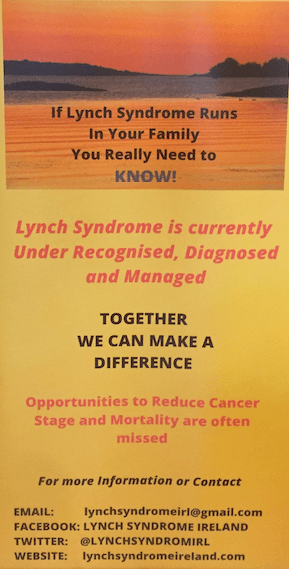
Lynch syndrome is the most common cause of inherited colorectal cancer

How Is Lynch Syndrome Diagnosed?

Lynch syndrome is diagnosed by genetic testing of a blood sample and often involves testing for multiple gene variants.

Prior to genetic testing for Lynch syndrome, individuals should be counseled about screening benefits (early initiation of cancer screening if Lynch syndrome is diagnosed or reassurance if Lynch syndrome is ruled out) and risks (potential difficulty with insurability and psychological consequences of being diagnosed with a genetic disease).

How Is Lynch Syndrome Diagnosed?

Lynch Syndrome

Lynch syndrome is an autosomal dominant hereditary cancer syndrome, associated with a 40%–80% lifetime risk of developing colorectal, endometrial and other cancers.

Lynch syndrome may be suspected from a family history of bowel cancer and other Lynch syndrome-related cancers, triggering genomic testing in the family.

Lynch syndrome is an autosomal dominant condition, so that each child (son or daughter) and each sibling (brother or sister) of an affected individual has a 50% (1-in-2) chance of inheriting the condition.

It is important to remember that chance has no memory, and the 1-in-2, or 50%, chance of inheriting the altered gene for the condition applies to each child, irrespective of whether or not the parents have already had children with, or without, the condition.

https://www.genomicseducation.hee.nhs.uk/genotes/

Lynch Syndrome: Diagnosis & Treatment

https://www.mayoclinic.org/diseases-conditions/lynch-syndrome/diagnosis-treatment/drc-20374719

Your GP may want you to consider genetic testing for Lynch syndrome if your family history has one or more of the following:

  • Multiple relatives with any Lynch-associated cancers, including colon cancer and endometrial cancer. Other cancers caused by Lynch syndrome include those that happen in the stomach, ovaries, pancreas, kidneys, bladder, ureters, brain, gallbladder, bile ducts, small intestine and skin.
  • One or more family members who had cancer before age 50.
  • One or more family members who have had more than one type of cancer.
  • More than one generation of family with the same type of cancer.