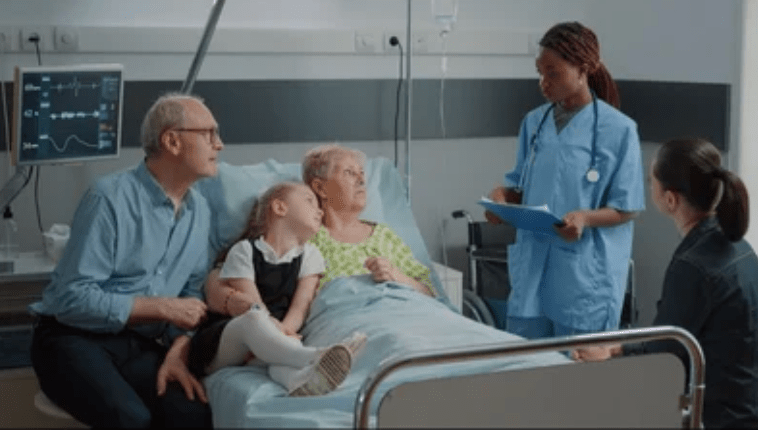
When patients worry about being judged

Just because people see me out in public, they shouldn’t assume that I’m back to normal or ‘feeling great.

She sure doesn’t look sick.  She’s a complainer.  She’s STILL off work?! 

“Some clinicians express frustration with patients who have invisible illnesses – blaming them, resenting symptoms without the privilege of certain expression, accusing them of exaggerating or being ‘difficult’, pathologising them as malingering or psychosomatic, or labeling them in ways that are dismissive of their deep knowledge and understanding of their own bodies and lived experiences.”

It’s not only spoken words that can make us feel  judged. In a study published in the Journal of General Internal Medicine,  for example, Dr. Leonor Fernández – an assistant professor of medicine at Harvard – reported that one in 10 patients she studied “felt judged and/or offended”  by comments written about them in their patient portal chart notes2  – especially among patients reporting poor health, unemployment or inability to work.
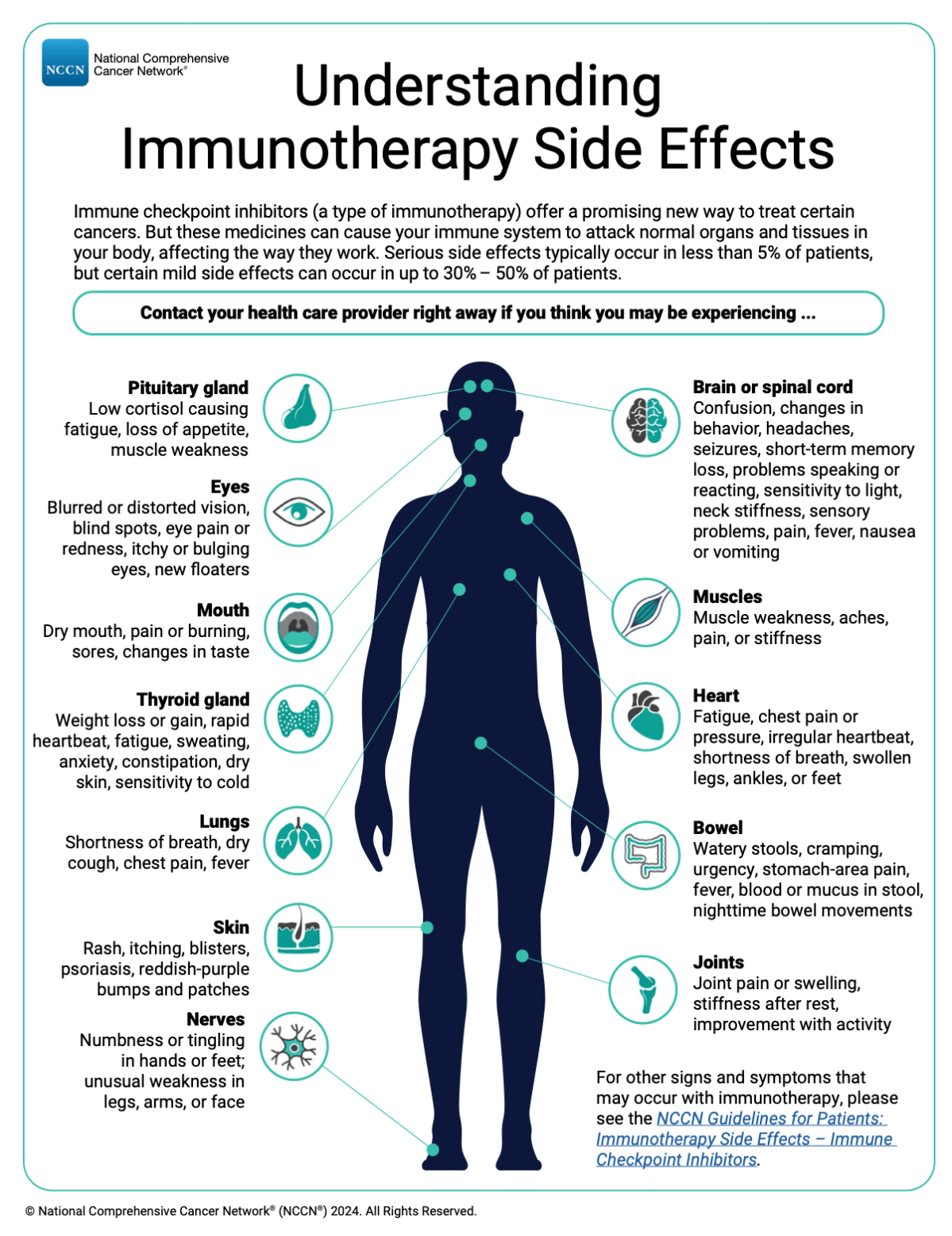
Understanding Immunotherapy Side Effects

Immune checkpoint inhibitors (a type of immunotherapy) offer a promising new way to treat cancer for some patients. But these medicines can cause your immune system to attack normal organs and tissues in your body, affecting the way they work.

Preventing Lynch Syndrome Cancers: Study Suggests Immunotherapy Could Work….https://www.mskcc.org/news/preventing-lynch-syndrome-cancers-new-study-suggests-immunotherapy-could-work

No matter where your cancer began, side effects from immunotherapy can affect your whole body.

https://www.nccn.org/docs/default-source/patient-resources/immunotherapy_infographic.pdf?sfvrsn=f92249ca_36

Source credibility: a necessary North Star in cancer care

For millions of healthcare providers it is their “go to” source for treatment planning for patients.

For patients and their families it is an essential repository for access to information, access to charitable support services, access to clinical research options and access to patient communities who have invaluable, shared, lived experiences.

Ensuring that the internet remains a trusted resource for ALL is in everyone’s interest, including those who profit from it.

https://www.nature.com/articles/s44276-024-00075-5

Gain a Certificate in Cancer Genetics and Genomics

This 11-month programme contains a mixture of asynchronous and synchronous material and is delivered virtually so can be completed anywhere in the world for those who wish to advance their academic and professional knowledge and skills in the area of Cancer Genetics and Genomics.

The programme is interdisciplinary and welcomes those with a minimum requirement of a degree in a relevant healthcare or biomedical subject. A strong background in basic science is encouraged, and eligible learners should be working at a senior level in a research role or healthcare discipline involving the care of patients with cancer.

This programme will lead to Certificate in Cancer Genetics and Genomics for all other learners.

For Ireland based learners, their qualification is accredited at QQI Level 9 on the National Framework of Qualification (PG25033). 

I Got You This! (What to get your friend who has cancer)

” Honestly, I now tell anyone coming to see me not to bring gifts, I just want to see you and have a laugh or two.

I discovered and concur also that the best gift someone can give is their attention and time. A casual visit or trip out for a cuppa and a chat about the ups and downs of life or gossip helps us feel like we still belong in this world.

All too often we get sidelined as if we had a contagious disease. In fact, in some ways people may see us as a walking disease rather than the person they knew before all this sickness lark happened.

https://peakd.com/health/@clodaghdowning/i-got-you-this-what-to-get-your-friend-who-has-cancer

Palliative care is about so much more than end of life. It should be central to healthcare.

The economic case for investment in palliative care is well established, evidence-based and firmly grounded.

Due to the lack of palliative care resources, the first interaction most people will have with it is when their loved one is reaching the end of life. As a result, it is not surprising that some people believe that it only comes into play when all other treatment options have failed.

Palliative care is so much more than end-of-life. It emphasises improving the quality of life for both patients and their families by focusing on the whole person rather than only their disease.

https://www.irishtimes.com/opinion/2024/08/17/palliative-care-is-about-so-much-more-than-end-of-life-it-should-be-central-to-healthcare/

A booklet with information on the different types of surgery you may have to treat bowel cancer.

This guide (by Bowel Cancer UK) describes the different types of surgery for cancer in the colon and rectum, and explains open, keyhole and robotic-assisted surgery.

It covers how to prepare for your operation and what you can expect after your operation, including having a stoma fitted. It also provide tips to help you recover at home.

https://www.bowelcanceruk.org.uk/about-bowel-cancer/our-publications/your-operation/

ALTERNATIVES OR ADDITIONS

 “If you think about it, cancer loves stress and anxiety because the body becomes inflamed and therefore patients who engage in mental well-being tactics like counselling and exercise live longer, tolerate chemo more and have a better quality of life. However, anything other than that I do not know.”

It can be overwhelming and frankly too much when we get bombarded with leads on cures, from the potentially sound to the ridiculous and they are generally expensive. That’s why I love exercise, it does so much good, and it is potentially free depending on how you go about it. So please build up to that 150 minutes a week if you can. Ask your physiotherapist in your cancer centre if you need to get advice on how to start. It is never too late.

https://peakd.com/health/@clodaghdowning/alternatives-or-additions

What is palliative care?

Palliative care is  specialised medical care focused on quality-of-life issues for patients and their families with serious illness. Palliative care is helpful at any age or stage of illness and is beneficial when started soon after diagnosis.

Why is this topic important?

Palliative care is about helping people with serious illnesses feel better, mentally and physically. While it initially developed from end of life care, research increasingly shows the value of beginning palliative care earlier. By talking with patients about palliative care, doctors can learn about their patients’ preferences and are better able to honor those preferences throughout treatment.

Many patients mistake palliative care for end-of-life care or hospice and may turn down the opportunity to receive palliative care that could help them deal with the side effects of their cancer or treatment.

https://www.facingourrisk.org/XRAY/palliative-care-for-cancer-patients

Did you know…

There are 3 different types of hospitals in Ireland:

  • Public hospitals run by the State through the Health Service Executive.
  • Voluntary public hospitals, are mainly state-funded but are sometimes owned by private bodies. For example, religious orders. … 
  • Private hospitals receive no state funding.

Funding……

https://www.irishexaminer.com/news/munster/arid-41383537.html

Public hospitals that are ultimately managed by

HSE (although the model is again currently in transition to RHAs). Voluntary hospitals that are managed by an independent board outside the control of the HSE, but still funded by taxpayers (https://foi.gov.ie/voluntary-hospitals/). And Private hospitals that operate independent of taxpayer funding. From a cancer perspective, the Dublin public hospitals are Voluntary Hospitals, and the cancer centres outside of Dublin are Public Hospitals run by the HSE.