Lynch Choices

Do you have Lynch Syndrome?

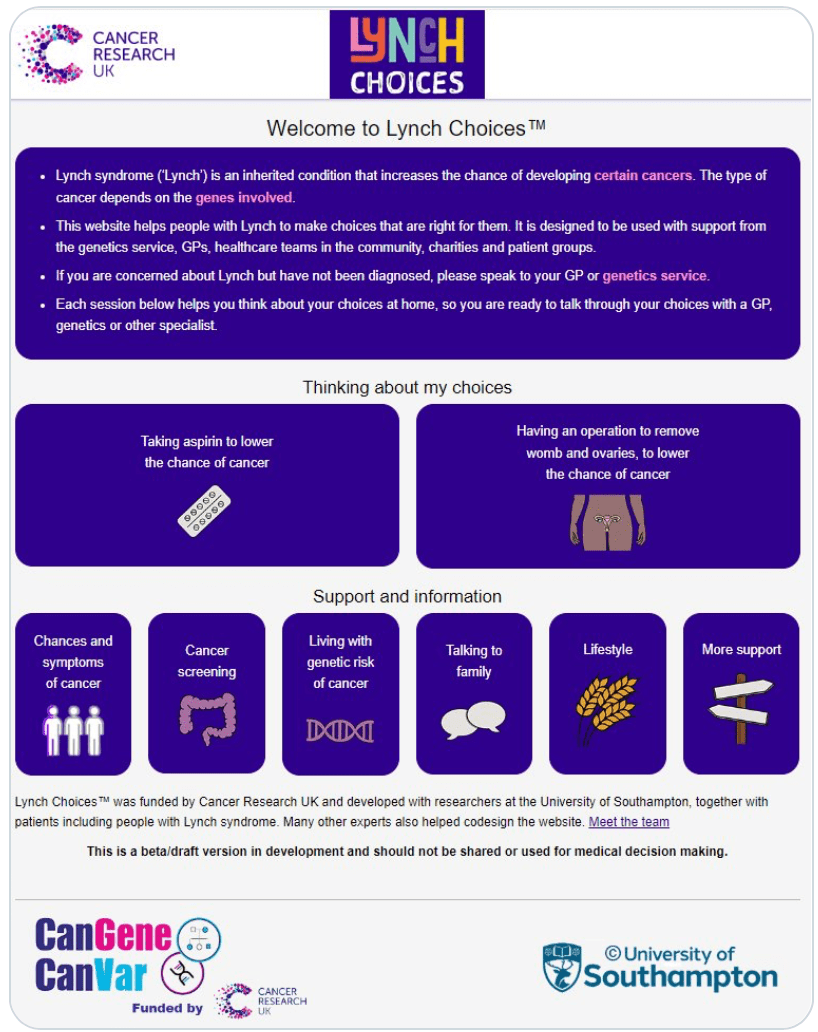
  • Lynch syndrome is an inherited condition that increases the chance of developing certain cancers. The type of cancer depends on the genes involved.
  • This website helps people with Lynch to make choices that are right for them. It is designed to be used with support from the genetics service, GPs, healthcare teams in the community, charities and patient groups.
  • If you are concerned about Lynch but have not been diagnosed, please speak to your GP or genetics service.
  • Each session helps you think about your choices at home, so you are ready to talk through your choices with a GP, genetics or other specialist.

Cancer Research UK has funded codesign of Lynch Choices https://canchoose.org.uk to support decisions.

Please complete a short survey https://southampton.qualtrics.com/jfe/form/SV_1FvPJJEZPVX62aO to tell us what you think. We need people from all backgrounds.

Thank you.
National Cancer Registry Ireland Strategic Plan 2024 -2026

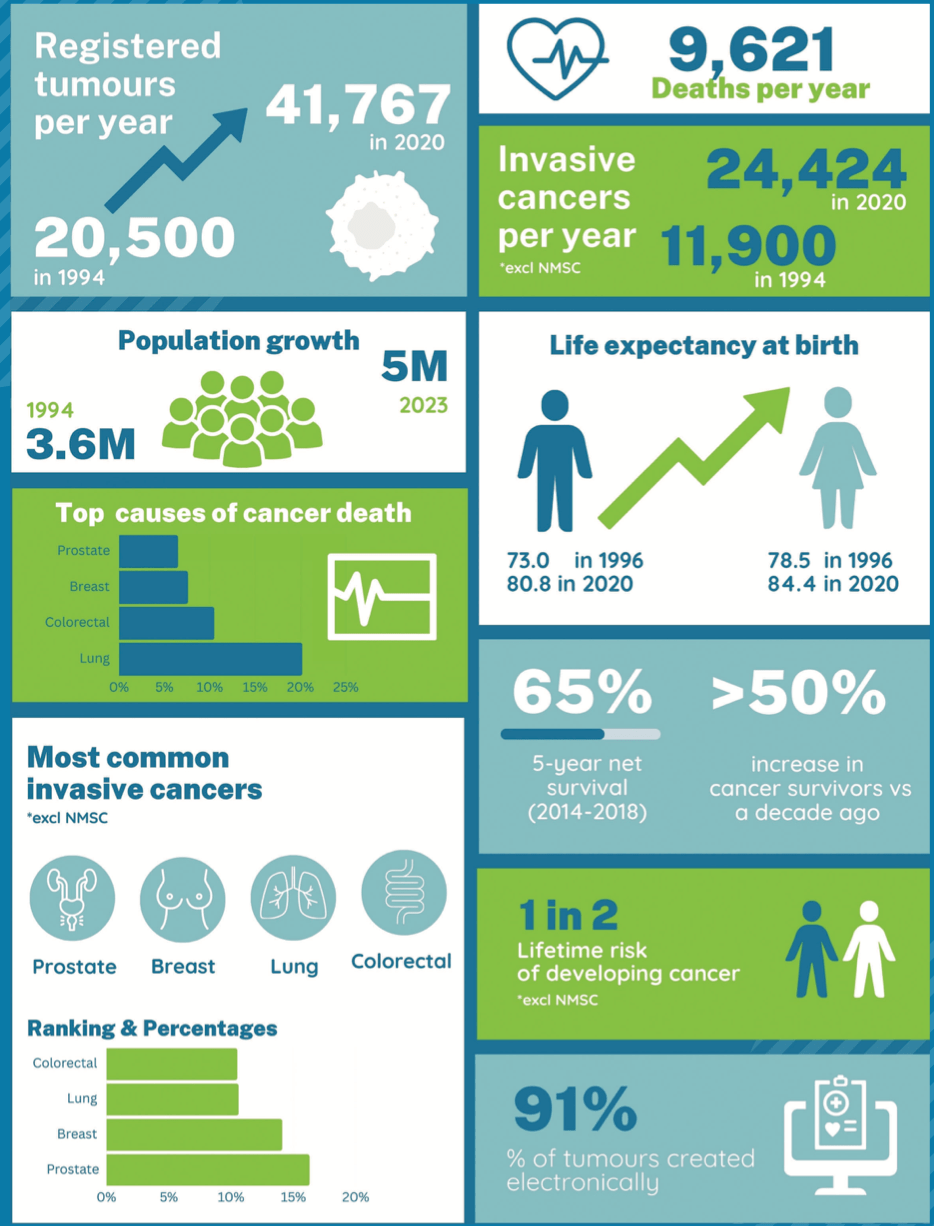
The Registry collects data on cancer incidence, treatment and survival in Ireland. It carries out research to help improve cancer outcomes and reduce the cancer burden.

Dr Kevin Monahan explains the importance of providing Lynch syndrome surveillance through the NHS England Screening Programme

What will this mean for people with Lynch syndrome? 

For bowel cancer, survival is strongly related to stage at diagnosis: 9 in 10 people will survive if diagnosed at the earliest stage, because they’re more likely to be offered curative treatment. However, treatment is less effective and therefore survival is lower as the disease progresses.  

The new national Lynch syndrome colonoscopy programme will be delivered by the national Bowel Cancer Screening Programme. This will have a transformative effect on the care of people with Lynch, improving their experience as well as the prevention and early diagnosis of bowel cancer. It’s estimated 300 lives could be saved every year if diagnosis and optimal care for Lynch syndrome are offered in England.  

The change to the surveillance programme will ensure:  

  • you’re invited for colonoscopic surveillance, on time, every two years 
  • you’re seen by a specialist team and have a high-quality test performed by an expert colonoscopist 
  • a consistent approach across England with equal access for people with Lynch syndrome 

Moving the Lynch surveillance within the national screening programme is the first screening programme of its kind in the world.

https://www.bowelcanceruk.org.uk/news-and-blogs/research-blog/dr-kevin-monahan-explains-the-importance-of-lynch-syndrome-surveillance-in-the-nhs-england-screening-programme

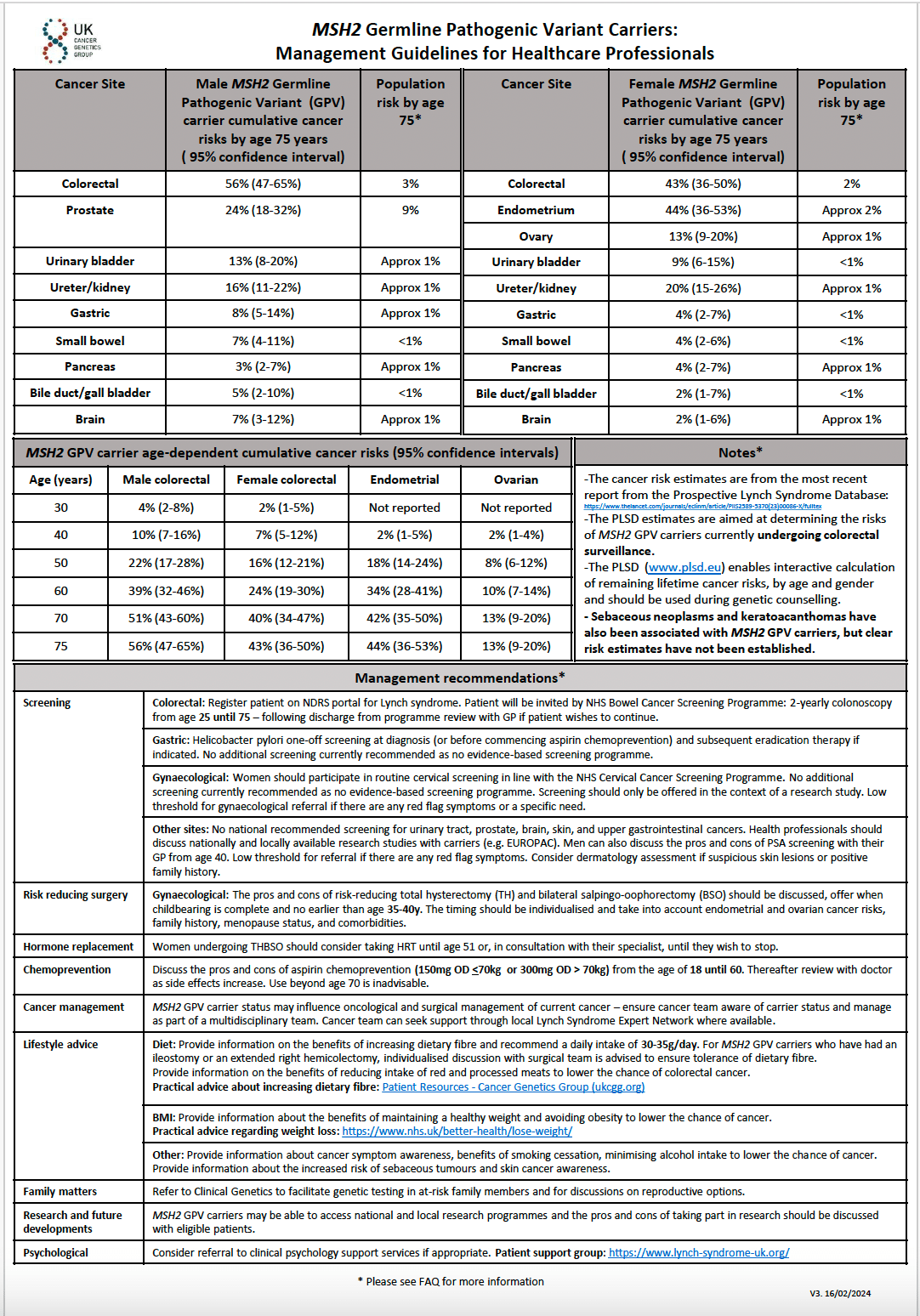
Cancer Genetics Group UK: Management Guidelines for Healthcare Professionals

One-page Gene-Specific Management Guidelines

Please click on the links to access guidelines and leaflets created by UKCGG, CanGene-CanVar working groups and expert colleagues.

Additional guidelines from other expert groups are available. 

Patients with certain heritable cancer predisposition syndromes may benefit from referral to their local Polyposis Rare Disease Collaborative Centre working in the relevant Rare Disease Collaborative Network (RDCN). 

https://www.ukcgg.org/information-education/ukcgg-leaflets-and-guidelines/?fbclid=IwAR1F02Oa-0L7pftf-NcIXkahBLmveazKs0zKlqhHwMpj5ZJSU4o8Q66zqkg

L.S. UK Annual Conference

Excellent up to date information on Lynch syndrome. Tickets sell out fast.

Last year’s conference videos can be found here…..

https://www.youtube.com/@lynchsyndromeuk4652/videos

Talking with Children About Adult-Onset Hereditary Cancer Risk:

Often complicated by the parent’s ongoing adjustment to their mutation status, guilt at potential transmission of the mutation to the child, concern over inciting distress in children, and the varied capacities of children in the home to understand genetic information.

Optimally, communication about inherited cancer risk is an open, ongoing process within the family. 

https://www.researchgate.net/publication/322811101_Talking_with_Children_About_Adult-Onset_Hereditary_Cancer_Risk_A_Developmental_Approach_for_Parents

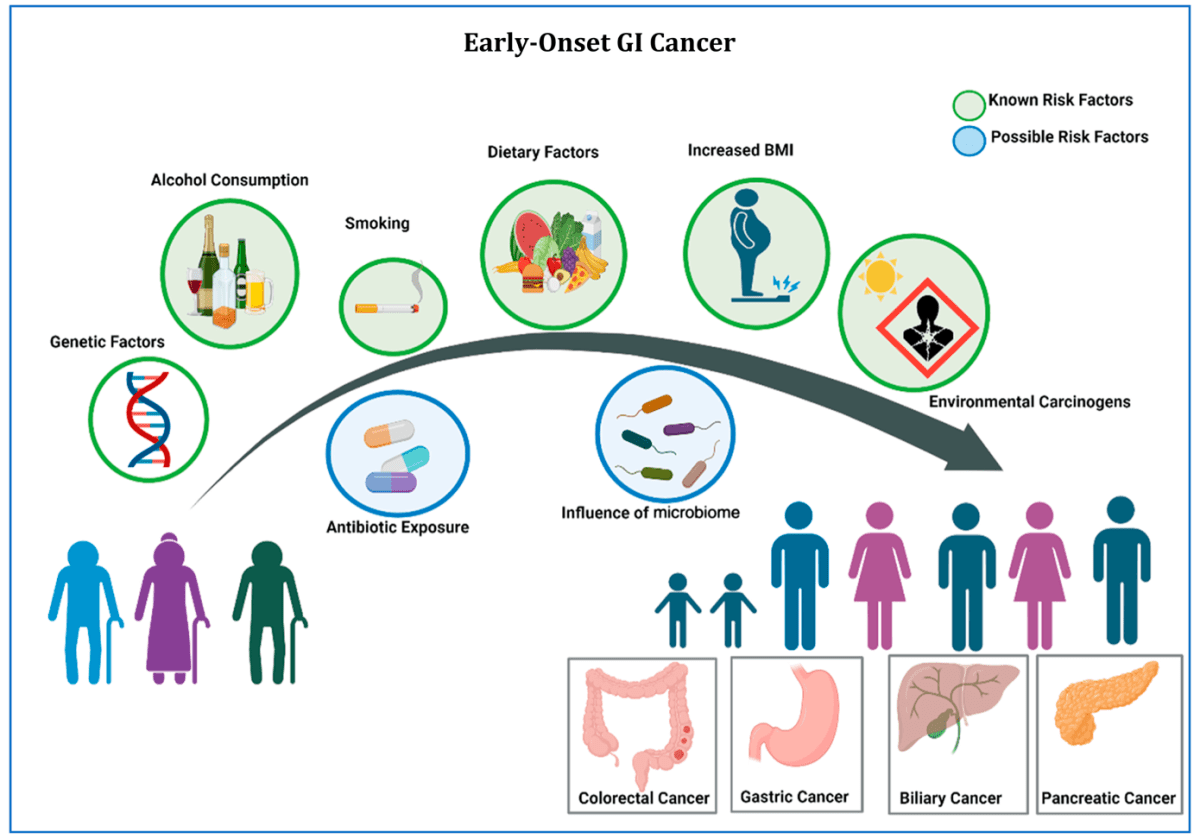
Early-Onset GI Cancers: Rising Trends, Genetic Risks, Novel Strategies, and Special Considerations

Understanding the complex interplay between host factors such as gPVs (Germline Pathogenic Variant), gut microbiome, and extrinsic environmental factors will be critical to mitigate the rising incidence of EO cancer globally, particularly across the spectrum of GI cancers.

Practical Applications

Awareness of the early-onset (EO) cancer epidemic should prompt heightened vigilance among health care providers caring for patients who would not be historically considered at high risk for cancer.

Early detection of symptoms with appropriate diagnostic testing is critical to obtaining a cancer diagnosis in earlier stages which may allow for a greater chance of curative approaches.

Multidisciplinary management of patients with EO cancers is critical to address unique and challenging issues that younger populations must navigate, including family, social, career, and financial stress.

Genetic counselling and testing are critical components to multidisciplinary care and may elucidate mechanisms of EO cancer development.

https://ascopubs.org/doi/full/10.1200/EDBK_398068

An interactive animation about LynchSyndrome

https://leahhz.github.io/animation0621/

https://sites.google.com/sheffield.ac.uk/previvorship/outputs/mlh1

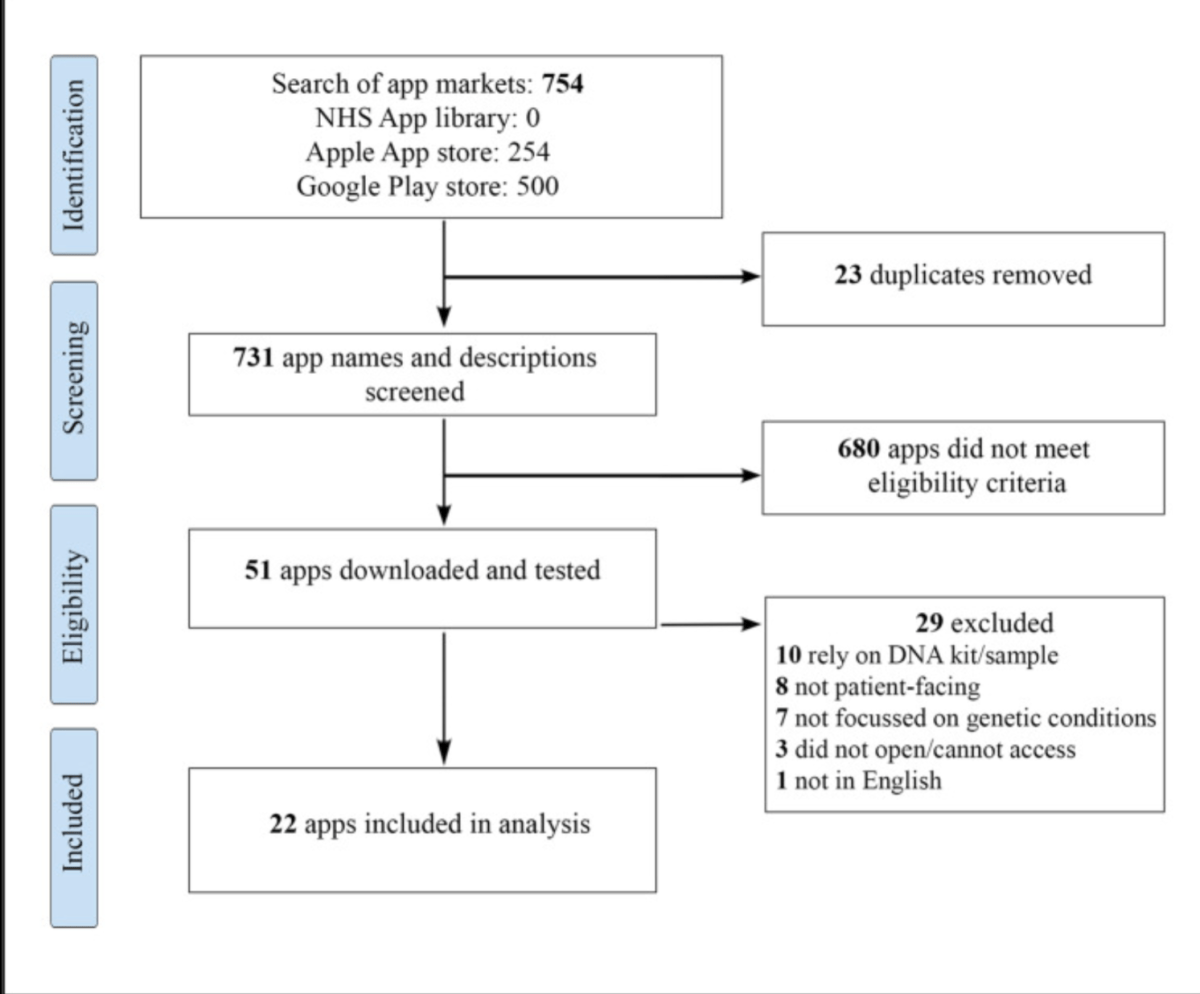
Patient-facing genetic and genomic mobile apps in the UK: a systematic review of content, functionality, and quality(2022)

This systematic review of patient-facing genetic/genomic mobile apps explores content, function, and quality.

Conclusion: It was evident that there are few high-quality genomic/genetic patient-facing apps available in the UK. This demonstrates a need for an accessible, culturally sensitive, evidence-based app to improve genetic literacy within patient populations and specific communities.

Has this changed?

Implementing the EuropeanHealth DataSpace in Ireland

The European Health Data Space (EHDS) seeks to address key challenges
facing healthcare systems in Europe resulting from lack of access to health
data, and is designed to boost Europe’s competitiveness on the global
stage. If passed, individuals will have access to, and control over, their
digital health data from anywhere within the EU.
It will also make large,
anonymised datasets available for research, innovation, and policymaking.

When compared to European countries such as Denmark, that has a
similar-sized population, Ireland has traditionally had less access to
health research funding
. This coupled with a lack of integrated health data
availability
has meant that finding Irish patients to take part in clinical trials
is difficult
.

By harnessing the value of health data, the EHDS has potential
to enable better healthcare for patients, and improve the lives of the family
teams that care for them.
Ireland has a unique set of capabilities that can
contribute to the vision of the EHDS and support the needs of patients,
healthcare professionals, and others working on the frontline of healthcare
at home and across Europe.

Awareness will need to be raised among key stakeholders—the healthcare
system, patients, citizens
—and support provided to help them prepare for
the far-reaching changes ahead. Their engagement will in no small part
determine Ireland’s ability to make the leap from where it is today to full-
scale implementation of the EHDS in 2025.