What is a Biomarker?

A biomarker (also called a biological marker) is a piece of information about your health. Biomarkers include your blood pressure, your blood type, and cholesterol or blood sugar levels measured in a blood test. The biomarkers of cancer are also known as tumor markers. Biomarkers can tell your medical team important information about you and your cancer.

Why are biomarkers important?

Colorectal cancer biomarkers can provide your medical team vital information about you and your cancer that is used to determine prognosis, guide treatment decisions, monitor treatment response, and look for recurrence after treatment. Biomarkers are also used in drug development to create and test targeted therapies for colorectal cancer.

Biomarkers of hereditary colorectal cancer

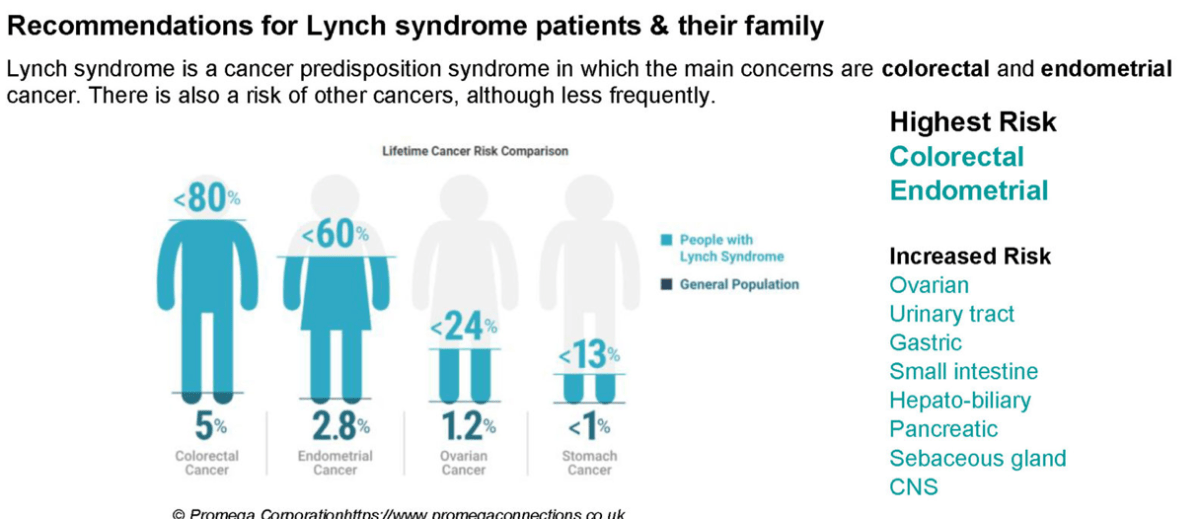
The biomarkers that can confirm hereditary colorectal cancer are the DNA mismatch repair genes causing Lynch Syndrome, and the genes causing Familial Adenomatous Polyposis (FAP) and associated syndromes. Lynch Syndrome is caused by mutations in MLH1, MSH2, MSH3, MSH6, EPCAM, or PMS2 genes, while FAP and other polyposis syndromes are caused by mutations in APC, MYH, BMPR1A, and SMAD4.

Health Innovation Hub Ireland

Health Innovation Hub Ireland (HIHI) was established by the Department of Business, Enterprise and Innovation and the Department of Health and is supported by Enterprise Ireland (EI) and the Health Service Executive (HSE) to drive collaboration between the health service and enterprise.

We offer companies the opportunity for pilot and clinical evaluation studies, and we provide the health service access to innovative products, services, and devices that they may not otherwise be exposed to.

HIHI is built on the recognition that collaboration with enterprise can benefit patient care, patient pathways and outcomes.

Lynch Syndrome online training for primary care clinicians

The training involves watching a short video which covers:

  • A brief overview of Lynch syndrome
  • Their personalised cancer prevention programme
  • An introduction to the Lynch syndrome quick guide and how it can help you identify and manage your patient’s care
  • How to manage their first-degree family members’ care

Resistant Starch

Taking a supplement of 30 grams of “resistant starch” a day – about the amount in two slightly unripe bananas – reduced the risk of multiple forms of cancer in people with a rare genetic condition.

Consuming resistant starch – a dietary fibre found in oatmeal, beans and bananas – reduces the risk of upper gastrointestinal cancers by nearly 50 per cent in people with Lynch syndrome. This is the first time a nutrient has been shown to prevent these cancers in people with the condition.

The nutrient supplement finding is significant because upper gastrointestinal cancers tend to be the deadliest for people with Lynch syndrome, says Matthew Yurgelun at the Dana-Farber Cancer Institute in Boston, Massachusetts, who wasn’t involved in the work.

https://www.newscientist.com/article/2330638-starch-supplement-reduces-the-risk-of-some-hereditary-cancers/?_ptid=%7Bkpdx%7DAAAAweYhyn3zhAoKcmJhNGYxWmNwZRIQbGt0Z2dpOHVzaTBmZzY2OBoMRVhMRlE5SEFCMVVTIiUxODIwMW9nMDgwLTAwMDAzMmRsYWJpZm1hbjJybHVxZGMzaDhzKhtzaG93VGVtcGxhdGVRSU9EQUhKOTFLS1oyMjcwAToMT1Q5RzRJMVpFNkRHQg1PVFZJRUVNM0I3N1pLUhJ2LYUA8Bh5ZHJkd3pqNTdaDTUxLjE3MS4yNDkuMjhiA2Rtc2ifxa2mBnAKeAQ

See: Cancer Prevention with Resistant Starch in Lynch Syndrome Patients in the CAPP2-Randomized Placebo Controlled Trial: Planned 10-Year Follow-up. https://www.capp3.org/media/26287/capr-22-0044_published_paper.pdf

What is the Lynch syndrome registry?

The Lynch syndrome registry pilot study led by The Cancer Screening and Prevention Research Group at Imperial College London, records information about the health status of individuals with Lynch syndrome. A select group of Lynch syndrome patients who have previously taken part in the Cancer Prevention Project 3 (CaPP3) trial will be invited to participate in the pilot study from across four hospitals in England.

The Lynch syndrome registry records and analyses important information about people with Lynch syndrome. This helps to understand how people with Lynch syndrome are looked after and cared for across England. All information is held on a secure and confidential computer database.

The registry will ultimately be an efficient system that with the help of the bowel cancer screening programme will allow nationally coordinated care for Lynch syndrome families. It will also become a valuable central research resource that could be used to support other studies.

https://www.lynchregistry.org.uk/index.html

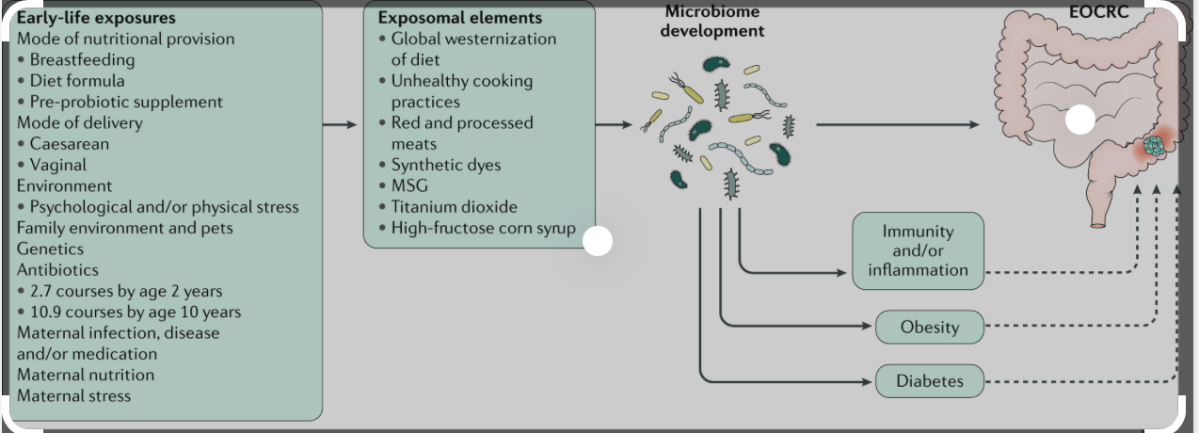
Lights and shadows in the early-onset colorectal cancer management and research: An integrative perspective – Physician scientist with patient advocates

https://www.sciencedirect.com/science/article/pii/S1521691823000318

Practice points

  • -The global importance that Early-onset colorectal cancer (EOCRC) is acquiring, makes a joint and worldwide effort necessary to unravel the problem.
  • -Although most EOCRC cases seem to be sporadic, there is still an important proportion belonging to families with well-defined colorectal cancer predisposition syndromes.
  • Excluding hereditary syndromes, general population screening strategies don’t cover most cases in the majority of countries, except in some defined ones with first-degree relatives with colorectal cancer.
  • -At present, the management of EOCRC should be considered a lifelong process: from the early care of symptoms to avoiding delays in diagnosis; through a multidisciplinary treatment in both the present and future; and with considerations for the possible consequences in the short and long term.
  • -The participation of patients in each step of the process, as well as in the awareness of the problem is especially critical in EOCRC.

Patient education – ICS

In our free Patient Education programmes, our cancer nurses provide information to guide you through and beyond your treatment including: what the treatment is, how it is given, managing side effects, and available supports.

We also have a programme for adult patients who have finished treatment or who are on maintenance therapy and living well with advanced cancer. Our Life and Cancer – Enhancing Survivorship (LACES) workshop can help you to adjust, live well, and feel your best, physically and emotionally.  

https://www.cancer.ie/cancer-information-and-support/patient-education

“How to set up an in-house nurse-led colorectal Lynch syndrome clinic”

In this paper, Filipe Carvalho goes through how he set- up his service, and outlines the essential steps to consider when setting up and managing an in-house nurse-led colorectal Lynch syndrome clinic.

The NHS long term plan sets a target that by 2028, 75% of cancers will be diagnosed at an early stage. One of the ways this ambition will be reached is through targeted screening and personalised surveillance of those most at risk of developing cancer, such as those with Lynch syndrome.

It highlights the educational requirements, patient criteria, the importance of thorough planning and the need to liaise-on with key stakeholders.

https://www.magonlinelibrary.com/doi/abs/10.12968/gasn.2023.21.6.22

Real-world evidence research in metastatic colorectal cancer: raising awareness of the need for patient contributions

https://www.futuremedicine.com/doi/10.2217/fon-2022-1253

Conclusion

By providing evidence and insights into patient experiences without bias, RWE research is a valuable resource that complements RCT(randomised control trial) data.

The success of RWE research depends upon the active engagement of patients and their carers. Alongside education regarding the disease and its treatment, participation in RWE research may help empower patients with mCRC and other cancers to influence decisions concerning their own treatment. There is potential for increased patient engagement to help improve overall management of the disease. To increase the numbers of patients and carers participating in RWE studies, improved understanding and awareness of RWE research is needed, and clinicians are well placed to encourage this process. Engaging patients and carers throughout disease management is key to unlocking the potential for RWE to improve outcomes in mCRC.

It is now imperative that policy makers consider the value of this in their assessment and inclusion of treatments.

https://www.futuremedicine.com/doi/10.2217/fon-2022-1253

Your Hard Matters too!

What hard things have you gone through?
Are you going through something hard right now?

Do you tend to compare your hard things with the “hards” of others?

Pretty sure we all do this. It’s human nature, after all. And in Cancer Land this comparing thing goes on a lot.