St Mark’s Centre for Familial Intestinal Cancer

The St Mark’s Centre for Familial Intestinal Cancer (incorporating the Polyposis Registry and Family Cancer Clinic) is run by a team of specialists consisting of Colorectal Surgeons, Gastroenterologists, Nurse Practitioners, Nurse Specialists and Administrators.
The team works together to ensure prompt diagnosis and surveillance of patients with a genetic condition associated with bowel cancer or from a family at high risk of bowel and other cancers.

Our Services

We look after individuals and their families throughout their healthcare journey. We also provide education for healthcare professionals and the public and actively carry out research. If you are referred to us we will look after you and your family.

http://www.polyposisandlynch.com

Lynch Syndrome(Bowel Cancer UK)

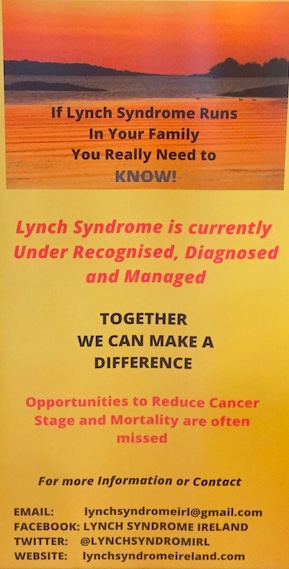
During National Hereditary Cancer Awareness Week, we wanted to highlight our information about Lynch syndrome, a genetic condition that increases the risk of bowel cancer.

https://www.bowelcanceruk.org.uk/about-bowel-cancer/risk-factors/family-history/

Lynch syndrome; towards more personalised management?

The lifetime risk of each cancer in people with Lynch syndrome is gene-specific and may be modified by environmental factors.

Furthermore, the benefits of surveillance strategies need to be balanced against the risk of over-diagnosis and be supported by evidence of improved outcomes from cancer diagnosis in surveillance.

Therefore, people with Lynch syndrome may benefit from a personalised management approach.

https://pubmed.ncbi.nlm.nih.gov/35988964/

The global burden of cancer attributable to risk factors, 2010–19: a systematic analysis for the Global Burden of Disease Study 2019

Half of all cancer deaths could be avoided by behavioural change. More could be prevented if we identified those at genomic risk and implemented risk reduction strategies. Funders must fund more prevention research. It’s the low hanging fruit

Although some cancer cases are not preventable, governments can work on a population level to support an environment that minimises exposure to known cancer risk factors. Primary prevention, or the prevention of a cancer developing, is a particularly cost-effective strategy,

8although it must be paired with more comprehensive efforts to address cancer burden, including secondary prevention initiatives, such as screening programmes, and ensuring effective capacity to diagnose and treat those with cancer. 

https://www.thelancet.com/journals/lancet/article/PIIS0140-6736(22)01438-6/fulltext?dgcid=raven_jbs_etoc_feature_gbd22_lancet#seccestitle160

IMPROVING THE LIVES OF INDIVIDUALS AND FAMILIES FACING HEREDITARY CANCER.

FORCE(USA) has extended their efforts and programs to include the millions of people and families who face breast, ovarian, pancreatic, prostate, colorectal and endometrial cancers as a result of Lynch syndrome, or an inherited mutation. http://ow.ly/NfWX50KjtG1

Germline and Somatic Variants: What Is the Difference?

Cancers caused by germline pathogenic variants are called inherited or hereditary. More than 50 different hereditary cancer syndromes have been identified that can be passed from one generation to the next e.g. Lynch Syndrome

https://voice.ons.org/news-and-views/germline-and-somatic-variants-what-is-the-difference

When a patient’s survival is dwarfed by the logistics of treatment, oncologists need to talk about ‘time toxicity’

Time toxicity may be less pertinent when treatments offer a significant survival benefit or align with the patient’s goals. No choice is inherently wrong provided it is made with sufficient information.

“Left to ponder the opportunity cost for everyone involved, I imagine a day when patients will be spared the lament of time toxicity because oncologists like me will have embraced it as a plank of our counsel. It won’t be the easiest thing to talk about but by doing so, we will be serving the best interest of our patients.”