A personalised online resource for womenimpacted by cervical cancer. If you have a partner in your life, this platform can also support them. If you are a health care provider working in the area this can also support you and your practice.
If you are newly diagnosed, receiving treatment, in surveillance or living well with and beyond cancer this has information that is tailored to meet your needs.
Also information on Ovarian, Uterine, Vulval and Vaginal cancers.
In addition a genetic pathway for those impacted by BRCA and Lynch Syndrome.
People with Lynch syndrome may develop polyps, which can vary in size. Colon polyps are very common and most are harmless. But if they are left untreated, they can lead to cancer.
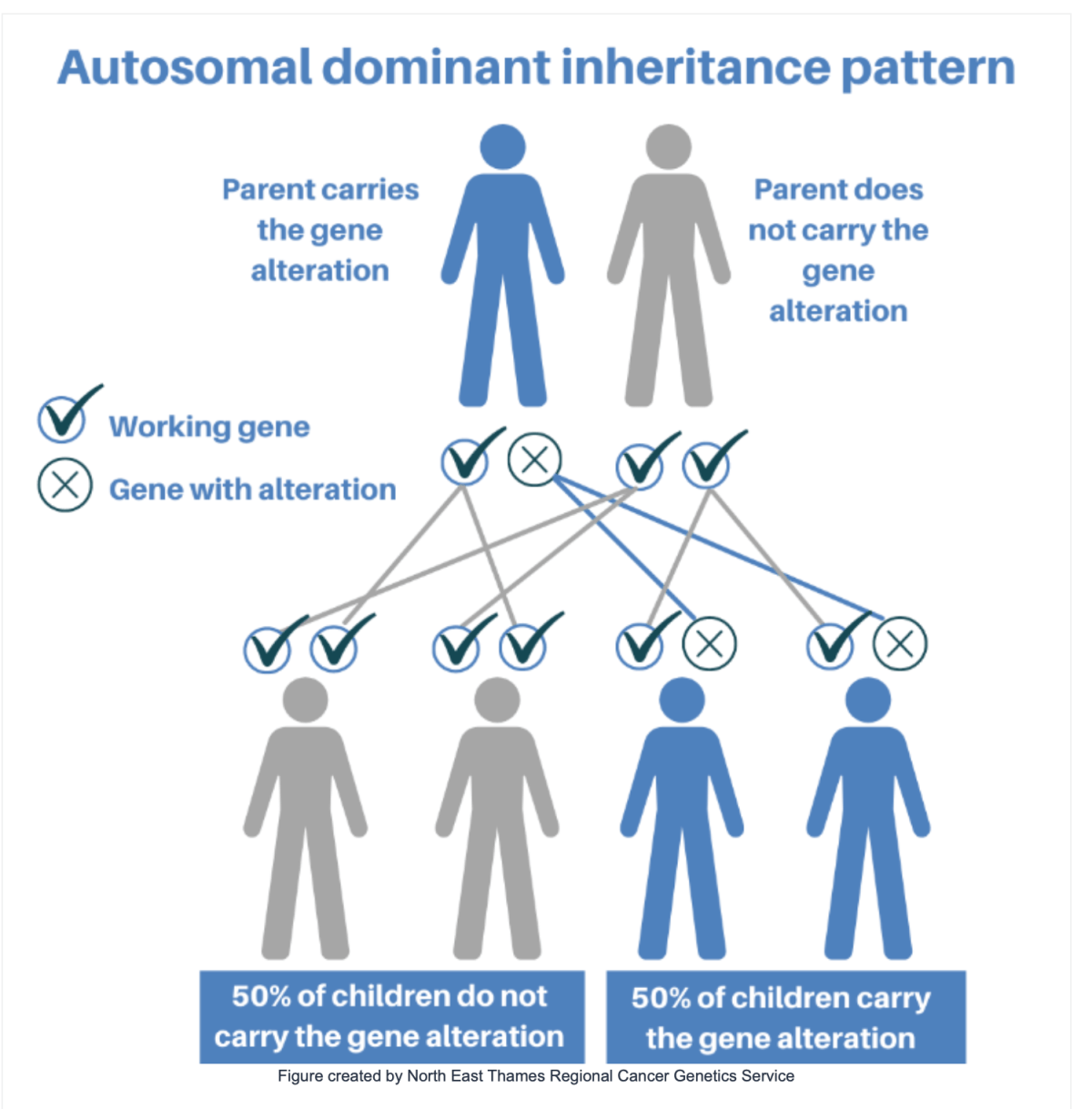
If one of our parents has Lynch syndrome, at the point of conception, they have a 50% chance of passing on their altered copy and 50% chance of passing on their unaltered copy.If a person inherits the altered copy, they will have Lynch syndrome.
The Lynch syndrome genes are like police officers in our body, checking that cells know when to stop dividing and do not turn into cancer cells, and by doing so they protect us against cancer. If these genes aren’t working properly, this might result in fewer police officers protecting us against cancer.
What will this mean for people with Lynch syndrome?
For bowel cancer, survival is strongly related to stage at diagnosis: 9 in 10 people will survive if diagnosed at the earliest stage, because they’re more likely to be offered curative treatment. However, treatment is less effective and therefore survival is lower as the disease progresses.
The new national Lynch syndrome colonoscopy programme will be delivered by the national Bowel Cancer Screening Programme. This will have a transformative effect on the care of people with Lynch, improving their experience as well as the prevention and early diagnosis of bowel cancer. It’s estimated 300 lives could be saved every year if diagnosis and optimal care for Lynch syndrome are offered in England.
The change to the surveillance programme will ensure:
you’re invited for colonoscopic surveillance, on time, every two years
you’re seen by a specialist team and have a high-quality test performed by an expert colonoscopist
a consistent approach across England with equal access for people with Lynch syndrome
Moving the Lynch surveillance within the national screening programme is the first screening programme of its kind in the world.
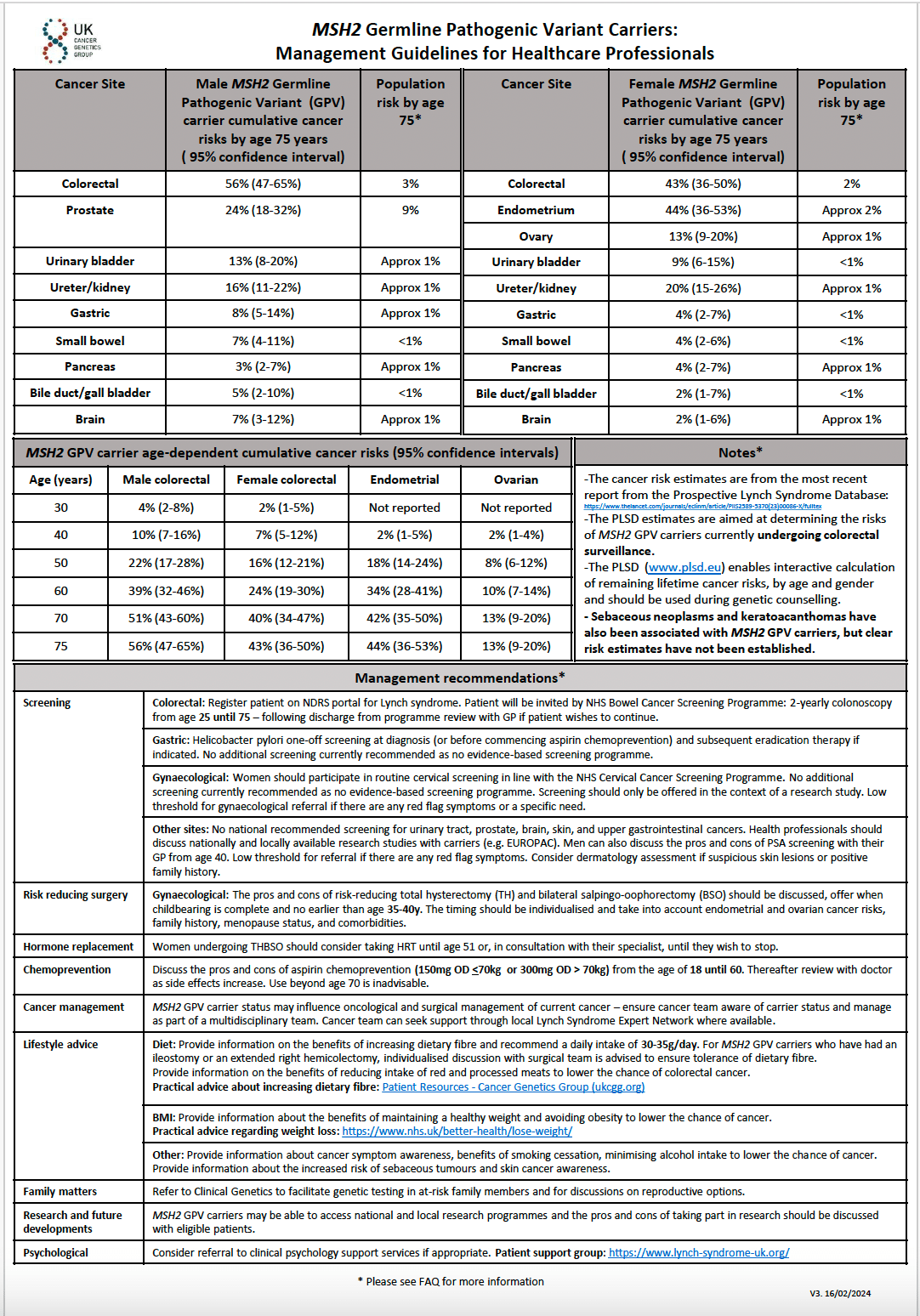
Please click on the links to access guidelines and leaflets created by UKCGG, CanGene-CanVar working groups and expert colleagues.
Additional guidelines from other expert groups are available.
Patients with certain heritable cancer predisposition syndromes may benefit from referral to their local Polyposis Rare Disease Collaborative Centre working in the relevant Rare Disease Collaborative Network (RDCN).
In recent years, breakthroughs in genetics and DNA testing have revolutionised healthcare, especially in cancer diagnosis, treatment, and care. By examining a person’s genes, we can now identify people at higher risk of developing certain cancers.
This allows healthcare providers to detect cancers at an earlier stage and make informed decisions about cancer management and surveillance. Crucially, they can also offer more effective personalised treatments and prevention strategies based on the patient’s genetic profile.
Report found:
There have been significant improvements in genetic testing for bowel cancer patients, with an average of 9 in 10 newly diagnosed bowel cancer patients being tested over the last financial year, but workforce and capacity issues are still barriers.
Half of health authorities who responded, reported that family members of people with Lynch syndrome aren’t offered letters they can take to their GP, which is one route to accessing genetic counselling and testing.
A postcode lottery for life-saving routine surveillance colonoscopies exists. Although surveillance is offered to all Lynch syndrome patients in England through the Bowel Cancer Screening Programme, only 6 in 10 health authorities across Scotland, Wales and Northern Ireland offer surveillance colonoscopies in line with clinical guidance.
Major gaps in data collection and reporting on Lynch guidance and services are holding back Lynch syndrome care.
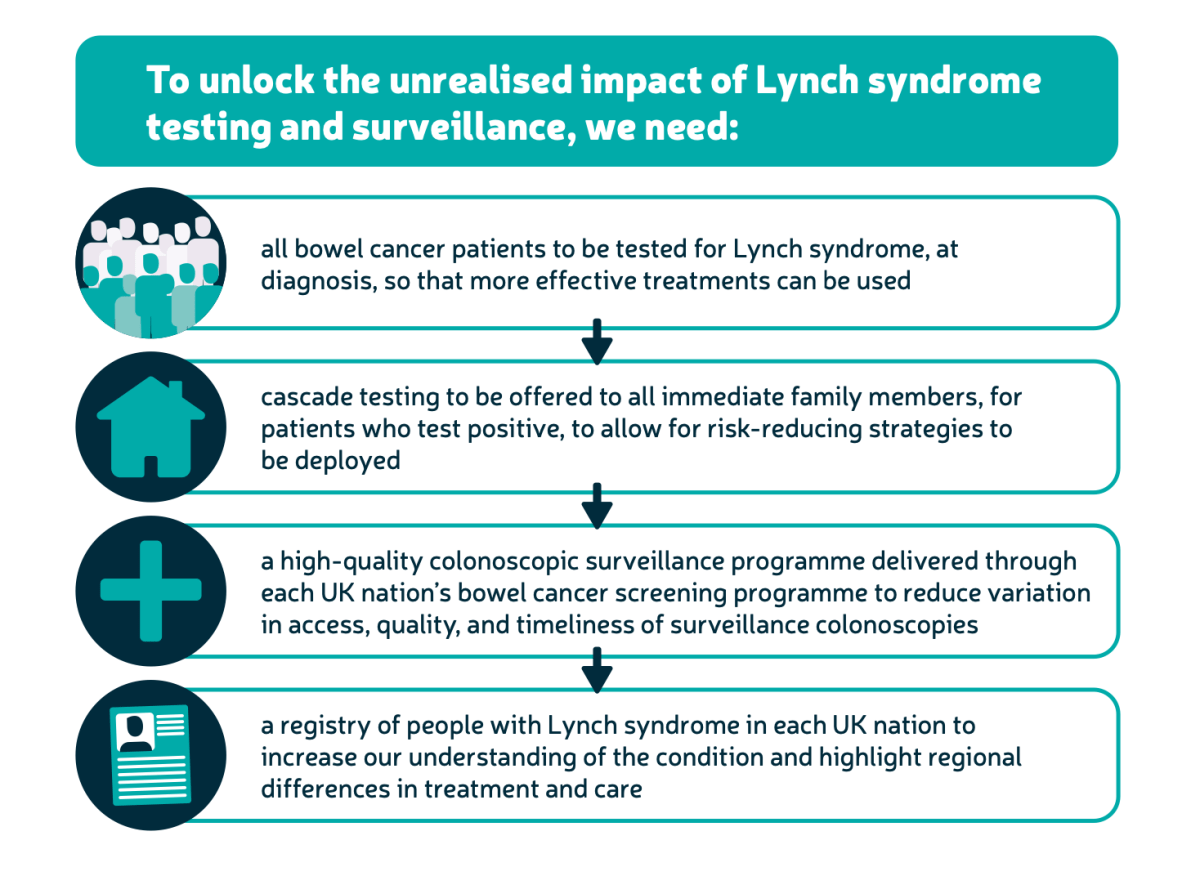
Testing all newly diagnosed bowel cancer patients for Lynch syndrome and implementing routine colonoscopic surveillance are crucial steps in meeting the early diagnosis goals set by governments and health services nationwide.
Survivor guilt is a complex emotion that often plagues those who have lost loved ones to illness.
I question myself with overwhelming questions often: “Why have I not developed cancer? Why have I outlived him? Why did he have to die?” And “What could we as a family have done differently?
I have turned my grief into action and strive to make a positive impact in the fight against Lynch syndrome and its devastating consequences — his death has not been in vain.







 Lynch Syndrome Ireland