Evaluation of user experiences, perceptions and attitudes towards faecal immunochemical testing (FIT) for risk-stratified colonoscopy in people with Lynch syndrome

Objective: This study evaluates the experiences, perceptions, and attitudes of people with Lynch syndrome (LS) towards faecal immunochemical testing (FIT) as an adjunct to colonoscopy for colorectal cancer surveillance.

ConclusionsFIT is widely perceived as an acceptable supplemental tool among surveyed people with LS, who appreciate its potential to reduce intervals between colonoscopies without compromising surveillance quality.

Ongoing patient engagement is crucial to addressing concerns about FIT’s reliability. Future research should evaluate long-term outcomes and explore diverse population perspectives to guide FIT implementation in LS surveillance.

https://bmjopengastro.bmj.com/content/12/1/e001751

PREDI-LYNCH project

PREDI-LYNCH sets out to make a difference for people with Lynch syndrome (LS) by developing and implementing novel, non-invasive early detection methods for colorectal, endometrial and urothelial cancers in patients with LS. The research team addresses an unmet medical need in providing an innovative approach to biomarker discovery for early-stage cancers in LS patients.

PREDI-LYNCH will focus on improving cancer surveillance in LS to detect cancers at an early stage, utilising effective and minimally invasive strategies, so as to improve patient outcomes and compliance.

  • Develops non-invasive liquid biopsy tests for early cancer detection in individuals with Lynch syndrome.
  • Combines artificial intelligence, biomarker technology, and clinical expertise to improve the quality of life and healthcare for at-risk groups.
  • Is a collaborative consortium involving 28 organisations from 16 European countries.
  • Received €13.6 million in Horizon Europe funding. Horizon Europe is the EU’s key research and innovation funding programme aimed at promoting scientific breakthroughs and collaborations to solve global challenges.
  • The project will begin in June 2025 and end in summer 2031.

https://www.tuni.fi/en/news/eu13-6-million-funding-early-detection-lynch-syndrome-cancers?fbclid=IwY2xjawKT0iVleHRuA2FlbQIxMQBicmlkETB6S0xyT01CVGNNS3pubzNoAR5xf-m1Gz3nRhAwvE0zjXVTKt0ezvczsWLjlt3rXOdSbn7Jx0NB9MVAKvSqqA_aem_QF6PsggOnwwwuCV_2Y-E6A

Call for people to mind their gut health and not ignore heartburn ahead of World Barrett’s Day

Barrett’s Oesophagus is a potentially pre-cancerous, inflammatory disease that affects the lining of the oesophagus (that is the 12-inch food pipe or gullet connecting your mouth to your stomach).

While it is estimated that over 35,000 people in Ireland could have Barrett’s, the majority are unaware, undiagnosed and possibly under the illusion that persistent heartburn or reflux is no big deal.

Furthermore, they don’t go to the GP and are treating it themselves with over-the-counter antacids for far too long, according to OCF.

Assessing preventive gynecologic decisions in individuals with Lynch syndrome

Highlights
  • Current Lynch syndrome guidelines for managing gynecologic risks are vague and often left to a clinician’s discretion.
  • Among 115 patients with intact uterus and/or ovaries upon Lynch diagnosis, 71 (61.8 %) underwent risk-reducing surgery.
  • Older age, lower education, completed childbearing, and history of non-gyn cancer were associated with having surgery.
  • Patients felt anxiety and frustration with the lack of provider knowledge and support to manage gynecologic cancer risks.

https://www.sciencedirect.com/science/article/abs/pii/S0090825825008297

Role of industry in drug ‘delays’ should be acknowledged

The timetable for access to new drugs in Ireland is “significantly” influenced by decisions made by the pharmaceutical industry, according to Prof Michael Barry, Clinical Director of the National Centre for Pharmacoeconomics (NCPE).

Medicines are often launched in larger European countries before Ireland. Prof Barry highlighted that the HSE has “nothing to do” with the decisions of the pharmaceutical industry.

@mccarthymt7 “When a process is designed to cause delays, and it results in delays”

“Patients will die waiting for cancer treatment” – advocate

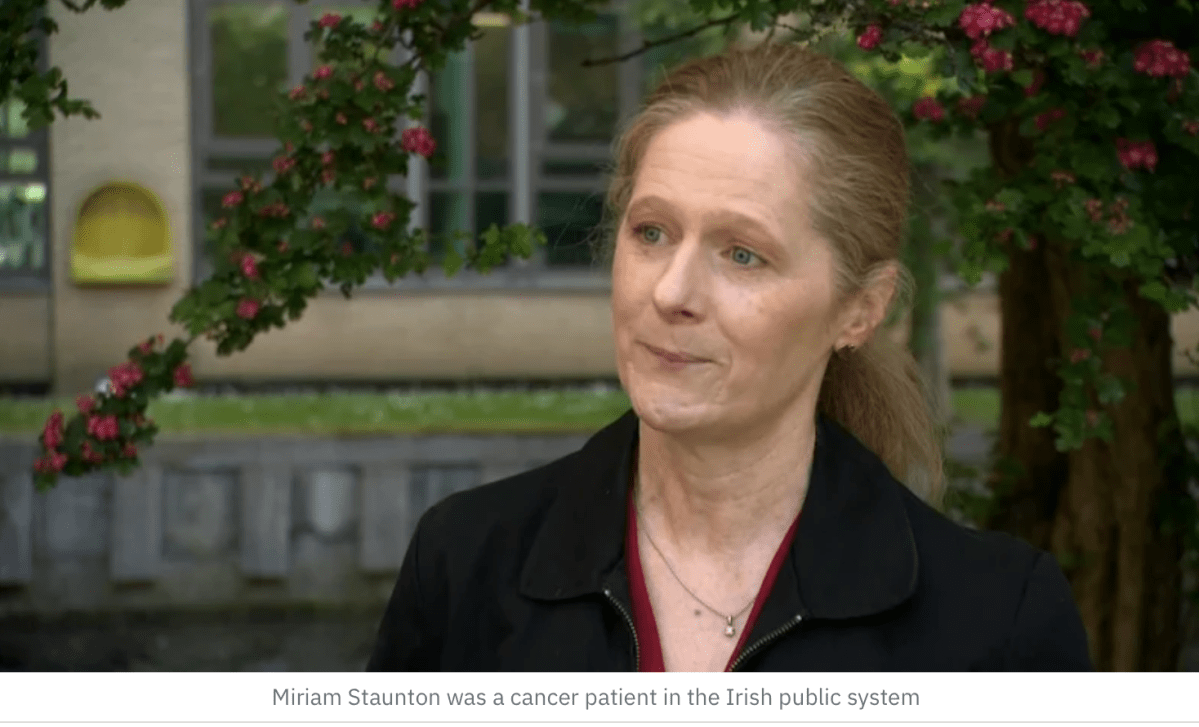
A study showed Ireland has the lowest availability for new cancer medicines in Western Europe. Of the 56 oncology medicines which were granted a European Medicines Agency (EMA) licence since 2020, only 14, or 25%, are currently available in Ireland.

It comes as figures show Ireland has the lowest availability for new cancer medicines in Western Europe, according to the Irish Pharmaceutical Healthcare Association (IPHA).

The United Cancer Advocates Network (UCAN) said there is no early access scheme in Ireland, so Irish patients are forced to wait for full assessments and negotiations with drug companies to take place.

“Medical Oncologists have a very peripheral role (and very little influence) in the HSE system for drug reimbursement. So far, to my knowledge, every approach made by medical oncologists to the HSE to address this issue has been listened to but ignored fully.” @mccarthymt7

https://www.rte.ie/news/health/2025/0507/1511477-cancer-drugs-ireland/

InSight

The International Society for Gastrointestinal Hereditary Tumours (InSiGHT) is a multidisciplinary scientific organisation, whose mission is to improve the care of patients and families worldwide with any hereditary condition resulting in gastrointestinal tumours.

They have nearly 300 members, including scientists, clinicians and other healthcare professionals, from all parts of the world.

Lynch Syndrome Risks

The Prospective Lynch Syndrome Database (PLSD) now provides the most accurate estimates of cancer risks in LS, both in individuals who have yet to develop a cancer and those who have survived a cancer. An individual’s risks can be found according to their age, gender and the underlying gene.

Lynch syndrome-related tumours include:

  • Colon and rectal cancer
  • Endometrial cancer
  • Small intestine cancer (MSH2 & MLH1)
  • Hepato-biliary and pancreatic cancer (MSH2 & MLH1)
  • Gastric cancer (MSH2 & MLH1)
  • Ovarian non-serous cancer (MSH2 & MLH1)
  • Renal pelvis and ureter cancer (MSH2 & MSH6)
  • Bladder cancer(MSH2 & MSH6)
  • Sebaceous gland cancer (and adenoma – Muir-Torre syndrome)
  • Prostate cancer (MSH2)
  • Breast cancer (MLH1)
  • Central nervous system cancer

The risks associated with some EPCAM deletions appear not to be restricted to GI cancers.

https://www.insight-group.org/about/

Primary care: the ‘linchpin’ in Lynch syndrome

In most cases, a person will be diagnosed with Lynch syndrome following a cancer diagnosis.

People may also be identified with Lynch syndrome after a family member has been diagnosed with the condition (for example, cascade testing), or, less frequently, for those with a strong family history, by referral for genetic testing from their GP. 

Following a diagnosis of Lynch syndrome and treatment of any cancers, most of the contact for patients will be with the NHS Bowel Cancer Screening Programme and their primary care team.

Fragmentation of Lynch syndrome care

A persistent challenge reported by people with Lynch syndrome is a lack of consistent and coordinated health care to help support them to manage their condition generally.

Improved communication from secondary and tertiary care is needed to enable consistent coding of Lynch syndrome on patient health records and for primary care to fulfil its role as the ‘linchpin’ of comprehensive care.

https://bjgp.org/content/75/754/198

Lynch Syndrome: Similarities and Differences of Recommendations in Published Guidelines

ABSTRACT:

Background: In this review, we aimed to compare the recommendations for Lynch syndrome (LS).

Methods: We compared the LS’s guidelines of different medical societies, including recommendations for cancer surveillance, aspirin treatment, and universal screening.

Results: Most guidelines for LS patients recommend intervals of 1–2 years for performing colonoscopy, though there is disagreement regarding the age to begin CRC screening (dependent on status as a MLH1/MSH2 or MSH6/PMS2 carrier). There are inconsistencies between LS guidelines for gastric cancer surveillance. Most guidelines do not recommend routine surveillance of the pancreas and small bowel. Most but not all of the guidelines support endometrial and ovarian surveillance with trans- vaginal ultrasound and endometrial biopsy. Only two societies recommend urological surveillance, while others recommend surveillance among high-­ risk carriers with family history only. There is significant disagreement between the guidelines about the recommendation for limited or extended bowel resection among patients with CRC. Aspirin use is recommended by most societies, though some with reservations, and most of them recommend universal screening.

Conclusions: There are significant disparities and disagreements in the guidelines and recommendations for patients with LS, causing confusion and difficulties for clinicians. Harmonisation and cooperation are needed between the societies creating LS guidelines.

https://onlinelibrary.wiley.com/doi/pdf/10.1111/jgh.16881

Digital for Care 2030 Overview

With the focus on the evolving needs of patients and their families, Digital for Care 2030 will ensure that healthcare professionals have access to modern digital tools for delivering better, safer care. Explore more by clicking on the tiles below to discover the key elements of Digital for Care. 

The aim is to implement the work outlined collaboratively by both the Department of Health and the HSE to digitally transform our health services into a modern, integrated care system which will:    

  • Improve delivery of safe patient care. 
  • Deliver better health outcomes and access to care.  
  • Make all relevant data available to patients to manage their health more effectively. 
  • Allow for more capacity in our health services. 
  • Reduce hospital admissions. 
  • Reduce the cost of care. 

https://www.ehealthireland.ie/technology-and-transformation-functions/digital-for-care-2030/digital-for-care-2030-overview/