Clinical referral to the NHS following multi-cancer early detection test results from the NHS-Galleri trial

The large, randomised, controlled NHS-Galleri trial (NCT05611632) is assessing the clinical utility of a multi-cancer early detection (MCED) test for asymptomatic cancer screening in England. 

Conclusions: To our knowledge, the NHS-Galleri trial has established the first model for the standardised clinical referral of asymptomatic individuals from a trial into NHS standard-of-care cancer pathways. We hope insights from our work could help accelerate screening trial conduct in the UK, and support MCED population screening programme implementation in future.

https://www.frontiersin.org/journals/oncology/articles/10.3389/fonc.2025.1511816/full

The Myth that Cervical Screening Checks for All Gynecological Cancers

Research in Ireland commissioned by the Irish Network of Gynaecological Oncology (INGO) and supported by Breakthrough Cancer Research highlights the misconceptions that exist surrounding cervical screening, showing that one in three women in Ireland (34%) mistakenly believe that cervical screening checks for all five gynecological cancers 

(https://isgo.ie/ingo-outputs/).

Comparison of Universal Genetic Testing vs Guideline-Directed Targeted Testing for Patients With Hereditary Cancer Syndrome

Hereditary factors play a key role in the risk of developing several cancers. Identification of a germline predisposition can have important implications for treatment decisions, risk-reducing interventions, cancer screening, and germline testing.

Key Points:

Questions  Does universal genetic testing in patients with cancer identify more inherited cancer predisposition variants than a guideline-based approach, and what is the association between universal genetic testing and clinical management?

Findings  In this multicenter cohort study of 2984 patients with cancer, 1 in 8 patients had a pathogenic germline variant, half of which would not have been detected using a guideline-based approach. Nearly 30% of patients with a high-penetrance variant had modifications in their treatment based on the finding.

Meaning  Universal genetic testing detected more clinically actionable variants than a guideline-based approach, with a significant association with clinical management for the patients and their families.

https://jamanetwork.com/journals/jamaoncology/fullarticle/2772576/

Improving Cancer Outcomes with Better Lynch Syndrome Testing: A Cost-Benefit Study

While testing of colorectal cancer tumours for mismatch repair defects has been recommended for years, the majority of patients with abnormal results do not complete the next steps, including genetic testing.

Completed genetic testing would determine whether a patient had Lynch syndrome (LS), a hereditary marker for a higher-than-average predisposition for developing colorectal cancer as well as other cancers, including endometrial and ovarian. Early identification of LS in a patient’s family members has the potential to reduce their cancer risk and mortality, increasing the medical benefit of and thereby ultimately lowering testing costs, the study found.

https://medicine.yale.edu/news-article/improving-cancer-outcomes-with-better-lynch-syndrome-testing-a-cost-benefit-study/

Metachronous colorectal cancer risks after extended or segmental resection in MLH1, MSH2, and MSH6 Lynch syndrome: multicentre study from the Prospective Lynch Syndrome Database

According to the European Hereditary Tumour Group’s latest position report, LS is now considered an umbrella term for four distinct types of LS: MLH1 syndrome, MSH2syndrome, MSH6 syndrome, and PMS2 syndrome. These syndromes vary with regard to the age of onset of the associated cancers, sex predominance, and cancer incidence rates.

Numerous retrospective studies and several meta-analyses support the increased risk of metachronous CRC, despite segmental resection, recommendations for extended resection remain a subject of debate due to the current absence of prospective studies and randomised trials.

Furthermore, no survival benefit has been demonstrated for extended surgery. A quality-of-life comparison between patients who had undergone segmental resection and patients who had undergone subtotal colectomy did not find a significant difference, but the latter group had poorer functional outcomes

https://academic.oup.com/bjs/article/112/4/znaf061/8113421#google_vignette

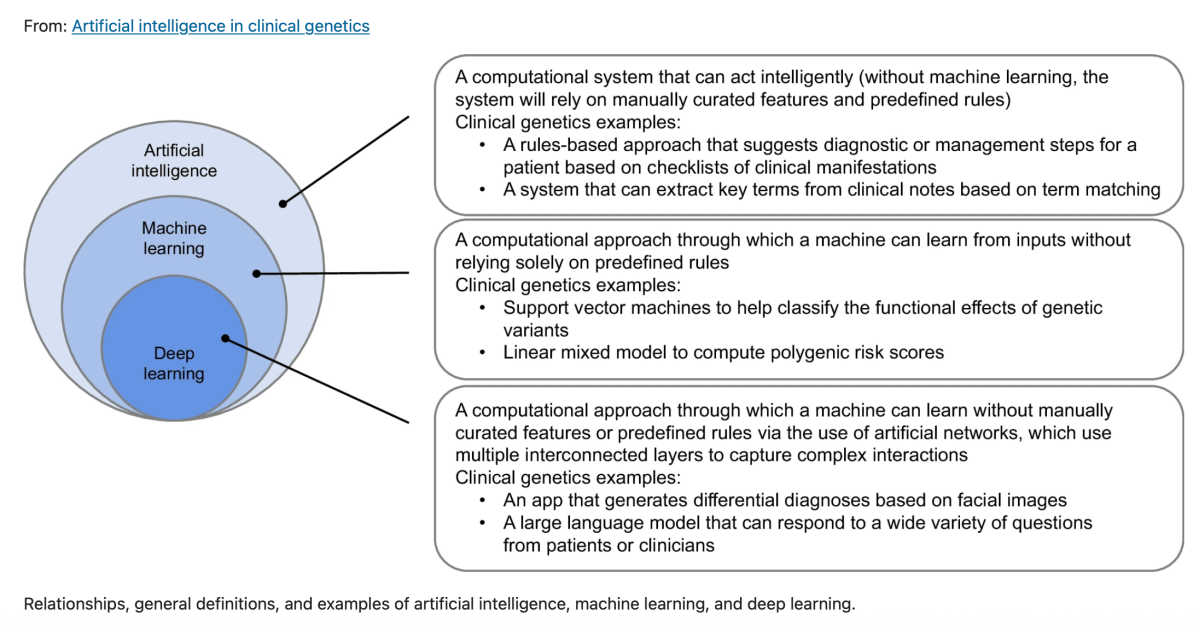
Artificial intelligence in clinical genetics

Artificial intelligence (AI) has been growing more powerful and accessible, and will increasingly impact many areas, including virtually all aspects of medicine and biomedical research. 

Overall, while the precise speed at which AI will continue to change clinical genetics is unclear, as are the overall ramifications for patients, families, clinicians, researchers, and others, it is likely that AI will result in dramatic evolution in clinical genetics.

It will be important for all those involved in clinical genetics to prepare accordingly in order to minimize the risks and maximize benefits related to the use of AI in the field.

https://www.nature.com/articles/s41431-024-01782-w#Abs1

Colectomy

Colectomy is a surgical procedure to remove all or part of your colon. Your colon, part of your large intestine, is a long tubelike organ at the end of your digestive tract. Colectomy may be necessary to treat or prevent diseases and conditions that affect your colon.

There are various types of colectomy operations:

  • Total colectomy involves removing the entire colon.
  • Partial colectomy involves removing part of the colon and may also be called subtotal colectomy.
  • Hemicolectomy involves removing the right or left portion of the colon.
  • Proctocolectomy involves removing both the colon and rectum.

Colectomy surgery usually requires other procedures to reattach the remaining portions of your digestive system and permit waste to leave your body.

https://www.mayoclinic.org/tests-procedures/colectomy/about/pac-20384631

Anti-cancer drug reimbursement in Ireland…..the balance is not right.

Until relatively recently, the role of a medical oncologist was to weigh up the probable benefits and toxicities of the best available anticancer therapy, and offer professional advice, based on data and experience on the best possible option.

At the threat of being sued if they made a bad decision. Increasingly, the best possible treatment option is not available to medical oncologists as an option.

The best possible treatment option is a question relating to published clinical trial data, international clinical guidelines, and professional opinion, for specific cancer patients.

All of the people currently charged with the responsibility of making reimbursement decisions for new cancer drugs in Ireland have a very difficult job. As difficult as that job is, they do not have to sit in front of someone who has cancer now, requiring a clinical treatment decision.

Tomorrow, again, I will politely ask a drug company for free drug supply.

Michael McCarthy @mccarthymt7 Consultant Medical Oncologist @ University Hospital Galway

Supporting patient pathway though gynaecological cancer

Women themselves may be unaware of the sometimes symptoms or may be too embarrassed to consult a doctor, and there remains a stigma associated with these diagnoses in some quarters. This reticence needs to be overcome and a more positive message developed to improve the prevention, screening, treatment and care of gynaecological cancers so that women throughout Europe have the best chance of survival and quality of life.

Ovarian, uterine, cervix and other gynaecological cancers are among the most common cancers to affect women, but collectively attract less attention than they deserve from the public and policy makers.

WHAT SHOULD YOU ASK THE DOCTOR?

Useful information before, during, and after your meeting with your doctor(s)

Brochure from ENGAGe (The European Network of Gynaecological Cancer Advocacy Groups is an ESGO network of European patient advocacy groups representing all gynaecological cancers)

https://engage.esgo.org/brochures/what-should-you-ask-the-doctor/

Uptake and patient-related outcomes of mainstreaming genetic testing: a systematic review and meta-analysis

Mainstreaming genetic testing refers to genetic testing for cancer susceptibility genes following cancer diagnosis, which is provided by nongenetic health professionals of the cancer-treating team.

Mainstreaming can be used to guide cancer treatment and secondary cancer prevention in the patient and to identify carriers in the family members of patients who test positive through cascade testing. We aimed to assess uptake and patient-reported outcomes of mainstreaming genetic testing.

Conclusion

Mainstreaming genetic testing uptake is associated with high uptake and satisfaction and low decision conflict, regret, and post-test distress. Quality and quantity of evidence across different types of cancers vary significantly.

https://www.ajog.org/article/S0002-9378(25)00259-5/abstract