Critical Evaluation of Total Neoadjuvant Therapy for Locally Advanced Rectal

Conclusion: the incorporation of total neoadjuvant therapy(TNT) as the standard of care for patients with Locally advanced rectal carcinoma(LARC) would mean intensification of treatment as compared with chemoradiotherapy(CRT) alone with its associated toxicity, without conclusive evidence of improved response rates or overall survival.

Therefore, we feel that CRT should remain the standard of care for patients with LARC. Future research should focus on novel biomarkers, enabling identification of patients who will substantially benefit from a TNT regimen to justify the added toxicity.

https://ascopubs.org/doi/10.1200/OP-25-00530

Prevention is better than Cure

Cancer came as no surprise for one survivor.

Learn how the family history and a genetic syndrome put them at high risk.

Delving into the role of genetic counsellors in cancer care.

And the hope for a vaccination.

Cancer Needs Trials

Cancer Trials: Better Treatments, Smarter Spending

For every hundred people who hear the words “you have cancer” in an Irish doctor’s office, only three or four will get onto an interventional clinical trial.

That’s not enough 
— and it’s something we can change.

By adding your name below, you’re helping us push for the funding needed to open more cancer trials in Ireland. You’re standing up for every patient and every family who deserves access to the very best care.

Therapeutic targeting of mismatch repair-deficient cancers

Key points
  • Immune-checkpoint inhibitors (ICIs) confer remarkably durable clinical benefit in many patients with DNA mismatch repair-deficient (MMRd) tumours.
  • MMRd tumours are thought to be responsive to ICIs because they harbour many single-base substitutions and frameshift mutations, which, if expressed, have the potential to encode tumour-specific immunogenic neoantigens.
  • Immune-mediated killing of MMRd cancer cells can be orchestrated by various effector cells, enabling MMRd tumours to respond to ICIs despite major histocompatibility complex (MHC) class I loss.
  • Most patients with MMRd tumours derive benefit from ICIs, although a substantial number have primary resistance and many more develop acquired resistance.
  • Many potential predictors of response and resistance to ICIs are under active investigation, but none are currently ready for clinical implementation.
  • The accurate diagnosis of MMRd status is an important determinant of ICI response. This is best achieved through a multimodal approach that involves immunohistochemical analysis of mismatch repair protein expression and microsatellite profiling.

MMRd seems to be acquired early during oncogenesis and is followed by the progressive accumulation of mutations and neoantigens, which ultimately predispose to immune sensitivity. 

https://www.nature.com/articles/s41571-025-01054-6

Is It Advisable to Use Probiotics Routinely After a Colonoscopy? (A Rapid Comprehensive Review of the Evidence)

About 5–20% of patients who undergo colonoscopy, in the days and weeks following the procedure, develop various symptoms (abdominal pain, bloating, and bowel alteration) mainly related to dysbiosis(imbalance in bacterial composition) induced by the propaedeutic intestinal preparation. 

Conclusion: more prospective multi-arm case-control studies on large case series are certainly needed to establish the real efficacy and necessity of probiotic treatments after colonoscopy. There is a wide variability of proposed treatments that have not been compared with each other and no cost-effectiveness analysis is yet available in the literature. Therefore, we are still far from being able to suggest a routine probiotics treatment after colonoscopy.

https://pmc.ncbi.nlm.nih.gov/articles/PMC12194910/#:~:text=To%20date%2C%20to%20our%20knowledge,10%2C11%2C12%5D.

Gene-Specific Detection Rate of Adenomas and Advanced Adenomas in Lynch Syndrome

Colonoscopy is expected to reduce colorectal cancer (CRC) incidence in Lynch syndrome (LS) by detecting and removing adenomas. The existence of gene-specific differences in adenoma detection has been proposed yet remains insufficiently explored. This study aims to elucidate gene-specific adenoma detection rates and their association with post-colonoscopy CRC (PCCRC), which stands as an important issue in LS surveillance.

Conclusions

Carriers of MLH1/MSH2 pathogenic variants are at a higher risk of developing advanced adenomas(AAs) compared with those with MSH6/PMS2mutations, with MSH6 carriers exhibiting an intermediate risk profile. AAs are an independent risk factor for PCCRC. LS patients with AAs should be identified as high risk and undergo enhanced colonoscopy surveillance.

https://www.gastrojournal.org/article/S0016-5085(25)00650-X/abstract

Occurrence of dMMR/MSI-H tumor during follow-up in Lynch syndrome patients treated with immune checkpoint inhibitors for metastatic digestive cancer

2015 and 2024: a retrospective analysis of a monocentric prospective cohort study

Highlights

Patients with LS treated with ICIs are at risk of metachronous dMMR/MSI-H cancers (8% of cohort).

The most frequent metachronous(occurring at different times) cancers observed were urothelial cancer and CRC.

Preneoplastic(state or lesion that occurs before the formation of a benign or malignant tumour) colorectal polyps developed in 39% of patients undergoing colonoscopies during follow-up.

Long-term surveillance is critical for LS patients post-ICI treatment.

https://www.esmoopen.com/article/S2059-7029(25)01428-0/fulltext

The Prospective Lynch Syndrome Database (PLSD)

Objective: Compiling existing information on carriers with pathogenic mismatch repair gene variants (path_MMR variants) associated with dominantly inherited cancer.

Aim: Describing associations between the path_MMR variants and cancer in any organ by age, gene and gender, and effects of interventions.

https://www.ehtg.org/plsd.php

New UKCGG gene specific guidance

New UK Cancer Genetics Group(UKCGG) gene specific guidance to incorporate updated advice about risk-reducing aspirin.
For families with Lynch syndrome.

https://www.ukcgg.org/information-education/ukcgg-leaflets-and-guidelines/

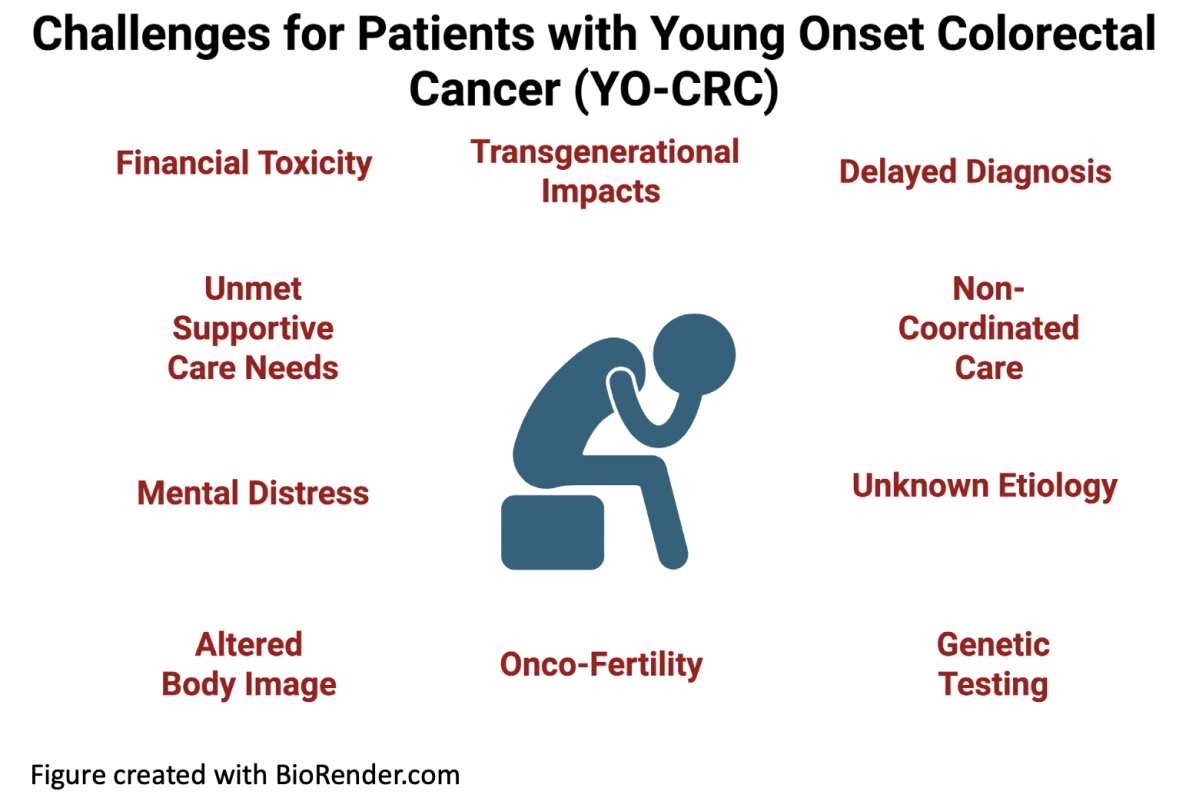
Global epidemic of Young Onset Colorectal Cancer has arrived…

Epidemiology is the study of how often diseases occur in different groups of people and why.

https://imj.ie/the-global-epidemic-of-young-onset-colorectal-cancer-has-arrived-implications-for-irish-healthcare/