
LS UK Conference 2024 – Dr David Church
Category: Research
Lynch Syndrome Conference 2024

Check out the presentations on YouTube.
Up to date information on Lynch Syndrome
Dominantly inherited micro-satellite instable cancer – the four Lynch syndromes – an EHTG, PLSD position statement
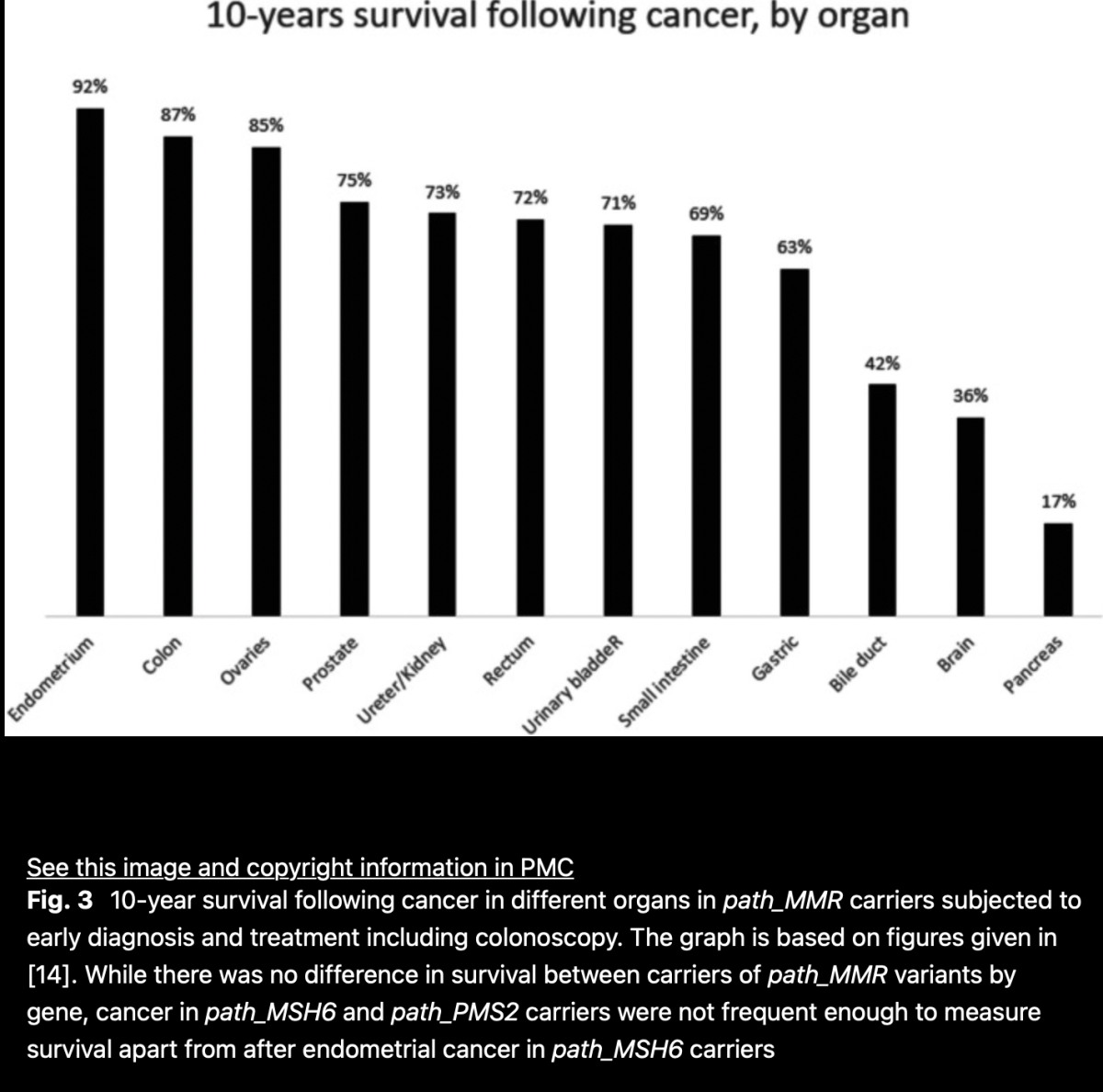
In the Lynch syndromes (LS) we now recognize a dynamic balance between two stochastic processes: MSI producing abnormal cells, and the host’s adaptive immune system’s ability to remove them.
The latter may explain why colonoscopy surveillance does not reduce the incidence of colorectal cancer in LS, while it may improve the prognosis.
Most early onset colon, endometrial and ovarian cancers in LS are now cured and most cancer related deaths are after subsequent cancers in other organs.
Aspirin reduces the incidence of colorectal and other cancers in LS.
Immunotherapy increases the host immune system’s capability to destroy MSI cancers.
Colonoscopy surveillance, aspirin prevention and immunotherapy represent major steps forward in personalized precision medicine to prevent and cure inherited MSI cancer.
The Prospective Lynch Syndromes Database (PLSD)
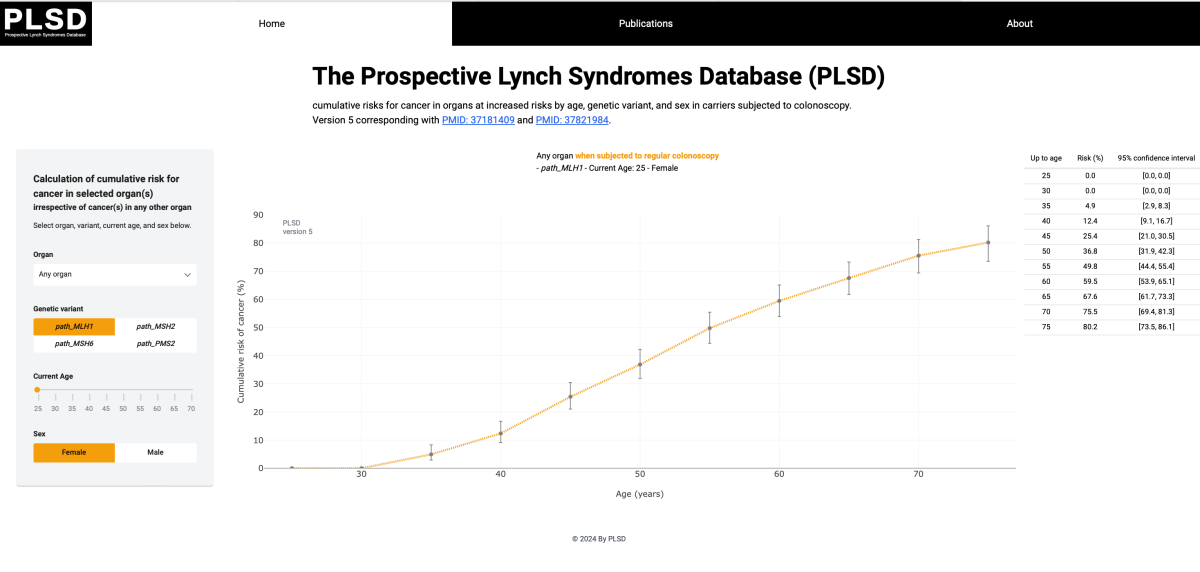
cumulative risks for cancer in organs at increased risks by age, genetic variant, and sex in carriers subjected to colonoscopy.
Version 5 corresponding with PMID: 37181409 and PMID: 37821984.
Aims of PLSD
Based on the observation that removal of adenomas with colonoscopy did not reduce CRC incidence as assumed, in 2012 the European Hereditary Tumor Group (EHTG), at that time denoted the Mallorca Group, decided to compile information on follow-up of path_MMR carriers across multiple specialist centres to answer three questions:
- To what degree does colonoscopy surveillance reduce CRC incidence in path_MMR carriers?
- What is the penetrance and expressivity of pathogenic variants in each of the four Lynch syndrome-associated genes?
- What is the survival of carriers when followed-up as recommended, to facilitate early diagnosis and treatment?
Modifiable risk factors for cancer among people with lynch syndrome: an international, cross-sectional survey

Lynch syndrome is the most common cause of hereditary colorectal and endometrial cancer. Lifestyle modification may provide an opportunity for adjunctive cancer prevention. In this study, they aimed to characterise modifiable risk factors in people with Lynch syndrome and compare this with international guidelines for cancer prevention.
Conclusions
They have characterised the modifiable risk profile of people living with Lynch syndrome, outlining targets for intervention based on lifestyle guidelines for the general population. As evidence supporting the relevance of modifiable factors in Lynch syndrome emerges, behavioural modification may prove an impactful means of cancer prevention.
https://hccpjournal.biomedcentral.com/articles/10.1186/s13053-024-00280-w
Molecular profiling of pediatric and young adult colorectal cancer reveals a distinct genomic landscapes and potential therapeutic avenues

https://pubmed.ncbi.nlm.nih.gov/38849509/
This study delves into the genomic landscape of EO-CRC, specifically focusing on pediatric (PED) and young adult (YA) patients, comparing them with adult (AD) CRC.
This study emphasizes the importance of comprehensive molecular investigations in EO-CRCs, which can potentially improve diagnostic accuracy, prognosis, and therapeutic decisions for these patients. Collaboration between the pediatric and adult oncology community is fundamental to improve oncological outcomes for this rare and challenging pediatric tumor.
Study: Colorectal Cancer Rates Are Rising Rapidly Among Children and Teens

This rise in colorectal cancer cases among young people has been well-documented in recent years. However, experts are still working to figure out what’s behind the trend.
The myth that someone can be too young to get cancer is just not true.
- Colorectal cancer rates are rising significantly among people as young as 10, a new study has found
- The report sheds more light on the fact that colorectal cancer is increasingly affecting people under the 45 years old—the age at which screenings are recommended to begin(USA).
- Health officials should invest in more research on colorectal cancer in young people to reverse current trends, experts said.
https://www.health.com/study-colorectal-cancer-rates-children-teens-8648696
Aspirin and cancer: the emerging evidence
Professor Peter Elwood Honorary Professor, Cardiff University
There is a remarkable harmony between the effects of aspirin on the biological mechanisms of cancer metabolism and growth, and clinical evidence of reductions in cancer mortality and metastatic cancer spread.
Although aspirin increases the number of bleeds, the severity of bleeds attributable to aspirin is low, and the risk-benefit balance of aspirin appears to be favourable to aspirin.
COULD ASPIRIN STOP THE SPREAD OF COLORECTAL CANCER?
The recent study, carried out at the Chirurgia Generale Unit in Padova, Italy, involved 238 patients who were treated for colorectal cancer between 2015 and 2019. Among these, 31 patients were regular aspirin users, taking a daily dose of 100 mg.
The findings were promising. Regular use of aspirin was linked to a reduction in nodal metastasis, which is the spread of cancer to lymph nodes, and an increase in tumour-infiltrating lymphocytes. These lymphocytes, including T and B cells, play a crucial role in recognising and destroying cancer cells.
Neoadjuvant Immunotherapy in Locally Advanced Mismatch Repair–Deficient Colon Cancer

In patients with locally advanced dMMR colon cancer, neoadjuvant nivolumab plus ipilimumab had an acceptable safety profile and led to a pathological response in a high proportion of patients. (Funded by Bristol Myers Squibb; NICHE-2 ClinicalTrials.gov number, NCT03026140.)
(Neoadjuvant chemotherapy is delivered before surgery with the goal of shrinking a tumor or stopping the spread of cancer to make surgery less invasive and more effective.)
(DMMR =deficient DNA mismatch repair)
 Lynch Syndrome Ireland