
Category: Screening

#Dip4GODay & #WorldGODay

Early detection of cancer

Early detection of cancer makes treatment more likely to be successful.
Here’s a reminder of some of the most common signs & symptoms. Remember, these signs can be linked to other conditions too, but it’s important to talk to your GP if they persist for 3 weeks or more
https://x.com/BreakthroCancer/status/1702698796801556671?s=20
Don’t let this idea put you off having a Colonoscopy
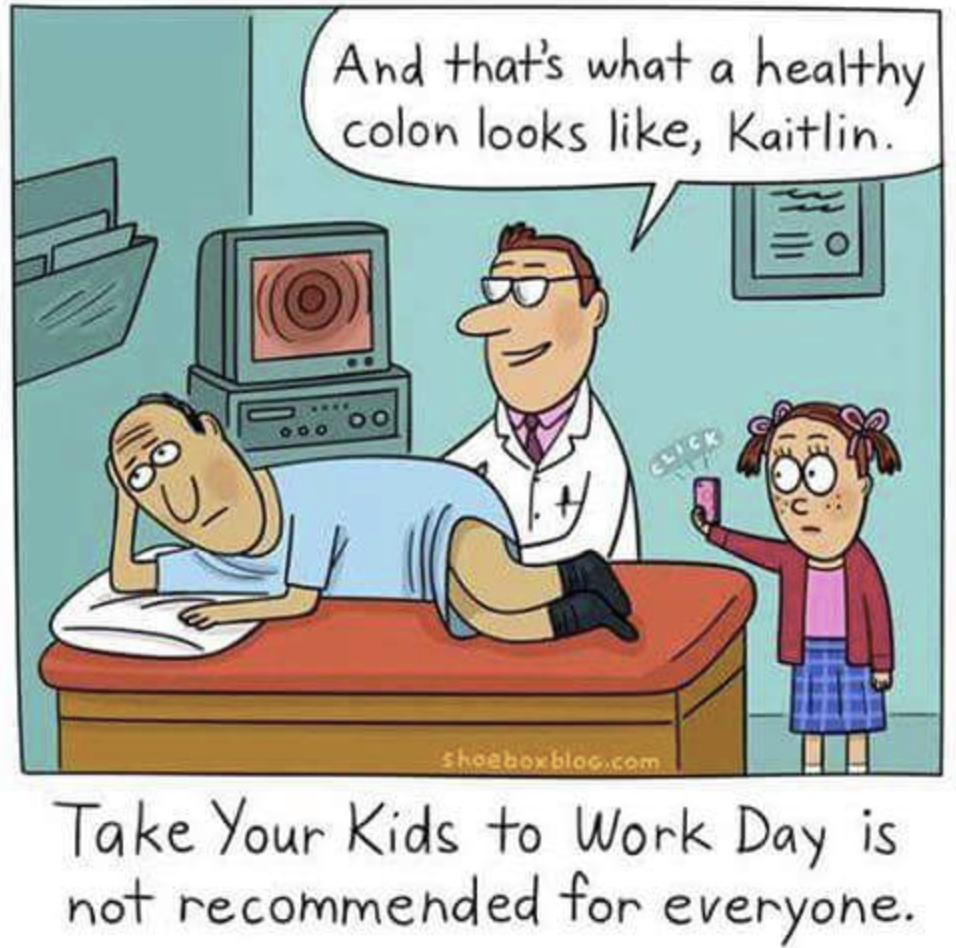
Does Colon Cancer run in YOUR Family?
The genetic risk for colon and rectal cancer.
- The risk of developing colorectal cancer increases 2-3 times when a parent, sibling, or child is diagnosed compared to those with no family history.
- The risk increases 3-6 times over the general population, when a relative is diagnosed at a young age or if there is more than one relative with colorectal cancer.
- About 20% of all colorectal cancer patients have a close relative who was also diagnosed with the disease.
- About 5% of patients with colorectal cancer have a well-defined genetic syndrome that causes the disease like Lynch syndrome or familial adenomatous polyposis (FAP). These conditions are linked with higher risks for colon and other cancers.
- Lynch syndrome accounts for 2- 4% of all colorectal cancer cases.
- FAP is the second most common predisposing genetic syndrome; for these individuals, lifetime risk of colorectal cancer approaches 100% without intervention.
If you have been avoiding your colonoscopy because the prep makes you nervous, check out this blog (and stop delaying)!
“An Individual Doesn’t Get Cancer, a Family Does”

“I had always assumed that this type of potentially life-saving information would be openly shared within the family. And that the individual’s doctors would alert other family members as well. Naively, I had believed the “duty to warn” applied to genetic cancer risks.“
https://www.facingourrisk.org/blog/an-individual-doesnt-get-cancer-a-family-does
Risk-stratified faecal immunochemical testing (FIT) for urgent colonoscopy in Lynch syndrome during the COVID-19 pandemic

Lynch syndrome is a hereditary cancer disease resulting in an increased risk of colorectal cancer. Findings are reported from an emergency clinical service implemented during the COVID-19 pandemic utilising faecal immunochemical testing (‘FIT’) in Lynch syndrome patients to prioritise colonoscopy while endoscopy services were limited.
Fifteen centres participated from June 2020 to March 2021. Uptake was 68.8 per cent amongst 558 patients invited.
Conclusion
FIT demonstrated clinical value for Lynch syndrome patients requiring colorectal cancer surveillance …. Further longitudinal investigation on FIT efficacy in Lynch syndrome is warranted and will be examined under the ‘FIT for Lynch’ study (ISRCTN15740250).
https://academic.oup.com/bjsopen/article/7/5/zrad079/7260320?login=false
AliveAndKickn Podcast – Dr Jose Perea
“I talk with Dr Jose Perea Garcia, Digestive Surgeon as well as cancer researcher in Madrid. We talk about how surgery has evolved and management of the Lynch Syndrome patient compared to sporadic cases. We compare some protocols and coverage in the US vs elsewhere such as Spain where there is government run. Urban vs rural is an issue everywhere. I convince Dr Garcia to offer me a ticket to an Atletico Madrid game if I get there, including if they play Real Madrid.”
https://www.aliveandkickn.org/podcast-1/episode/26556485/aliveandkickn-podcast-dr-jose-perea-garcia
Promoting research and learning in the National Screening Service
Research in healthcare is important. We need to investigate novel approaches to clinical and management strategies, practices and interventions. This also applies to screening programmes. It keeps us informed of new developments and emerging trends in screening.
Research goals are:
- to promote the visibility of our four population screening programmesboth nationally and internationally
- to contribute to international screening literature
- to facilitate the use of anonymised screening data by external partners working with us.
 Lynch Syndrome Ireland