People with Lynch syndrome may develop polyps, which can vary in size. Colon polyps are very common and most are harmless. But if they are left untreated, they can lead to cancer.
Blog
How did I get Lynch syndrome?
If one of our parents has Lynch syndrome, at the point of conception, they have a 50% chance of passing on their altered copy and 50% chance of passing on their unaltered copy. If a person inherits the altered copy, they will have Lynch syndrome.
The Lynch syndrome genes are like police officers in our body, checking that cells know when to stop dividing and do not turn into cancer cells, and by doing so they protect us against cancer. If these genes aren’t working properly, this might result in fewer police officers protecting us against cancer.
Dr Kevin Monahan explains the importance of providing Lynch syndrome surveillance through the NHS England Screening Programme
What will this mean for people with Lynch syndrome?
For bowel cancer, survival is strongly related to stage at diagnosis: 9 in 10 people will survive if diagnosed at the earliest stage, because they’re more likely to be offered curative treatment. However, treatment is less effective and therefore survival is lower as the disease progresses.
The new national Lynch syndrome colonoscopy programme will be delivered by the national Bowel Cancer Screening Programme. This will have a transformative effect on the care of people with Lynch, improving their experience as well as the prevention and early diagnosis of bowel cancer. It’s estimated 300 lives could be saved every year if diagnosis and optimal care for Lynch syndrome are offered in England.
The change to the surveillance programme will ensure:
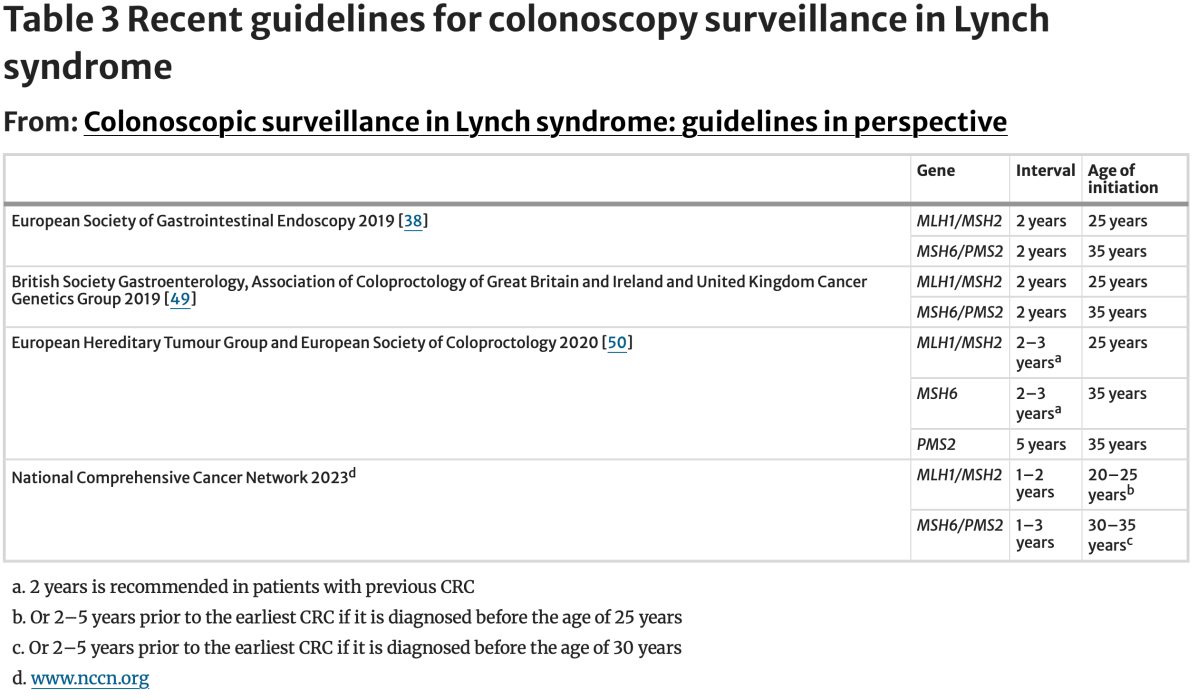
- you’re invited for colonoscopic surveillance, on time, every two years
- you’re seen by a specialist team and have a high-quality test performed by an expert colonoscopist
- a consistent approach across England with equal access for people with Lynch syndrome
Moving the Lynch surveillance within the national screening programme is the first screening programme of its kind in the world.
Thirty-year of genetic counselling education in Europe: a growing professional area
Genetic counselling is still a developing profession in Europe and this historical and current view of the European genetic counsellor pathways, allows for educational and professional standards to be examined as the profession evolves into the future.
How are we doing in Ireland ????@bernardgloster
https://pubmed.ncbi.nlm.nih.gov/38355960
https://www.sciencedirect.com/science/article/pii/S1769721223000162#sec5
This study may also contribute to strengthening the professional role and standards of genetic counsellors in many countries, as well as identifying the necessary mechanisms for the successful implementation of counselling supervision
Cancer Genetics Group UK: Management Guidelines for Healthcare Professionals
One-page Gene-Specific Management Guidelines
Please click on the links to access guidelines and leaflets created by UKCGG, CanGene-CanVar working groups and expert colleagues.
Additional guidelines from other expert groups are available.
Patients with certain heritable cancer predisposition syndromes may benefit from referral to their local Polyposis Rare Disease Collaborative Centre working in the relevant Rare Disease Collaborative Network (RDCN).
Analysis in the Prospective Lynch Syndrome Database identifies sarcoma as part of the Lynch syndrome tumor spectrum
We conclude that the incidence of OS in LS patients is significantly increased compared to the general population.
We suggest that osteosarcoma is part of the LS spectrum in adults and seems to be associated particularly with the path_MSH2 genotype. The association of STS with path_MMR variants is currently less clear, although there are case reports on young LS carriers with soft tissue sarcomas.
L.S. UK Annual Conference
Excellent up to date information on Lynch syndrome. Tickets sell out fast.
Last year’s conference videos can be found here…..
A Protocol for Vaccinating Patients With Lynch Syndrome
This is a fantastic trial….. the link to clinicaltrials.gov to have a look at the protocol. There are great investigators and great centers, and this is a very sensible randomised phase 2 trial design.
Navigating a genetic diagnosis
What might it be like to navigate a genetic diagnosis and share it with family members?
We talk to Julie Young from the CanGene CanVar patient reference panel about her experience.
https://podcasts.ox.ac.uk/series-2-episode-8-navigating-genetic-diagnosis
The role of digital tools in the delivery of genomic medicine: enhancing patient-centered care
Is the use of digital tools part of the answer to reducing Ireland’s long Genetic Testing waiting lists??
Alternative models of genetic counselling are needed to meet the rising demand for genomic sequencing. Digital tools have been proposed as a method to augment traditional counseling and reduce burden on professionals; however, their role in delivery of genetic counseling is not established. This study explored the role of the Genomics ADvISER, a digital decision aid, in delivery of genomic counseling.
Conclusion(2021) of this study
Overall, this study proposes that use of a digital tool in conjunction with tailored counseling from a genetic counselor can enhance patient-centered care in the delivery of genomic counseling.
This study demonstrates that their digital tool contributed to enhancing patient-centered care in the delivery of genomic counselling.