Clinical referral to the NHS following multi-cancer early detection test results from the NHS-Galleri trial

The large, randomised, controlled NHS-Galleri trial (NCT05611632) is assessing the clinical utility of a multi-cancer early detection (MCED) test for asymptomatic cancer screening in England. 

Conclusions: To our knowledge, the NHS-Galleri trial has established the first model for the standardised clinical referral of asymptomatic individuals from a trial into NHS standard-of-care cancer pathways. We hope insights from our work could help accelerate screening trial conduct in the UK, and support MCED population screening programme implementation in future.

https://www.frontiersin.org/journals/oncology/articles/10.3389/fonc.2025.1511816/full

The Myth that Cervical Screening Checks for All Gynecological Cancers

Research in Ireland commissioned by the Irish Network of Gynaecological Oncology (INGO) and supported by Breakthrough Cancer Research highlights the misconceptions that exist surrounding cervical screening, showing that one in three women in Ireland (34%) mistakenly believe that cervical screening checks for all five gynecological cancers 

(https://isgo.ie/ingo-outputs/).

National Cancer Registry Ireland

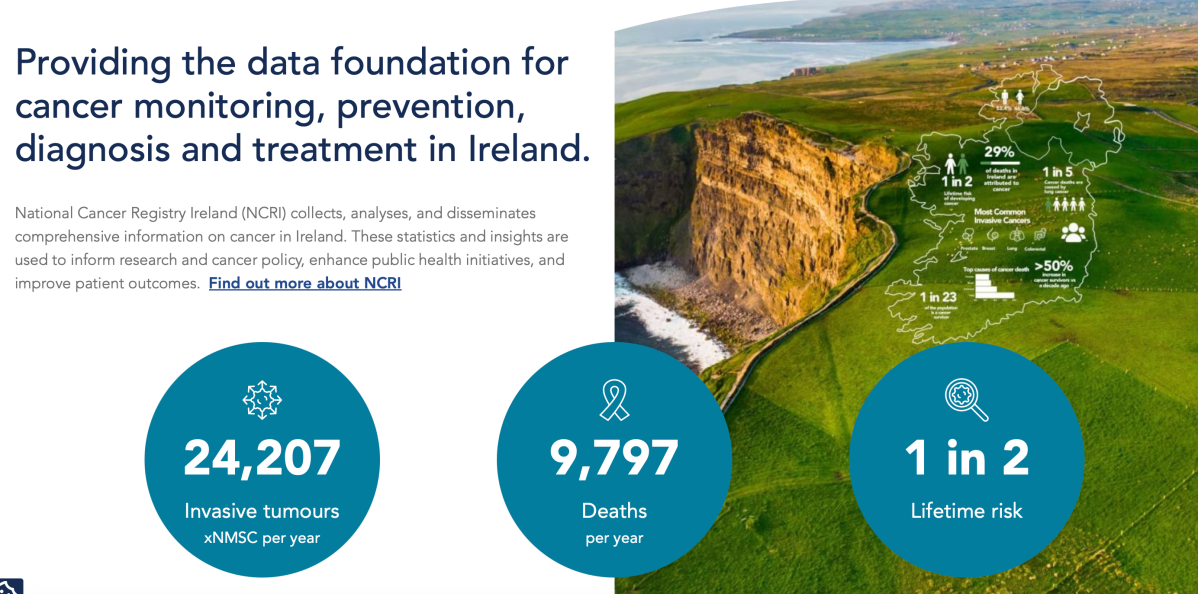
The National Cancer Registry Ireland (NCRI) has just launched its new website. This redesigned platform offers a user-friendly experience and improves access to essential cancer data and resources. This significant update reflects the NCRI’s commitment to enhancing the accessibility and presentation of vital information on cancer statistics and research in Ireland. 

Key features include simplified navigation, enhanced mobile compatibility, and interactive tools for data visualisation. This new website will better serve the cancer community and stakeholders by providing clear and comprehensive information on cancer statistics in Ireland.

https://www.ncri.ie/en

Comparison of Universal Genetic Testing vs Guideline-Directed Targeted Testing for Patients With Hereditary Cancer Syndrome

Hereditary factors play a key role in the risk of developing several cancers. Identification of a germline predisposition can have important implications for treatment decisions, risk-reducing interventions, cancer screening, and germline testing.

Key Points:

Questions  Does universal genetic testing in patients with cancer identify more inherited cancer predisposition variants than a guideline-based approach, and what is the association between universal genetic testing and clinical management?

Findings  In this multicenter cohort study of 2984 patients with cancer, 1 in 8 patients had a pathogenic germline variant, half of which would not have been detected using a guideline-based approach. Nearly 30% of patients with a high-penetrance variant had modifications in their treatment based on the finding.

Meaning  Universal genetic testing detected more clinically actionable variants than a guideline-based approach, with a significant association with clinical management for the patients and their families.

https://jamanetwork.com/journals/jamaoncology/fullarticle/2772576/

Nivolumab plus Ipilimumab in Microsatellite-Instability–High Metastatic Colorectal Cancer

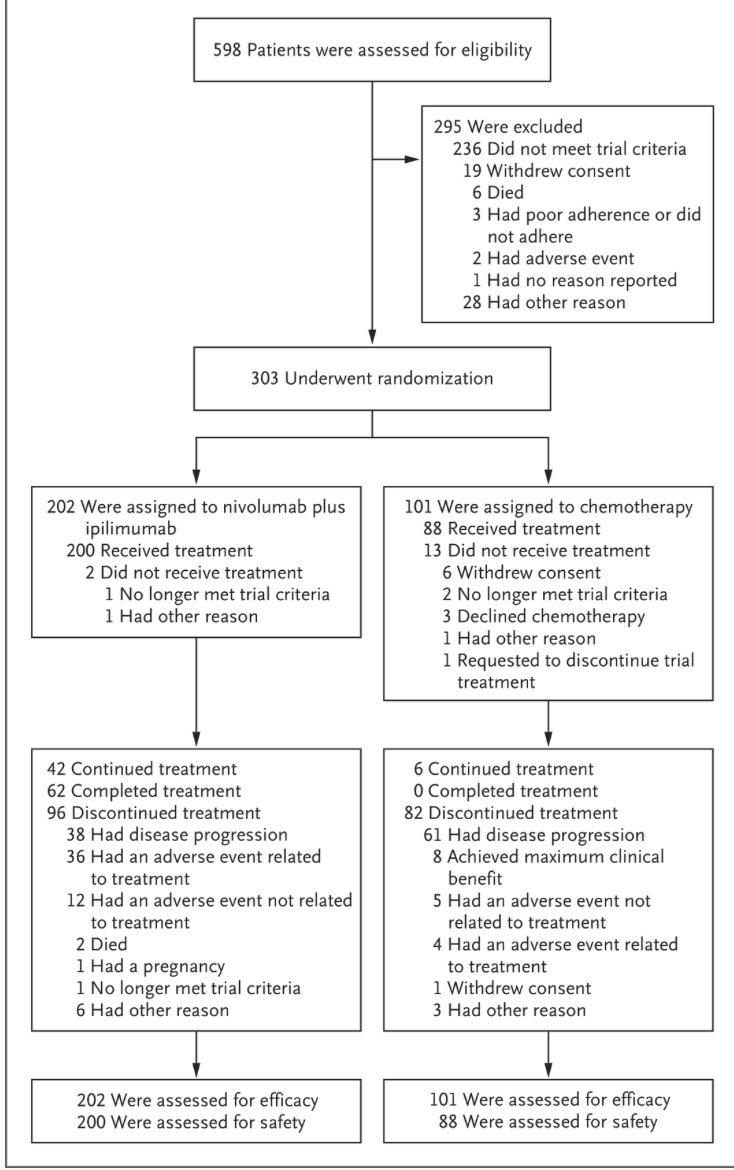
In this phase 3, multinational, randomised trial, , progression-free survival outcomes with nivolumab plus ipilimumab were superior to those with chemotherapy in the first-line treatment of MSI-H or dMMR metastatic colorectal cancer.

Grade 3 and 4 treatment-related toxic effects were consistent with the established profiles of each individual drug, and no new safety concerns were identified.

https://www.nejm.org/doi/full/10.1056/NEJMoa2402141

Improving Cancer Outcomes with Better Lynch Syndrome Testing: A Cost-Benefit Study

While testing of colorectal cancer tumours for mismatch repair defects has been recommended for years, the majority of patients with abnormal results do not complete the next steps, including genetic testing.

Completed genetic testing would determine whether a patient had Lynch syndrome (LS), a hereditary marker for a higher-than-average predisposition for developing colorectal cancer as well as other cancers, including endometrial and ovarian. Early identification of LS in a patient’s family members has the potential to reduce their cancer risk and mortality, increasing the medical benefit of and thereby ultimately lowering testing costs, the study found.

https://medicine.yale.edu/news-article/improving-cancer-outcomes-with-better-lynch-syndrome-testing-a-cost-benefit-study/

Organ Donation change -Ireland

Metachronous colorectal cancer risks after extended or segmental resection in MLH1, MSH2, and MSH6 Lynch syndrome: multicentre study from the Prospective Lynch Syndrome Database

According to the European Hereditary Tumour Group’s latest position report, LS is now considered an umbrella term for four distinct types of LS: MLH1 syndrome, MSH2syndrome, MSH6 syndrome, and PMS2 syndrome. These syndromes vary with regard to the age of onset of the associated cancers, sex predominance, and cancer incidence rates.

Numerous retrospective studies and several meta-analyses support the increased risk of metachronous CRC, despite segmental resection, recommendations for extended resection remain a subject of debate due to the current absence of prospective studies and randomised trials.

Furthermore, no survival benefit has been demonstrated for extended surgery. A quality-of-life comparison between patients who had undergone segmental resection and patients who had undergone subtotal colectomy did not find a significant difference, but the latter group had poorer functional outcomes

https://academic.oup.com/bjs/article/112/4/znaf061/8113421#google_vignette

Artificial intelligence in clinical genetics

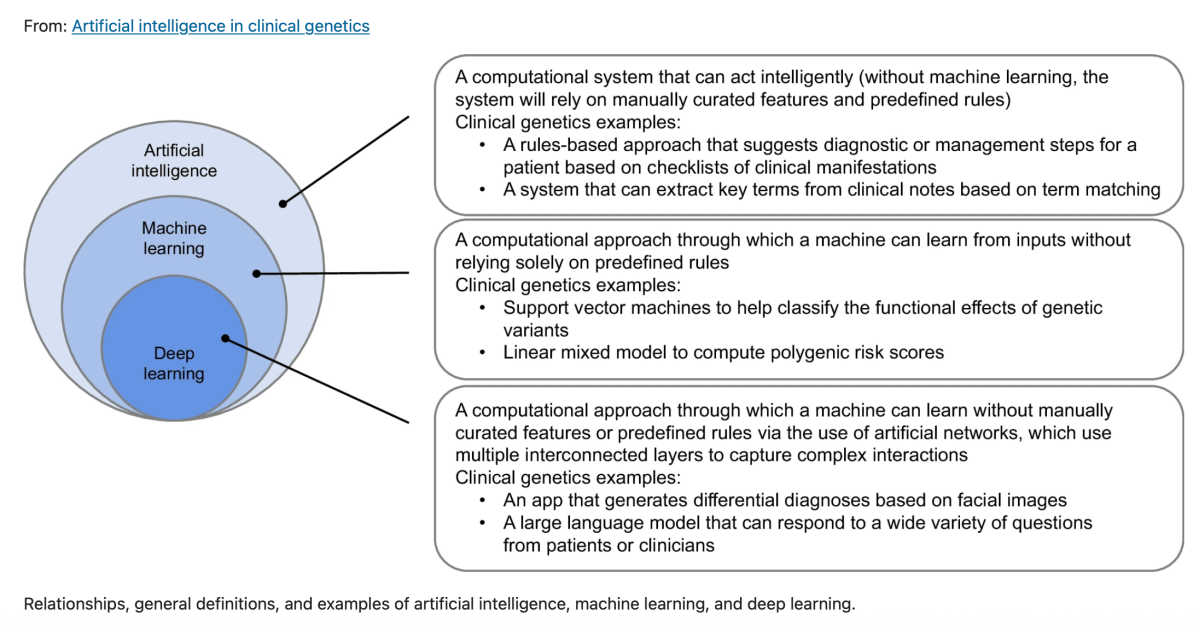
Artificial intelligence (AI) has been growing more powerful and accessible, and will increasingly impact many areas, including virtually all aspects of medicine and biomedical research. 

Overall, while the precise speed at which AI will continue to change clinical genetics is unclear, as are the overall ramifications for patients, families, clinicians, researchers, and others, it is likely that AI will result in dramatic evolution in clinical genetics.

It will be important for all those involved in clinical genetics to prepare accordingly in order to minimize the risks and maximize benefits related to the use of AI in the field.

https://www.nature.com/articles/s41431-024-01782-w#Abs1

Don’t Miss Your Shot: A Letter to My Newly Diagnosed Self

Key Takeaways
  • Lynch syndrome diagnosis necessitates proactive healthcare, including frequent screenings and prophylactic surgeries, to manage increased cancer risks.
  • The emotional journey involves anger and empowerment, transforming adversity into advocacy and resilience.
  • The narrative highlights the importance of seizing preventive opportunities and living intentionally, inspired by a loved one’s cancer battle.
  • Strong familial bonds and nurturing relationships are central to the protagonist’s journey, emphasising the legacy of courage and determination.

But here’s the thing: your anger doesn’t paralise you—it empowers you.

https://www.curetoday.com/view/don-t-miss-your-shot-a-letter-to-my-newly-diagnosed-self?fbclid=IwY2xjawK6F85leHRuA2FlbQIxMQBicmlkETB6S0xyT01CVGNNS3pubzNoAR4m-nT_i-D7mwh74RbJIE5aYnXmyd0Qfqo8m057fjiYJhH6v83ZyfganEMbRw_aem_HLd3dqOHPLv_g9yAaL1jdw