Nobody wants to say the wrong thing to any newly-diagnosed patient, but that perky “good kind of cancer” comment can land with a hollow thud.
Yale University professor of psychology Dr. Laurie Santos calls this cheerfully minimizing response to a cancer patient as “the kind that decides ‘bad’ negative emotions could be fixed if only we had a more ‘look on the bright side!’ attitude.”
When someone hears those words, you have cancer, her world is turned up-side-down, in more ways than one. As is her family’s. I won’t say a cancer diagnosis is necessarily the most horrible thing any person can experience, medically speaking or otherwise, but it’s right up there, that’s for sure.
Once a cancer reaches stage 4, it’s not curable. Treatable, yes. Curable, no.
This is not to say staying positive and fighting hard do not matter. Of course, they do. But cancer outcome is not determined by how hard you fight or how much smiling you do. Cancer isn’t an opponent in some war game you can stomp out with mindset or determination. And a positive attiude—not always doable. Cancer patients don’t need the added pressure to always fight and always stay positive. What does that even mean anyway? It sounds exhausting because it is.
The identification and management of individuals and families with Lynch syndrome has evolved rapidly during the past decade or so. Advances in molecular testing and NGS technologies now allow all patients with colorectal and endometrial cancers to reliably receive screening for underlying Lynch syndrome, whereas innovations in immuno-oncology promise to continue revolutionising the treatment of Lynch-associated cancers.
To continue moving the needle forward, expanded efforts to diagnose Lynch syndrome in healthy, cancer-free individuals are needed, rather than relying on the identification of Lynch syndrome through a new cancer diagnosis.
Identification of Lynch syndrome offers the potential to prevent cancer-related morbidity and mortality, and continued progress in understanding the immune system’s ability to recognize, eradicate, and intercept Lynch-associated neoplasia offers many intriguing possibilities for immune-based primary cancer prevention.
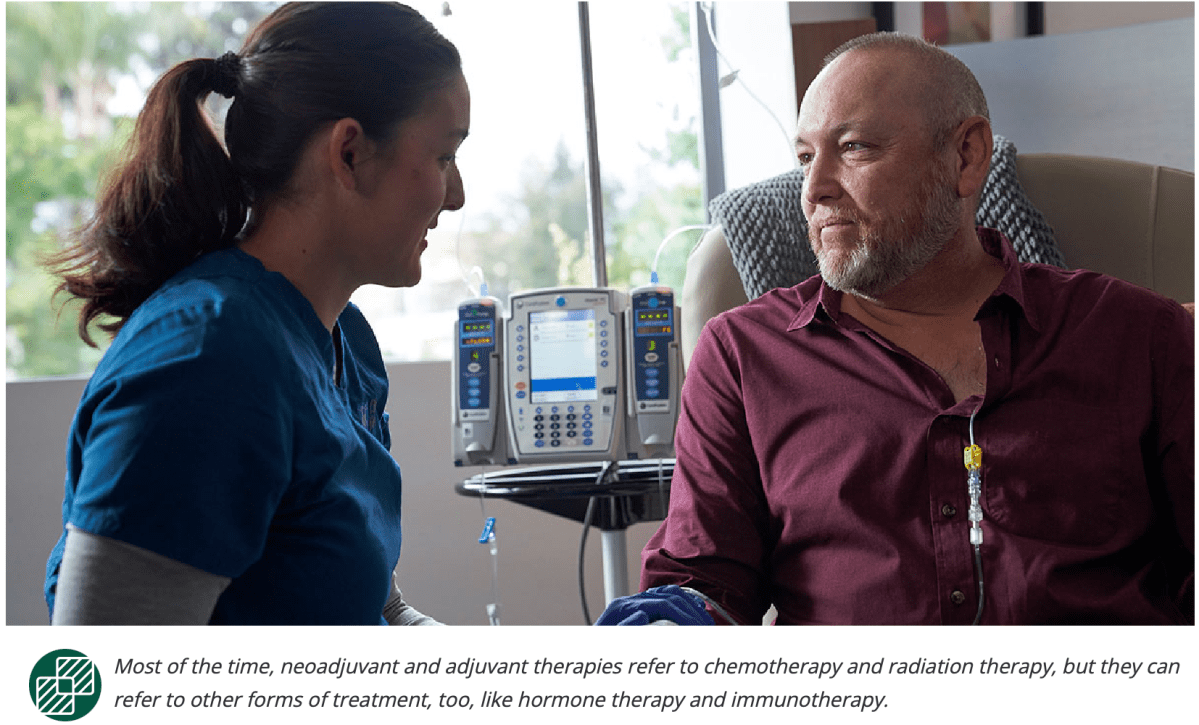
Adjuvant and neoadjuvant therapies are treatments delivered before or after the primary treatment—in most cases, surgery—to help increase its chance of success and decrease the risk of cancer recurrence.
Neoadjuvant therapy is given to a patient before surgery to help shrink a tumor or stop disease spread to optimize the main treatment’s success rate and, if possible, make it less invasive.
Adjuvant therapy is delivered after surgery to kill any remaining cancer cells in the area and lower the risk of the cancer coming back.
For decades, genetic testing was rationed, reserved only for patients who fit narrow, outdated clinical guidelines. But what happens when those guidelines leave countless people at risk?
In this episode, clinical geneticist and medical innovator Dr. Ed Esplin of LabCorp Genetics reveals how his team’s groundbreaking research exposed the flaws in restrictive testing policies. Through rigorous studies in breast cancer, colorectal cancer, and beyond, they proved that universal germline genetic testing identifies far more at-risk patients than guidelines ever predicted and fundamentally changes how we treat and prevent disease.
The data has forced a reckoning: when up to “50% of high-risk patients were being missed”, “standard of care” was anything but standard care.
From community oncology clinics to rare disease diagnostics, he makes the case that access to genetic insights should be driven by evidence, not just eligibility criteria.
This resource is designed to offer practical, evidence-based guidance on how dietary and lifestyle choices can alleviate menopausal symptoms and enhance overall well-being during this unique phase of life. Cancer treatments can sometimes trigger a sudden, intense menopause, often leading to more severe symptoms than those of natural menopause. For some, these symptoms are manageable, while others may find them overwhelming, impacting quality of life.
This book provides support and strategies, covering nutrition and lifestyle modifications to help ease these challenges.








 Lynch Syndrome Ireland