Did you know…

There are 3 different types of hospitals in Ireland:

  • Public hospitals run by the State through the Health Service Executive.
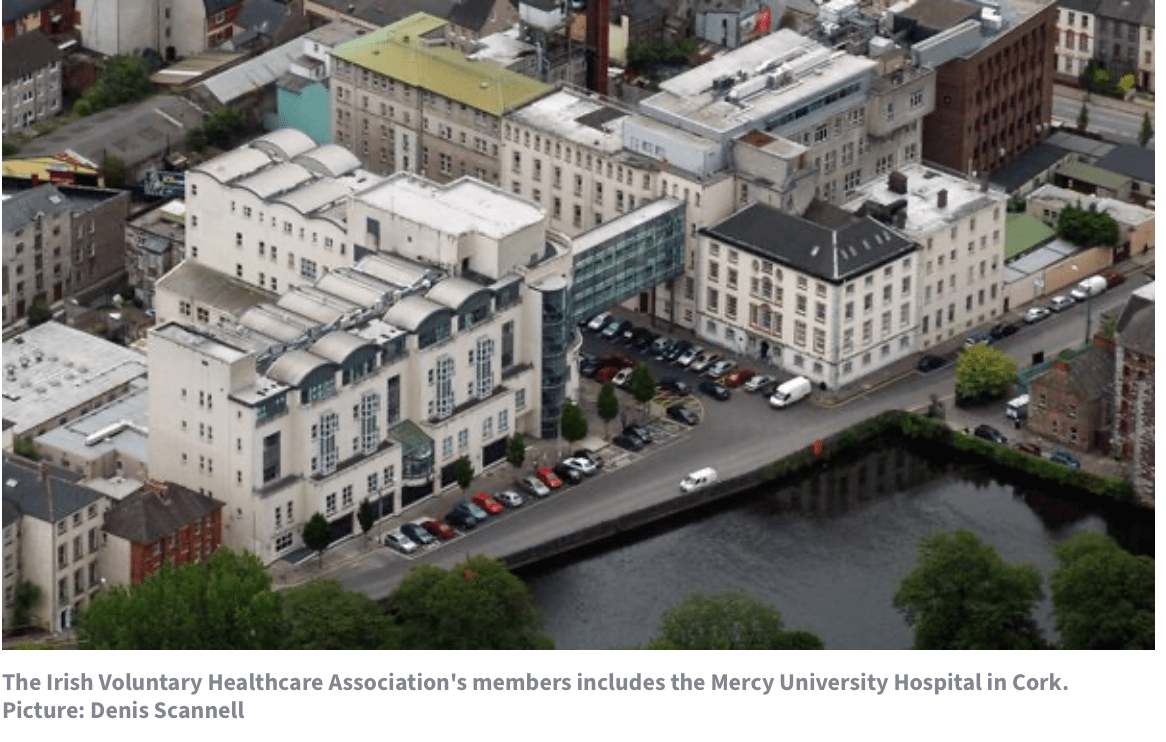
  • Voluntary public hospitals, are mainly state-funded but are sometimes owned by private bodies. For example, religious orders. … 
  • Private hospitals receive no state funding.

Funding……

https://www.irishexaminer.com/news/munster/arid-41383537.html

Public hospitals that are ultimately managed by

HSE (although the model is again currently in transition to RHAs). Voluntary hospitals that are managed by an independent board outside the control of the HSE, but still funded by taxpayers (https://foi.gov.ie/voluntary-hospitals/). And Private hospitals that operate independent of taxpayer funding. From a cancer perspective, the Dublin public hospitals are Voluntary Hospitals, and the cancer centres outside of Dublin are Public Hospitals run by the HSE.

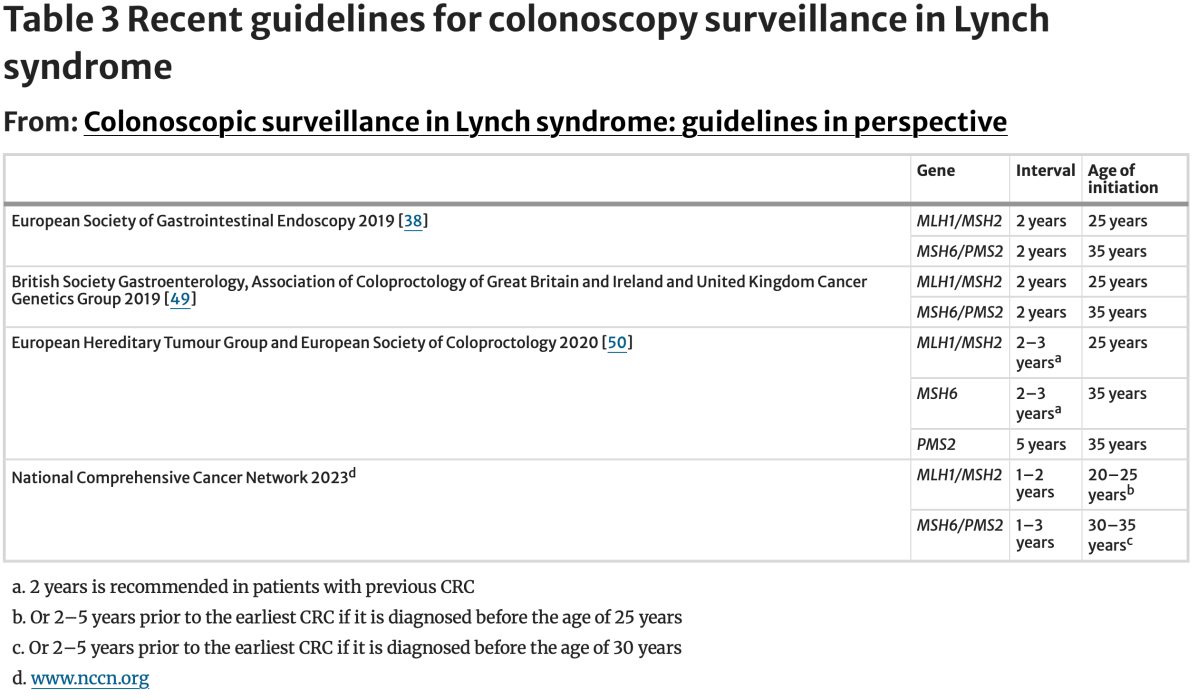
Colonoscopic surveillance in Lynch syndrome: guidelines in perspective

The prevention of colorectal cancer through colonoscopy relies on identifying and removing adenomas, the main precursor lesion. Nevertheless, colonoscopy is not an optimal strategy since post-colonoscopy colorectal cancer remains an important issue.

LS is currently understood as a four clinically distinct syndromes with consistent genotype-phenotype associations. Since CRC lifetime risk varies depending on the mismatch repair gene involved, screening guidelines are evolving to become gene specific. 

Despite recent advancements, the definitive role of colonoscopy in LS has yet to be established. Current evidence of the variable effect of colonoscopy effectiveness depending on quality indicators in LS suggests that the full potential of colonoscopy has not been achieved. 

The coming years are going to be very exciting with the results of the CAPP-3 study that will establish the role of different doses of ASA as cancer prevention, as well as the results of the first trials evaluating the effectiveness and safety of preventive vaccines in LS 

https://link.springer.com/article/10.1007/s10689-024-00414-y#Abs1

Cancer treatments and side-effects

It’s very important to be aware of any changes and let your medical team know about them, even if they happen some time after treatment. There are treatments to help with most side-effects. 

https://www.cancer.ie/cancer-information-and-support/cancer-information/cancer-treatments-and-side-effects/chemotherapy

Walking a Fine Line as a Squeaky Wheel: Communicating With Doctors

https://raredisease.net/living/communicating-with-doctors

In a nutshell, I walk the line by knowing what my tolerance level is, choosing my battles, and using diplomatic, intentional communication.

Asking a direct question with respect took all the guesswork out of everything for me, and I feel much more secure in our patient-provider relationship.

Irish Cancer Society’s Research Skills Summer School 2024

2024 Research Skills Summer School in Tullamore!

FREE course, for anyone interested in developing their research skills to apply to attend -led by Dr. Emer Guinan and Dr. Linda O’Neill, is perfect for anyone eager to dive into research – no experience needed! Join one or both blocks!

Apply at: https://brnw.ch/21wLsWL

https://www.cancer.ie/cancer-research/researchers-hub/apply-for-funding/open-calls/irish-cancer-societys-research-skills-summer-school-2024

Number of outpatients seen per consultant has fallen by nearly 30% since 2016

Consultant Medical Oncologist at University Hospital Galway commented on this article to Newstalk FM: https://irishtimes.com/health/2024/07/12/number-of-out-patients-seen-per-consultant-has-fallen-by-nearly-30-per-cent-since-2016/

I am surprised that it is only a 30% reduction. In medical oncology in Ireland, in general, there has never been a ‘waiting list’ to access a consultant opinion, public or private. Since I started my training, every new referral was pretty much automatically booked to the next OPD clinic, i.e. within a week of receiving the referral. That is still the case. 15 years ago, this meant that routinely, a consultant and 2-3 NCHDs would have a 3 hour clinic with 60-70 patients booked in. A patient with a “3pm appointment” would still be waiting to be seen at 8pm. There was little time to discuss the proposed cancer treatment and potential side-effects. The system was clearly understaffed for the volume of patients.

I have said before that one of the positive achievements over the past 10 years is the increase in consultant numbers. This has allowed more meaningful outpatient clinic interactions.

However: If the HSE hires a new consultant with the aim of improving patient care in this way, it should obviously be the case that secretarial support, clinical nurse specialist support, office space, outpatient space, dayward space supported by qualified staff nurses, HSCP support, (theatre space for surgeons), diagnostic and interventional radiology access, etc is also required, to enable improved patient care. In other areas of medicine or surgery, access to a consultant opinion might well be a constraint, in Oncology, the bottleneck is access to the service.


To Chemo or not to Chemo? (That is the question)

Many patients opt for no treatment at all for different reasons but for many, it comes from fear and fear alone.
I hope this blog post might help allay these fears because without chemotherapy, I wouldn’t be here writing this.

https://peakd.com/hive-121589/@clodaghdowning/to-chemo-or-not-to-chemo-that-is-the-question?

Cancer Ghosting


I bet you thought that friends and loved ones would come rushing our way once they learn about our cancer diagnosis. Well, you are wrong, sadly.…

https://peakd.com/health/@clodaghdowning/cancer-ghosting?

Metaphor

Illness as Metaphor, in her book Susan Sontag sets out to diagnose the problem with the way we think about illness.

Her discovery was not to focus on sickness itself, but the language surrounding disease – language that can, in her view, quite literally kill.

https://www.fringefest.com/festival/whats-on/illness-as-metaphor