PROTECTOR study (UK)

Current research points towards ovarian cancer beginning in the fallopian tube and not in the ovary itself.

This is where PROTECTOR comes in, with the theory being that removing the tube alone will help prevent cancer while being able to preserve fertility and avoid early menopause which comes with symptoms and long term health issues like hot flushes, sweats, mood changes, thinning of the bones, memory problems, higher risk of heart disease, and reduced libido.

Lynch syndrome genetic testing

A simple test using saliva or blood to determine if there is some type of mutation that will predispose you to certain types of cancers.

Knowing your family history

Preventative screening just part of our lives….

Coping with a Lynch Syndrome Diagnosis

What do you need to do to get yourself from getting a cancer…

Understanding what it means and educating yourself…

Lynch Syndrome as a Family Diagnosis

It’s a Family diagnosis.

Open communication is important.

Knowledge is power.

Why would you not want to know???

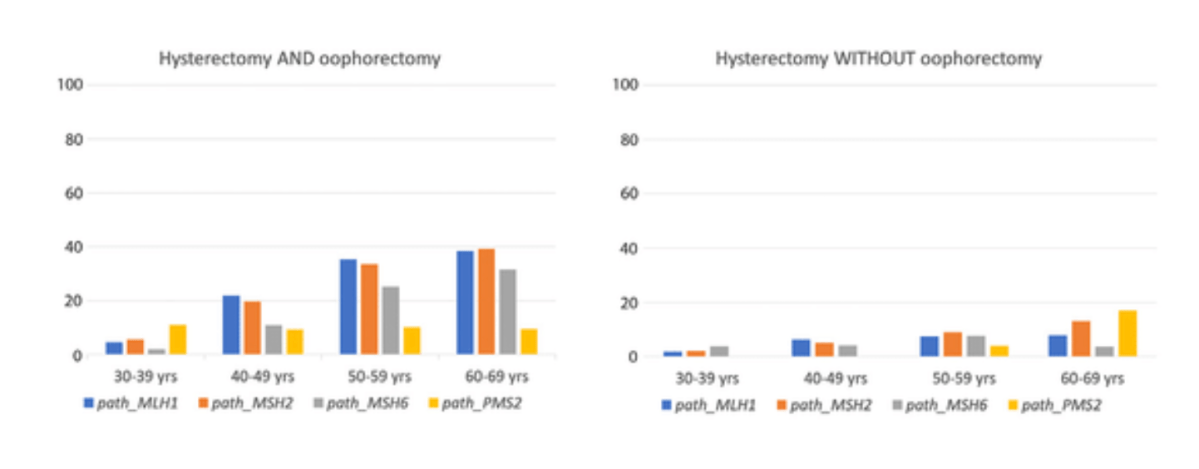
Uptake of hysterectomy and bilateral salpingo-oophorectomy in carriers of pathogenic mismatch repair variants: a Prospective Lynch Syndrome Database report(2021)

Conclusion:

Uptake of RRS before 50 years of age was low, and RRS was rarely undertaken in association with surgical treatment of CRC.

Uptake of RRS aligned poorly with gene- and age-associated risk estimates for endometrial or ovarian cancer that were published recently from PLSD and did not correspond well with current clinical guidelines.

The reasons should be clarified. Decision-making on opting for or against RRS and its timing should be better aligned with predicted risk and mortality for endometrial and ovarian cancer in Lynch syndrome to improve outcomes.

https://www.ncbi.nlm.nih.gov/pmc/articles/PMC8916840/

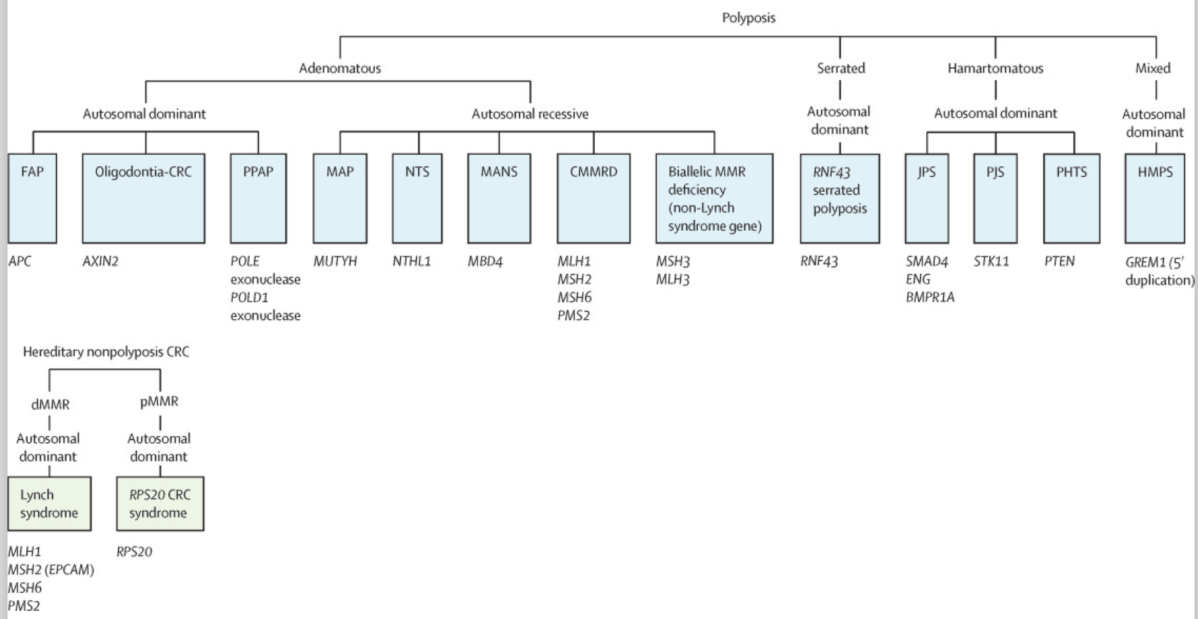
Genetic predisposition to gastrointestinal polyposis:

https://www.thelancet.com/journals/langas/article/PIIS2468-1253(23)00240-6/fulltext

This Review provides an overview of the known syndromes and genes, genetic testing, and clinical management of patients with polyposis, and recent advances and challenges in the field of gastrointestinal polyposis.

Implementing the EuropeanHealth DataSpace in Ireland

The European Health Data Space (EHDS) seeks to address key challenges
facing healthcare systems in Europe resulting from lack of access to health
data, and is designed to boost Europe’s competitiveness on the global
stage. If passed, individuals will have access to, and control over, their
digital health data from anywhere within the EU.
It will also make large,
anonymised datasets available for research, innovation, and policymaking.

When compared to European countries such as Denmark, that has a
similar-sized population, Ireland has traditionally had less access to
health research funding
. This coupled with a lack of integrated health data
availability
has meant that finding Irish patients to take part in clinical trials
is difficult
.

By harnessing the value of health data, the EHDS has potential
to enable better healthcare for patients, and improve the lives of the family
teams that care for them.
Ireland has a unique set of capabilities that can
contribute to the vision of the EHDS and support the needs of patients,
healthcare professionals, and others working on the frontline of healthcare
at home and across Europe.

Awareness will need to be raised among key stakeholders—the healthcare
system, patients, citizens
—and support provided to help them prepare for
the far-reaching changes ahead. Their engagement will in no small part
determine Ireland’s ability to make the leap from where it is today to full-
scale implementation of the EHDS in 2025.

How Holiday Conversations About Cancer Can Save Lives

Knowing your family history of Lynch syndrome can be a life-saving intervention.

Broaching the topic of family history, especially when it involves sensitive issues like cancer diagnoses, can be challenging, particularly in families with strained relationships or a history of familial dysfunction. It’s crucial to remember that discussing family history is not to dredge up painful memories or assign blame but to gain a deeper understanding of our collective past and make informed decisions about our health.

Silently plaguing our family is Lynch syndrome, a hereditary cancer syndrome that increases the risk of developing various cancers. This genetic predisposition often goes undetected, affecting approximately 1 in 279 Americans. Lynch syndrome arises from mutations in genes responsible for DNA error repair, potentially leading to tumor formation and triggering cancer.

https://www.curetoday.com/view/how-holiday-conversations-about-cancer-can-save-lives

Genetic Counsellors? are they recognised by the HSE???

They are an internationally recognised group of highly skilled healthcare professionals with training and expertise in genomic and genetic medicine and counselling skills.

Their role involves, but is not limited to, interpreting family and medical history to assess whether an inherited genetic condition may be present in a family and whether testing is appropriate. Education about inheritance, genetic testing, screening, and management.

Coming to terms with a genetic illness in the family can leave a person with many questions. What does this mean for me? What does this mean for my child? Will my family be affected?

Genetic counselling is about trying to explain the condition, how it’s inherited and explain any genetic testing results and also to ensure that people as a family understand what is happening.

Genetic counselling is embedded into some hospital departments in Ireland.

Recognition of the profession is also important…are they really recognised by the HSE???? At present, genetic counsellors in Ireland are registered in the UK or at a European level.

The Government needs to step up and fund the genomics/genetics strategy that includes provision for genetic counselling recognition, training and employment of genetic counsellors in the different mainstream models of healthcare.

Genetics is now recognised asa growing and integral part of cancer care, with a role across treatment, early detection and risk reduction.