A Guide to Lynch Syndrome

Lynch Syndrome is an inherited condition that increases your risk of developing some cancers, including bowel, womb and ovarian cancer. This is a guide to run through everything you need to know about Lynch.

This guide has been made with input from experts, people with Lynch Syndrome and Ask Eve nurses to provide you with all the information you need when offered testing for, or navigating a diagnosis of, Lynch Syndrome.  

We also have an Easy Read guide to Lynch Syndrome, which you can download here 

Philadelphia Girl, 14, Battling Three Cancers Simultaneously Hoping For a Breakthrough— The Rare Genetic Disorder Involved — How To Screen

Discovering that you or a family member have Lynch syndrome, Li-Fraumeni syndrome, or the BRCA1 and BRCA2 gene mutation, which increases the risk of developing breast and ovarian cancer, can be life-saving.

https://www.survivornet.com/articles/li-fraumeni-syndrome-importance-genetic-testing-sarcomas/

Exercise boosts anti-cancer immunity and reduces inflammation in Lynch Syndrome patients

A study led by our Dr. Eduardo Vilar-Sanchez found that intense aerobic exercise may lower the risk of colorectal cancer in patients with #LynchSyndrome.

Note: there are limitations to the study.

https://www.mdanderson.org/newsroom/exercise-boosts-anti-cancer-immunity-reduces-inflammation-in-lynch-syndrome-patients.h00-159621801.html

Why do we need to know if your cancer is hereditary?

If you find out your cancer is hereditary, knowing which gene mutations are involved enables you to:

• tailor your cancer treatments to your particular cancer, when possible;

 • take available steps to decrease your risk of developing other cancers; and 

• help your family members minimize their risk of cancer.

What if you don’t want to know?

Part of you may not want to know if your cancer is hereditary. Listen to the part of you that wants to do the best thing for your health and for your family. Finding out you have a mutation can be upsetting. Yet many patients report feeling relief and a renewed sense of control: “Learning I have a mutation does not change what is. It changes what I can do about what is.”

Long-term outcomes of hysterectomy with bilateral salpingo-oophorectomy: a systematic review and meta-analysis

What does this add to what is known?

Our findings show that hysterectomy with BSO at any age reduces the risk of ovarian cancer and that hysterectomy with BSO at a young age is associated with a reduced risk of breast cancer. Nevertheless, this risk reduction should be balanced against the possible increase in the risk of CVD, colorectal cancer, and all-cause mortality in young women. Furthermore, more evidences on the efficacy of hormone replacement therapy in mitigating the adverse effects of the premature cessation of estrogen are needed.

Conclusion:

Hysterectomy with bilateral salpingo-oophorectomy was associated with multiple long-term outcomes. The benefits of the addition of bilateral salpingo-oophorectomy to hysterectomy should be balanced against the risks.

Being Authentic

So, what does being authentic mean anyway? Is it just another one of those buzz words?

When you look around, there are various definitions, but words like reliable, genuine, trustworthy, and real are usually in there someplace.

Colonoscopy screening in Lynch syndrome

https://link.springer.com/article/10.1007/s10689-023-00347-y

Evidenced-based modelling studies of gene and gender stratified populations suggest a start age and frequency later and less frequent, for MSH6 and PMS2 variant carriers (35 years and 2–3 yearly). The penetrance of MLH1 and MSH2 variant carriers on the other hand does not allow the later start time at least as agreed in most guidelines. This differential surveillance by gene is now being implemented in various guidelines around the world. Such prescription however needs prudent implementation given variable intragenic and even intravariant penetrance estimates in large studies. Note that the confidence intervals in these estimates is relatively large.

There is still the “here and now” which needs to engage carriers and optimize adherence to whatever scheduling is prudent and advised.

How do we do this?

First, registries. Registries keep track of carriers, can provide automated time alerts for the need to attend scheduling ….Registries save lives.

Secondly, patient navigators. Time and time again it has been shown that navigators personally chaperone carriers through the complexities of the healthcare system, to actually reach colonoscopy. They are worth their cost-benefit weight in gold at least in the syndromic scenarios we are discussing.

Thirdly, a pleasant experience helps maintain adherence – the least offensive and effective bowel preparation, a comfortable colonoscopic experience (sedation is important for adherence), and compassionate staff. Efficient throughput (less time for patients) on the day is also valuable. Bowel preparation regime should be personalized against previous experience.

Fourthly, the governance of the risk management service needs to be comprehensive (not just gastrointestinal), patient-centred, interactive with the patient navigators, general practitioners. associated familial cancer clinics (not losing opportunities for time and age appropriate cascade testing across the family), and hospital electronic medical records.

The current study amongst others is important if we are to benefit from the wealth of science that has been uncovered in the understanding of familial cancer. Minimizing the burden of colonoscopies is an important variable, warranting that debate herein described.

Family history of Colorectal cancer – what’s next?

Expert Guest Kevin Monaghan,Gastroenterologist from @StMarksGenomics with an interest in hereditary bowel cancer.

8th UEG Talks #Podcast episode!

🎙️

http://ueg.eu/podcast Listen to our esteemed host,

@pradeepmundre, and expert guest

@kevinjmonahan

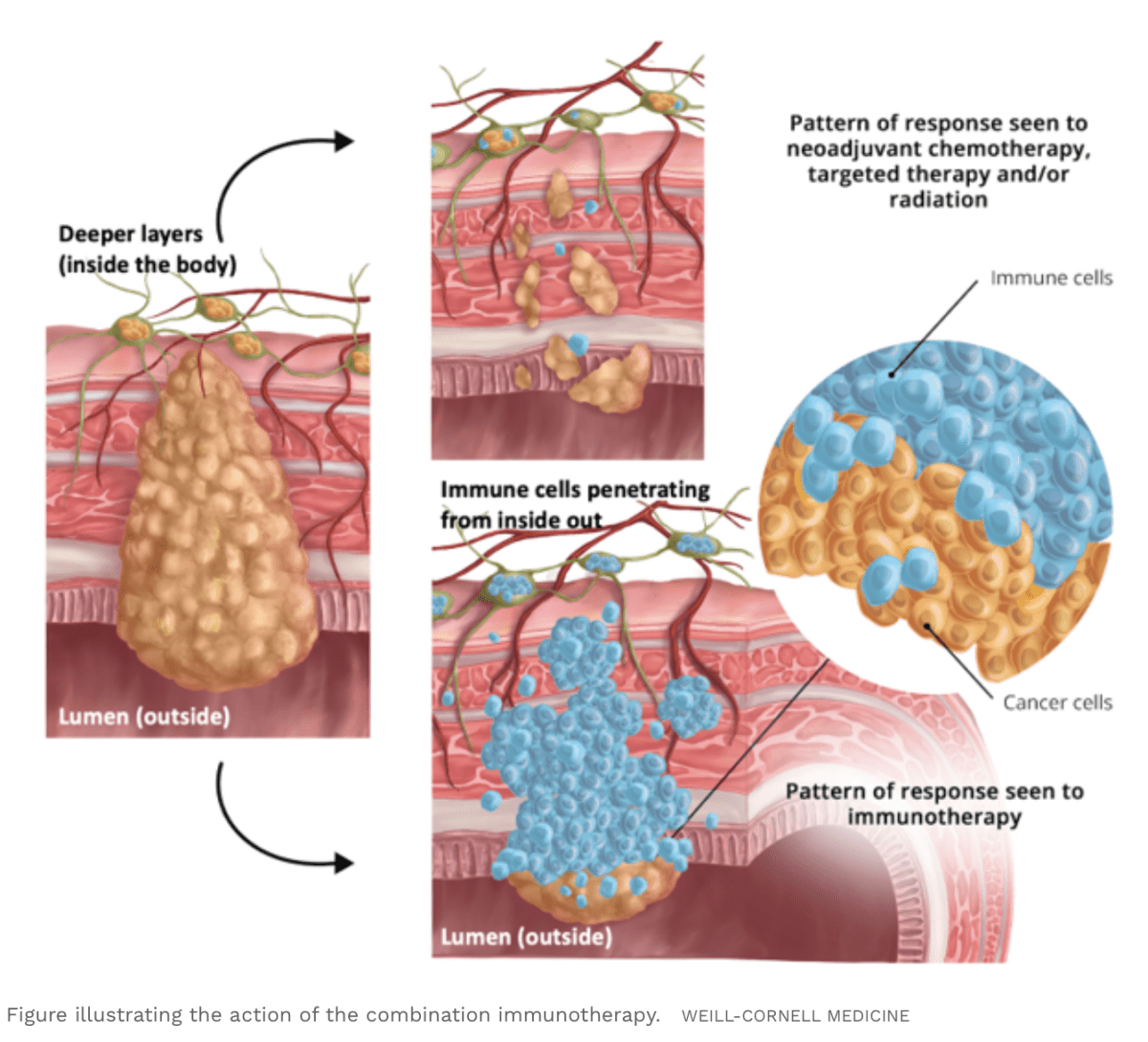
New Drug Combo Shows Promising Results Against Early Stages Of Colorectal Cancer

What’s noteworthy about this result is that the patients here, like about 85% of colorectal cancer patients, have what are called “mismatch repair proficient” cancers, which produce highly mutated tumor cells that typically do not respond to immunotherapy. What’s more, Kasi added that based on the results, it may be possible to reduce or even eliminate the need for chemotherapy after surgery, which would otherwise be standard in these kinds of cases.

https://www.forbes.com/sites/alexknapp/2023/09/20/new–drug-combo-shows-promising-results-against-earlier-stages-of-colorectal-cancer/?sh=2e8c593f175f