Lynch Syndrome Booklet -Eve Appeal(UK)

Lynch Syndrome and understanding your options

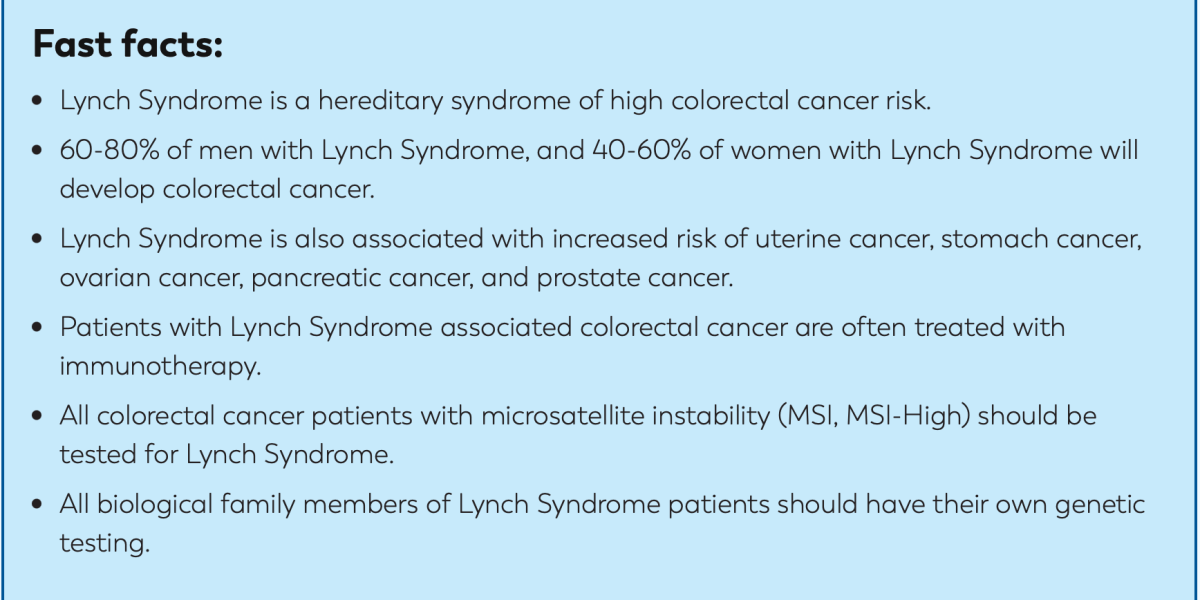
People with Lynch Syndrome are at a higher risk than the general population of developing some cancers. Identifying people who have Lynch Syndrome can have important benefits, including prevention of cancer, spotting it early and helping doctors decide on the best treatment for people who do develop cancer.

This booklet aims to help you understand more about the syndrome, what your options are

Lynch Syndrome: A Single Hereditary Cancer Syndrome or Multiple Syndromes Defined by Different Mismatch Repair Genes?

The risks of cancer (cumulative risks for various cancer types) differ among Lynch syndrome patients based on the specific altered MMR gene.

It may be appropriate to consider categorising Lynch syndrome as 4 distinct syndromes based on the specific altered MMR gene.

The varying carcinogenic mechanisms and associated cancer risks indicate the need for gene-specific surveillance recommendations in Lynch syndrome.

Moreover, the growing understanding of gene-specific differences will likely affect treatment options and efficacy of Lynch syndrome vaccines.

Studies of larger sample series are needed to definitively confirm the differences in mutational features identified across Lynch syndrome tumors and to evaluate the associated clinical consequences.

https://www.gastrojournal.org/article/S0016-5085(23)00696-0/fulltext

Finding the missing 95%: The Lynch syndrome diagnostic pathway to mainstreaming: NHS

Workshop to hear about the diagnostic pathway all the way to mainstreaming genetic testing & setting-up new clinics.

https://www.norththamesglh.nhs.uk/lynch-syndrome-pathway-mainstreaming/

Dr Ian Frayling(President Association of Clinical Pathologists), Lynch Syndrome UK Patients Conference 2023

What’s going on in Lynch Syndrome?

Better way of diagnosing Lynch Syndrome…

Individualising treatment…

How common is Lynch Syndrome???

No Longer a rare issue.

Hereditary Cancer Model of Care launched yesterday in Ireland

This provides the blueprint for the necessary development of hereditary cancer services in Ireland.

Lynch syndrome quick guide for Primary Care clinicians

7 things men should know about genetic testing and cancer

While the cause of most cancers is unknown, about one in 10 cancers are caused by changes in genes that can be passed down in families.

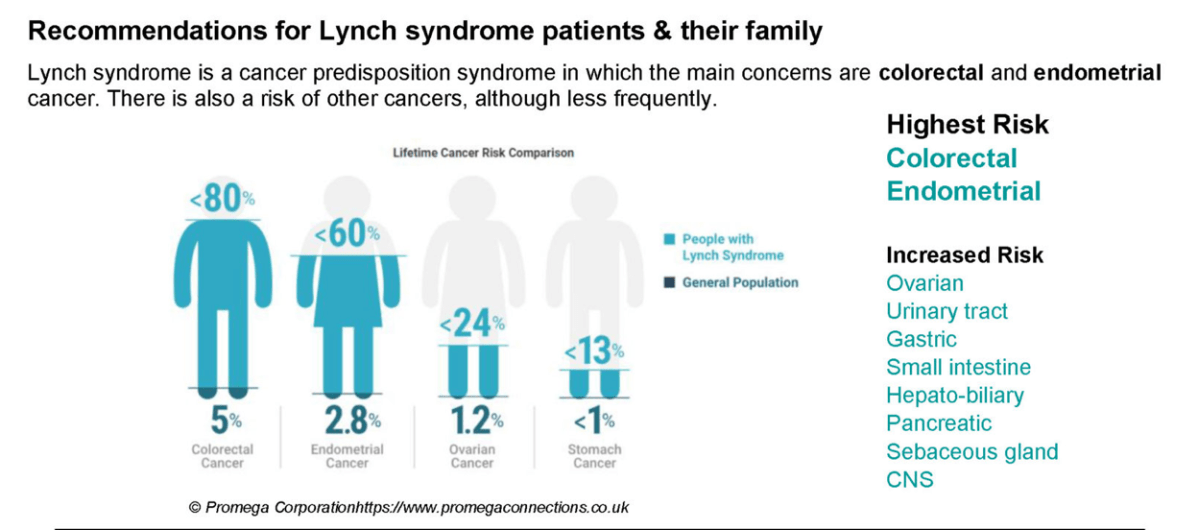
The lifetime risk of developing colorectal cancer is up to 52% for people with a gene mutation associated with Lynch syndrome, compared to about 4% for the general population.

These people also tend to get cancer at an earlier-than-average age. It’s estimated that less than 10% are aware of their status.

Acquired vs. Inherited Mutations in Cancer: What You Need to Know

A gene mutation is a change in the genetic instructions in a cell. Genes are the DNA-encoded instructions for building proteins, which are the machinery that does the work inside our cells and our bodies. Some mutations change the function of proteins in ways that increase the risk of cancer or drive its growth.  

Gene mutations are not all the same. An understanding of the difference between acquired mutations and inherited mutations can help you make better decisions about cancer care and prevention. 

An acquired mutation is acquired during your lifetime.

An inherited mutation is passed down from one or both parents. (These mutations, called germline mutations, can have no effect, be detrimental to health, or be beneficial, or sometimes have both positive and negative effects)

Germline genetic testing identifies inherited mutations. Inherited mutations also tend to be silent until you see a clue, such as a pattern of cancer in your family. If you suspect that you have an inherited mutation, a genetic counselor might suggest germline genetic testing.  

Inherited mutations that are associated with cancer don’t directly cause cancer, but they do increase the risk that cancer will develop at some point in a person’s lifetime.  

#MensHealthWeek

Men, on the island of Ireland, experience a disproportionate burden of ill-health.

Ireland was the first country in the world to adopt a National Men’s Health Policy, and there were three underlying factors behind the rationale to develop this.

Firstly, there were particular concerns about differences in health outcomes between males and females, and between different groups of males. This led to a call for a specific policy focus on men’s health in Ireland’s National Health Strategy in 2001.

Secondly, there was a recognition of the need to develop a gendered approach to men’s health in order to more effectively engage men in services and programmes.

Thirdly, concerns within wider grass roots men’s health organisations about the state of men’s health, and the health status of specific population groups of men, contributed bottom-up momentum to policy development (Health Service Executive, 2016).

The Men’s Health Forum in Ireland recently launched three publications titled ‘Men’s Health in Numbers’.  These tell you everything that you ever wanted to know about the facts and figures on men’s health on the island of Ireland.  Download the reports at: https://www.mhfi.org/news/1096-men-s-health-in-numbers.html