How patients can use medicines before authorisation

In Ireland, medicines need to be authorised before a patient can use them. 

Sometimes, there is no authorised medicine available to treat a patient’s illness or to meet their medical needs. When this happens, a patient may be able to get access to medicines by the following two ways: 

1.Clinical trials

2.Exempt Medicinal Products (EMP)

https://www.hpra.ie/regulation/human-medicine/patients-and-healthcare-professionals/access-to-medicines-before-authorisation

The Art of Distraction

UCAN Ireland notes with concern the comments attributed to Prof. Michael Barry in today’s RTÉ article by Fergal Bowers.

We are a grassroots, independent advocacy movement driven by one goal — to ensure that Irish cancer patients have timely and equitable access to the best available treatments, in line with European standards.

Prof. Barry’s remarks risk undermining the integrity of clinicians and advocates who have, in good faith and with full transparency, called attention to delays and shortcomings in the drug reimbursement process in Ireland. Suggesting that clinicians are somehow compromised by industry involvement is a deeply unfair and unsubstantiated claim. These are healthcare professionals who see first-hand the consequences of delayed access — and they are speaking out because their patients cannot afford to wait.

It is also important to point out that such comments serve as a distraction from the real issue: Ireland’s reimbursement system is not fit for purpose. By international comparison, we are among the slowest in Europe when it comes to approving access to innovative cancer therapies for public patients. This is not a matter of perception — it is borne out by the data and by the lived experience of patients across the country.

UCAN Ireland will continue to advocate, without fear or favour, for a reformed and patient-centred reimbursement system that serves the needs of those it is supposed to protect.

https://www.rte.ie/news/health/2025/0701/1521161-drug-payments-ireland/

The Cancer Prevention Project 3 study (CaPP3)

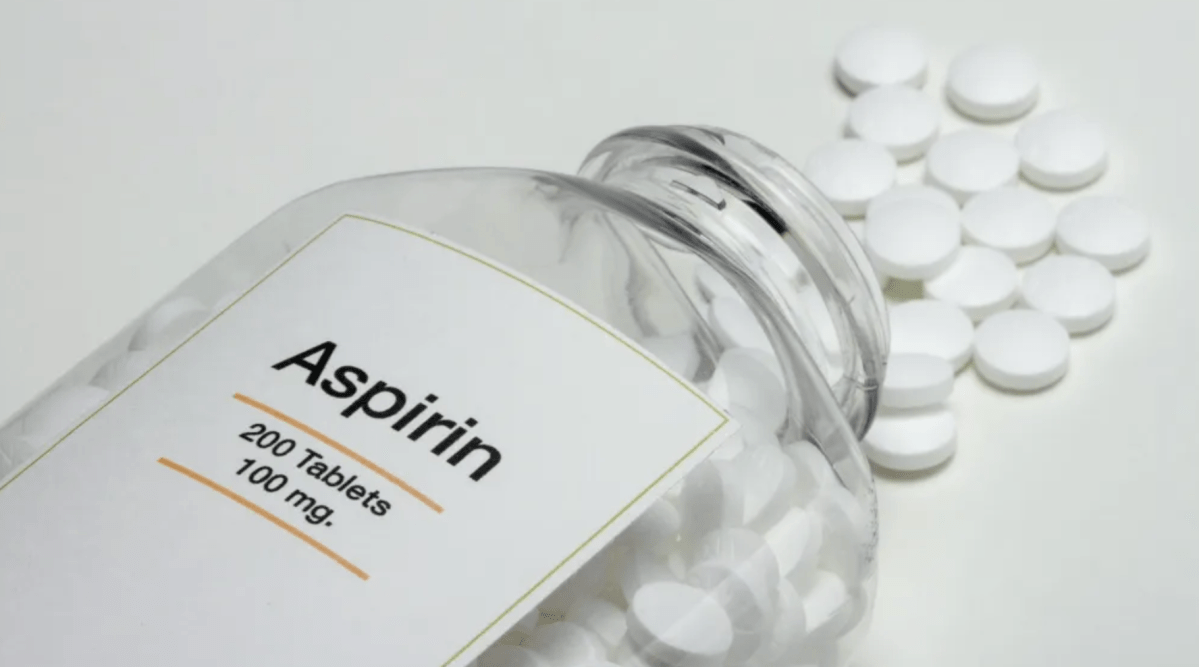
The trial involved 1,879 people with Lynch syndrome who were given three different-sized doses of the painkiller.

The Cancer Prevention Project 3 study (CaPP3), supported by Cancer Research UK, involved patients taking a different daily dose of aspirin: 100mg, 300mg or 600mg.  In the trial, a European-sized dose of 100 mg aspirin was used. The established dose is 75mg per day in the UK, and 81mg in the US.

People with Lynch syndrome have inherited a faulty gene which can increase their chances of developing some cancers – including bowel and womb cancer.

Prof John Burn, who led the international study, said he focused his research on those patients “because they get so many cancers”. 

“We already have NICE guidance saying people with Lynch syndrome should be recommended to take aspirin. Now we should recommend a baby aspirin.” new results showed the lowest dose worked just as well as the larger doses.

“Roughly speaking, if someone with Lynch syndrome has about a 2% a year chance of getting mostly bowel cancers, we think if they take aspirin, that is halved – down to about 1% a year,” he explained.

In some people, aspirin can cause bleeding, so Prof Burn said he wanted health regulators to now recommend the lowest dose be given to Lynch syndrome patients.

https://www.bbc.com/news/articles/c05702zjl2do

Cancer Trials Ireland

Every family in Ireland has been touched by cancer. Thankfully, we have made huge progress in finding it and treating it. But there’s more to be done.

Many questions remain unanswered. Maybe you can help find the answers by taking part in a cancer trial.

Cancer treatment in the last 6 months of life: when inaction can outperform action

The implications of the decision to treat a terminally ill patient are multidimensional, but the ultimate goal should be to help patients with a peaceful life-death transition.

To that end, education and training of oncologists on end of life care, managing expectations of patients and communication skills are important, as is the role of the media in promoting the importance and complexities of navigating quality end of life care and discouraging the ‘war’ metaphor for cancer.

It is also the case that prescribing drugs in the last 6 months of life constitutes a substantial proportion of total healthcare costs, and we may be able to avoid some of these costs if patients better understand the benefit/risk trade-off offered by anticancer drugs tested in this population.

https://ecancer.org/en/journal/article/826-cancer-treatment-in-the-last-6-months-of-life-when-inaction-can-outperform-action

Nouscom Presents Positive Final Results from Completed Phase Ib/II Study of Neoantigen Immunotherapy NOUS-209 at AACR 2025, Demonstrating a Highly Potent and Durable Immune Response in Lynch Syndrome Carriers

  • Lynch Syndrome (LS) is a common hereditary condition that significantly increases the lifetime risk of cancer, especially colorectal and endometrial, to as high as 80%

  • NOUS-209 is an off-the-shelf immunotherapy designed to harness the power of the immune system to recognize and eliminate cancer cells before tumours develop

  • Final results from a Phase Ib/II study of NOUS-209 monotherapy in LS carriers confirm its safety and immunogenicity, supporting advancement to a potentially registration-enabling study for cancer interception

The completed Phase Ib/II trial evaluated safety and immunogenicity in 45 LS carriers

  • T cells induced by NOUS-209 were shown to directly kill tumour cells ex vivo, confirming functional anti-cancer activity

NOUS-209 is a pioneering approach to cancer interception comprising two proprietary viral vectors that deliver 209 shared FSP neoantigens and train the immune system to recognise and attack cancerous and pre-cancerous cells before tumours can fully develop.

“Currently, individuals with Lynch Syndrome rely on frequent screenings, such as colonoscopies, to manage their markedly increased risk of developing cancer. These latest data are a step toward a completely new approach – leveraging the immune system for cancer interception,” said the study’s principal investigator, Eduardo Vilar-Sanchez, M.D., Ph.D., Professor of Clinical Cancer Prevention at The University of Texas MD Anderson Cancer Center.

https://www.globenewswire.com/news-release/2025/04/29/3070727/0/en/Nouscom-Presents-Positive-Final-Results-from-Completed-Phase-Ib-II-Study-of-Neoantigen-Immunotherapy-NOUS-209-at-AACR-2025-Demonstrating-a-Highly-Potent-and-Durable-Immune-Response.html

Nous-209 off-the-shelf neoantigen immunotherapy induces robust neoantigen T cell response with the potential to intercept cancer in Lynch syndrome carriers 

Cancer interception represents a new approach, aimed at targeting precancerous lesions and therefore preventing cancer occurrence. Lynch syndrome is one of the most prevalent hereditary cancer syndromes, with an estimated prevalence of one in 300, and high-risk predisposition to several types of cancer, with up to 80% lifetime risk to develop CRC.

Loss of MMR proteins causes an accumulation of mutations in the microsatellite sequences, known as Microsatellite instability (MSI), that can lead to shared frameshift mutations .

Nous-209 is a neoantigen directed immunotherapy encoding 209 FSP shared across sporadic and hereditary MSI tumors and precancer lesions in clinical development for interception and treatment of MSI tumors (Leoni et al., 2020; NCT04041310).

Reported are the full set of safety and immunogenicity results of a Phase Ib/II study of Nous-209 monotherapy in LS carriers. (45 enrolled) Neoantigen specific immune responses post Nous-209 were observed in 100% of evaluable participants (37/37)

The complete safety and immunogenicity results from this Phase Ib/II trial support the further development of Nous-209 monotherapy, highlighting its potential to efficiently stimulate the immune system and intercept cancer in LS carriers.

https://aacrjournals.org/cancerres/article/85/8_Supplement_1/6427/758888/Abstract-6427-Nous-209-off-the-shelf-neoantigen

‘Phenomenal’ – study hailed a significant milestone in child cancer care

Professor Owen Smith, Consultant Paediatric Haematologist at Children’s Health Ireland (CHI), has launched Ireland’s first clinical study of genomics approaches in cancer care.

Genomic sequencing allows medical teams to better identify cancerous cells and target them specifically.

“We need to stop carpet bombing cancers and go for a more sniper fire or precision way of killing the cancer and reducing the side effects to the patient,” Prof Smith said.

“Genomic sequencing of the cancer and the patient will allow us to define the patients where chemotherapy can be safely reduced,”

The primary objective of MAGIC-I is to evaluate the clinical and health economic impact of implementing genomic diagnostics in paediatric cancer care in Ireland.

A common drug sitting in your medicine cabinet right now may help fight cancer

It’s been a go-to for headaches, fevers, and sore muscles for over a century. But new research suggests that aspirin—the everyday over-the-counter medication sitting in your cabinet—might also have another, far more unexpected use as an anti-cancer drug.

A 30-year study from researchers at Harvard is catching attention

By analyzing data from over 100,000 people, researchers found that taking aspirin at least twice a week was associated with a reduced risk of colorectal cancer—but especially among people who don’t follow other health guidelines, like eating well or not smoking. So, while it isn’t a mind-blowing anti-cancer drug, it could very well have some promising potential to become one.

These newest findings could point toward a future where aspirin is used strategically based on someone’s genetic makeup and lifestyle risk factors to help treat dangerous cancers. However, there’s still reason for caution (Aspirin carries several known side effects, including the risk of stomach bleeding, especially in people over the age of 70. That’s why researchers are increasingly calling for personalised guidelines rather than blanket recommendations when treating it as an anti-cancer drug)

https://bgr.com/science/a-common-drug-sitting-in-your-medicine-cabinet-right-now-may-help-fight-cancer/