Critical Evaluation of Total Neoadjuvant Therapy for Locally Advanced Rectal

Conclusion: the incorporation of total neoadjuvant therapy(TNT) as the standard of care for patients with Locally advanced rectal carcinoma(LARC) would mean intensification of treatment as compared with chemoradiotherapy(CRT) alone with its associated toxicity, without conclusive evidence of improved response rates or overall survival.

Therefore, we feel that CRT should remain the standard of care for patients with LARC. Future research should focus on novel biomarkers, enabling identification of patients who will substantially benefit from a TNT regimen to justify the added toxicity.

https://ascopubs.org/doi/10.1200/OP-25-00530

Prevention is better than Cure

Cancer came as no surprise for one survivor.

Learn how the family history and a genetic syndrome put them at high risk.

Delving into the role of genetic counsellors in cancer care.

And the hope for a vaccination.

Lynch Syndrome

Lynch syndrome is an inherited condition that increases the risk of developing certain cancers, including colorectal, endometrial, and ovarian cancer.

On this page

https://www.canceraustralia.gov.au/impacted-by-cancer/lynch-syndrome#what-is-lynch-syndrome

Real-World Molecular Testing in European Early-Onset Colorectal Cancer

The global incidence and mortality of early-age onset colorectal cancer (EOCRC, or CRC diagnosed under 50 years) has increased in recent decades.

High-risk surveillance and personalised oncological treatment may improve patients’ outcomes. This study aims to characterise real-world somatic and germline molecular profiles in European EOCRC patients.

Conclusions

Results support universal and paired somatic and germline multi-gene panels for all EOCRC patients, regardless of MMR status or family history. Systematic molecular testing approaches are necessary to address disparities in people with EOCRC. Larger unselected cohort studies would support validation of testing prediction models and estimates of clinically relevant variant actionability.

(Somatic testing analyses acquired genetic changes (mutations) in a person’s tumor cells to guide cancer treatment, while germline testing looks for inherited genetic mutations present in every cell of the body since birth)

https://onlinelibrary.wiley.com/doi/10.1002/ueg2.70112

Is It Advisable to Use Probiotics Routinely After a Colonoscopy? (A Rapid Comprehensive Review of the Evidence)

About 5–20% of patients who undergo colonoscopy, in the days and weeks following the procedure, develop various symptoms (abdominal pain, bloating, and bowel alteration) mainly related to dysbiosis(imbalance in bacterial composition) induced by the propaedeutic intestinal preparation. 

Conclusion: more prospective multi-arm case-control studies on large case series are certainly needed to establish the real efficacy and necessity of probiotic treatments after colonoscopy. There is a wide variability of proposed treatments that have not been compared with each other and no cost-effectiveness analysis is yet available in the literature. Therefore, we are still far from being able to suggest a routine probiotics treatment after colonoscopy.

https://pmc.ncbi.nlm.nih.gov/articles/PMC12194910/#:~:text=To%20date%2C%20to%20our%20knowledge,10%2C11%2C12%5D.

What to expect from the NHS Bowel Screening Programme for people with Lynch syndrome

If you live with Lynch syndrome, regular bowel screening is one of the most effective ways to reduce your risk of bowel (colorectal) cancer and catch problems early. The NHS Bowel Cancer Screening Programme has produced a clear, plain-English leaflet, Helping You Decide, to walk you through the offer and help you choose what’s right for you.

Why we offer colonoscopies to people with Lynch syndrome

For people with Lynch syndrome, regular screening by having a colonoscopy has been shown to reduce the chance of becoming seriously ill or dying from bowel cancer, as well as reducing the chance of bowel cancer developing in the first place.

This is because screening through a colonoscopy can detect bowel cancer when it is at an early stage when treatment is more likely to be effective. It can also help to find polyps. These are small growths on the lining of the bowel. Polyps are not cancers but may develop into cancers over time. Polyps can be easily removed, which reduces the risk of bowel cancer developing.

Your clinical genetics team will continue to help you manage your other Lynch syndrome needs and risks (such as gynae and skin checks).

https://www.lynch-syndrome-uk.org/post/nhs-bowel-screening-for-people-with-lynch-syndrome-what-to-expect-and-how-to-decide

After Being Declared Cancer-Free

Most people believe that once a person is declared to be cancer-free that all is over.

Long after the doctor has given you this wonderful news, you still think about your journey and wonder if the cancer will come back. But, you keep these thoughts in your mind and live with this sense of fear always lingering in the back of your mind wondering if you just might be one of the very few for whom the cancer will return.

Being realistic, just about every survivor will think about this on occasion. When it comes time for yearly testing, you pray and hope beyond hope that nothing new will be discovered. This is perfectly natural but if you find yourself having these thoughts frequently, it is time to do yourself a favor and seek professional help.

Gene-Specific Detection Rate of Adenomas and Advanced Adenomas in Lynch Syndrome

Colonoscopy is expected to reduce colorectal cancer (CRC) incidence in Lynch syndrome (LS) by detecting and removing adenomas. The existence of gene-specific differences in adenoma detection has been proposed yet remains insufficiently explored. This study aims to elucidate gene-specific adenoma detection rates and their association with post-colonoscopy CRC (PCCRC), which stands as an important issue in LS surveillance.

Conclusions

Carriers of MLH1/MSH2 pathogenic variants are at a higher risk of developing advanced adenomas(AAs) compared with those with MSH6/PMS2mutations, with MSH6 carriers exhibiting an intermediate risk profile. AAs are an independent risk factor for PCCRC. LS patients with AAs should be identified as high risk and undergo enhanced colonoscopy surveillance.

https://www.gastrojournal.org/article/S0016-5085(25)00650-X/abstract

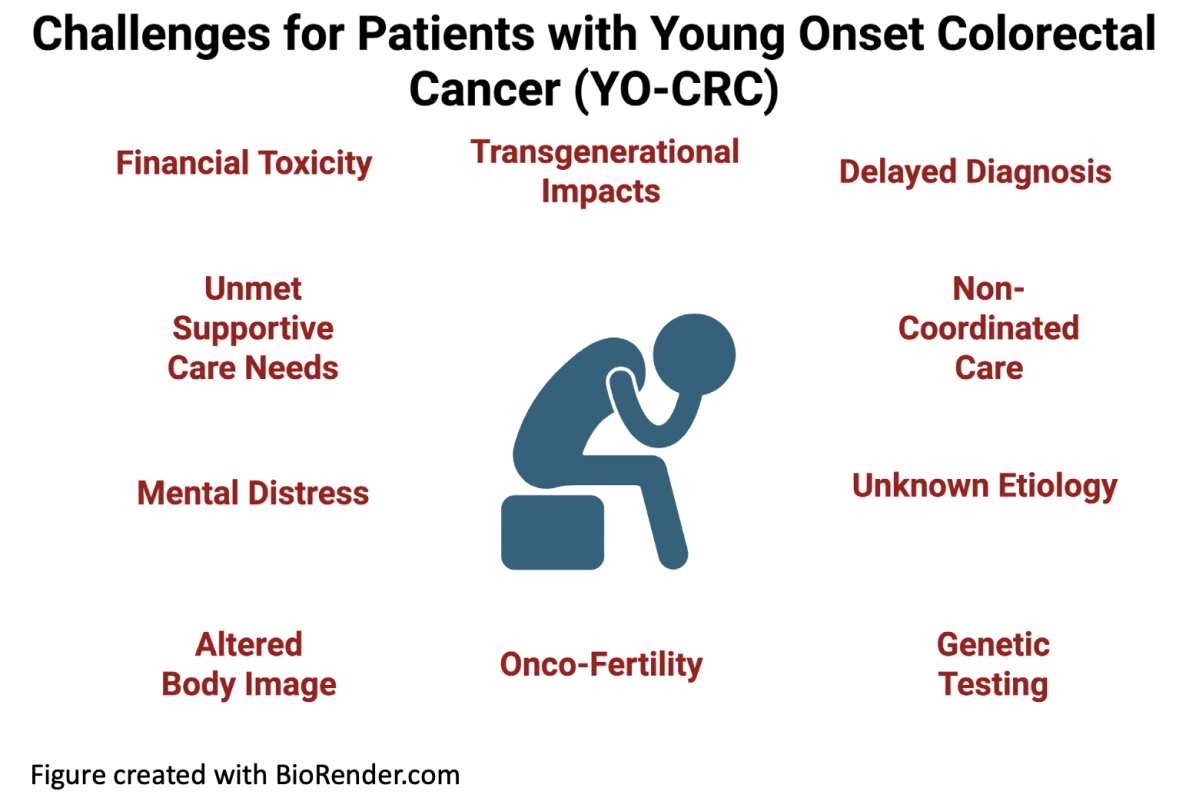
Global epidemic of Young Onset Colorectal Cancer has arrived…

Epidemiology is the study of how often diseases occur in different groups of people and why.

https://imj.ie/the-global-epidemic-of-young-onset-colorectal-cancer-has-arrived-implications-for-irish-healthcare/

Restrictive diets are unnecessary for colonoscopy: Non-inferiority randomized trial

In colonoscopy, preparation is often regarded as the most burdensome part of the intervention. Traditionally, specific diets have been recommended, but the evidence to support this policy is insufficient. The aim of this study was to evaluate the impact of the decision not to follow a restrictive diet on bowel preparation and colonoscopy outcomes.

Conclusions The liberal diet was non-inferior to the 1-day LRD, and increased tolerability. Colonoscopy performance and quality were not affected. 

A non-inferiority randomised trial is a study designed to prove that a new treatment is not worse than an existing treatment by more than a pre-defined, acceptable margin.

A liberal diet isn’t about eating anything you want, but rather following a low-fiber diet for a few days beforehand, gradually transitioning to clear liquids the day before the procedure.

https://pmc.ncbi.nlm.nih.gov/articles/PMC10919995/