Does Colon Cancer run in YOUR Family?

The genetic risk for colon and rectal cancer.

  • The risk of developing colorectal cancer increases 2-3 times when a parent, sibling, or child is diagnosed compared to those with no family history.
  • The risk increases 3-6 times over the general population, when a relative is diagnosed at a young age or if there is more than one relative with colorectal cancer.
  • About 20% of all colorectal cancer patients have a close relative who was also diagnosed with the disease.
  • About 5% of patients with colorectal cancer have a well-defined genetic syndrome that causes the disease like Lynch syndrome or familial adenomatous polyposis (FAP).  These conditions are linked with higher risks for colon and other cancers.
  • Lynch syndrome accounts for 2- 4% of all colorectal cancer cases.
  • FAP is the second most common predisposing genetic syndrome; for these individuals, lifetime risk of colorectal cancer approaches 100% without intervention.

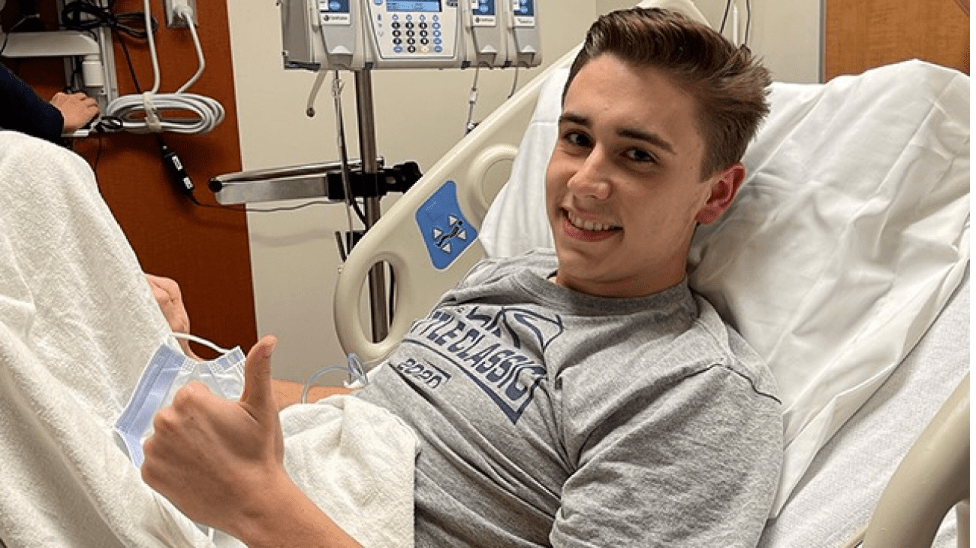
20-year-old patient: You’re never too young to get colorectal cancer

“I learned the reason right after my diagnosisgenetic testing showed I have Lynch syndrome. It’s a hereditary condition that makes me more likely to develop multiple cancers over my lifetime. I am the first person in my family to have it.”

How having Lynch syndrome has helped me

If there’s anything good to be said about having Lynch syndrome, it’s probably that it made me eligible to participate in a clinical trial …” 

https://www.mdanderson.org/cancerwise/20-year-old-patient–you-re-never-too-young-to-get-colorectal-cancer.h00-159538956.html

If you have been avoiding your colonoscopy because the prep makes you nervous, check out this blog (and stop delaying)!

Risk-stratified faecal immunochemical testing (FIT) for urgent colonoscopy in Lynch syndrome during the COVID-19 pandemic

Lynch syndrome is a hereditary cancer disease resulting in an increased risk of colorectal cancer. Findings are reported from an emergency clinical service implemented during the COVID-19 pandemic utilising faecal immunochemical testing (‘FIT’) in Lynch syndrome patients to prioritise colonoscopy while endoscopy services were limited.

Fifteen centres participated from June 2020 to March 2021. Uptake was 68.8 per cent amongst 558 patients invited.

Conclusion

FIT demonstrated clinical value for Lynch syndrome patients requiring colorectal cancer surveillance …. Further longitudinal investigation on FIT efficacy in Lynch syndrome is warranted and will be examined under the ‘FIT for Lynch’ study (ISRCTN15740250).

https://academic.oup.com/bjsopen/article/7/5/zrad079/7260320?login=false

The ins and outs and ups and downs of a colonoscopy

A colonoscopy is a test to look at your bowel using a small camera. 

Bowel preparation is required by taking a strong laxative. You will take this the day before the test to empty your bowel. The test works best when your bowel is empty and there is nothing to block the camera going into the bowel and having a look.

You will have to go to a hospital endoscopy unit to have the test.

The test is a day procedure.

The test is done by a doctor or an advanced practice nurse, called an endoscopist.

You will have a choice of doing the test with sedation or no sedation.

Generally the test can take up to 20 minutes.

Before you leave, you will be told what was seen during the test and if any samples were taken or if any polyps were removed. 

(Personally I have undergone aprox 15 colonoscopies and I can say that the preparation and procedure are worthwhile particularly if you have a family predisposition to cancer or have symptoms like blood in your stool. They have probably saved my life as during one of these procedures cancer was detected…I had no symptoms).

https://www2.healthservice.hse.ie/organisation/nss/news/the-ins-and-outs-and-ups-and-downs-of-a-colonoscopy/

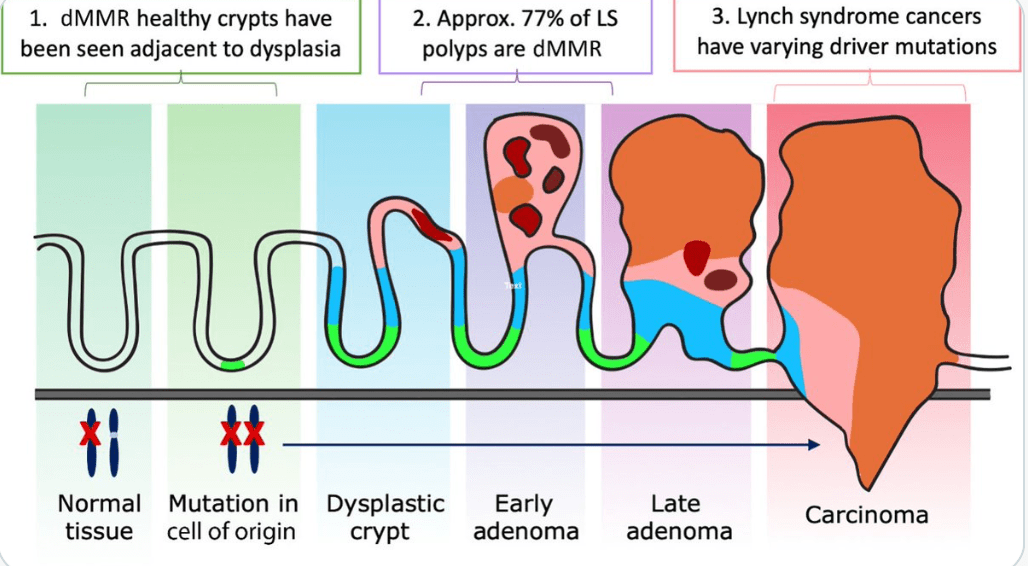
Biology of Precancers and Opportunities for Cancer Interception: Lesson from Colorectal Cancer Susceptibility Syndromes

In this review, they focus on two of the best characterised syndromes, Lynch syndrome (LS) and familial adenomatous polyposis (FAP). 

The increasing knowledge of precancer lesions and their biology may aid novel strategies for individualized prevention. It is essential to consider the adverse effects of such interventions when weighed against quality of life, particularly considering the age at which medication may begin.

Exciting advancements are being made in the field of cancer vaccination against LS colorectal cancer, however until trials show their validity the recommended surveillance protocols must be upheld.

Extrapolating information from these hereditary colorectal cancer studies can also help pinpoint how certain sporadic cancers evolve and offer opportunities for cancer prevention.

NICE publishes guidance on using Faecal Immunochemical Tests in primary care

The National Institute for Health and Care Excellence (NICE) have published new guidance on the use of a home test called faecal immunochemical test, known as FIT, in people with symptoms of possible bowel cancer.

Doctors have been advised by NICE to offer people with symptoms of possible bowel cancer a home test kit to help reduce waiting times for diagnostic tests, like a colonoscopy or flexi-sigmoidoscopy.

The new guidance will now see everyone with suspected bowel cancer receive a FIT kit.

Those with a positive result will be referred for a colonoscopy or other tests for further investigation. However, GPs can refer people for a colonoscopy without a positive FIT result if they think its necessary and where symptoms persist.

https://www.bowelcanceruk.org.uk/news-and-blogs/news/nice-publishes-guidance-fit-primary-care/

From diagnosis of colorectal cancer to diagnosis of Lynch syndrome: The RM Partners quality improvement project

The UK National Institute for Health and Care Excellence recommends universal testing for Lynch syndrome (LS) in all newly diagnosed colorectal cancer (CRC) patients. However, implementation varies significantly by geography. This project was developed to measure variation and deliver an effective diagnostic pathway from diagnosis of CRC to diagnosis of LS (within the RM Partners (RMP) West London cancer alliance).

Conclusion

The LS project was completed by April 2022. We have implemented a systematic approach with workforce transformation to facilitate identification and ‘mainstreamed’ genetic diagnosis of LS. This work has contributed to the development of a National LS Transformation Project in England which recommends local leadership within cancer teams to ensure delivery of diagnosis of LS and integration of genomics into clinical practice.

So why do people not get tested?

Experts say that millions of people are walking around with a genetic variant that raises their risk of developing cancer. The vast majority of them have no clue.

That’s a problem, because people who know they’re at a higher risk for certain cancers can take action, like going for more frequent screening tests such as colonoscopies and mammograms or even having preventive surgeries.

“Doctors are not up on this”

Asked why so few people get tested, both researchers and patients say that “many cancer doctors aren’t familiar with the latest research on inherited risk or that they don’t know the cost of testing has dropped”

https://www.npr.org/sections/health-shots/2023/08/02/1191419631/cancer-risk-test-genetic-genes-inexpensive-why-dont-more-people-get-tested

Biology of Precancers and Opportunities for Cancer Interception: Lesson from Colorectal Cancer Susceptibility Syndromes

The two best defined syndromes are Lynch syndrome (LS) and familial adenomatous polyposis (FAP). Studying these groups on regular cancer surveillance provides insight into the tumor biology, potential avenues for prevention, and their effectiveness. In this article, we will review some of the lessons that can be learned from these conditions which may afford opportunities for cancer prevention.

Conclusions

Hereditary syndromes provide an opportunity to study early precancer evolution surveillance and interventions to prevent cancer. Understanding genotype and phenotype in colorectal cancer susceptibility syndromes allows for customized clinical trials in preventive medicine to be highly effective in their outcomes.

The increasing knowledge of precancer lesions and their biology may aid novel strategies for individualized prevention. It is essential to consider the adverse effects of such interventions when weighed against quality of life, particularly considering the age at which medication may begin.

Exciting advancements are being made in the field of cancer vaccination against LS colorectal cancer, however until trials show their validity the recommended surveillance protocols must be upheld. Extrapolating information from these hereditary colorectal cancer studies can also help pinpoint how certain sporadic cancers evolve and offer opportunities for cancer prevention.