
Cancer came as no surprise for one survivor.
Learn how the family history and a genetic syndrome put them at high risk.
Delving into the role of genetic counsellors in cancer care.
And the hope for a vaccination.
Cancer came as no surprise for one survivor.
Learn how the family history and a genetic syndrome put them at high risk.
Delving into the role of genetic counsellors in cancer care.
And the hope for a vaccination.
Lynch syndrome is an inherited condition that increases the risk of developing certain cancers, including colorectal, endometrial, and ovarian cancer.
On this page
https://www.canceraustralia.gov.au/impacted-by-cancer/lynch-syndrome#what-is-lynch-syndrome
Sexual health and wellbeing are important parts of your overall physical and emotional health. Womb cancer and its treatment can affect these aspects of life in many ways. You may experience changes in how you feel about yourself, your body image, your self-confidence, and how you think others perceive you.
Everyone’s emotional response to womb cancer and its treatment is unique—but many people share common feelings as they process the experience. It’s entirely natural to go through a wide range of emotions, including low mood, anxiety, frustration, anger, sadness, and shame. These reactions can stem from any aspect of diagnosis and treatment, including changes to the body, identity, and future plans.
There is no timeline for recovery, and every journey is personal. With patience, self-compassion, and open communication, it’s possible to rediscover intimacy in ways that feel authentic to you.
Úna Kealy didn’t have any of the typical symptoms of a gynaecological cancer before she was diagnosed with stage one cervical cancer in 2016 at age 43.
Kealy says she is “living proof” that early intervention works and believes other women should be aware of their bodies and seek medical advice if any changes or concerns.
The platform (on-line portal) which was developed ‘by patients for patients’ in partnerships with healthcare professionals, was launched in Sept 2021 and is aiming to change the landscape in how we support those with gynaecological cancers, including cervical, ovarian, endometrial, vulval and vaginal cancers.
Currently there are still significant deficits in the provision of information and support for women affected by gynaecological cancer the team at thisisGO.ie are working, whilst acknowledging the power of cooperation and collection action, to provide this one-stop shop for these women, their families and Health Care Providers via thisisGO.ie
The platform includes articles, videos, podcasts, useful resources, symptom tracker, decoding the science and service directory content. These materials address every stage of the specific cancer diagnosis, treatment and life with and after this cancer. The platform also supports Health Care Professionals in their clinical practice, offering useful articles such as How to Break Bad News and How to take a Sexual History from a Patient.’
thisisGO.ie is kindly supported by the Irish Cancer Society through its Women’s Health Initiative and by UCD Clinical Research Centre (CRC), OvaCare, GSK, Pfizer and patient donations.
Please see https://thisisgo.ie/
The Irish Network for Gynaecological Oncology comprises over 30 of Ireland’s foremost gynaecological cancer campaigners, researchers and patient advocates.
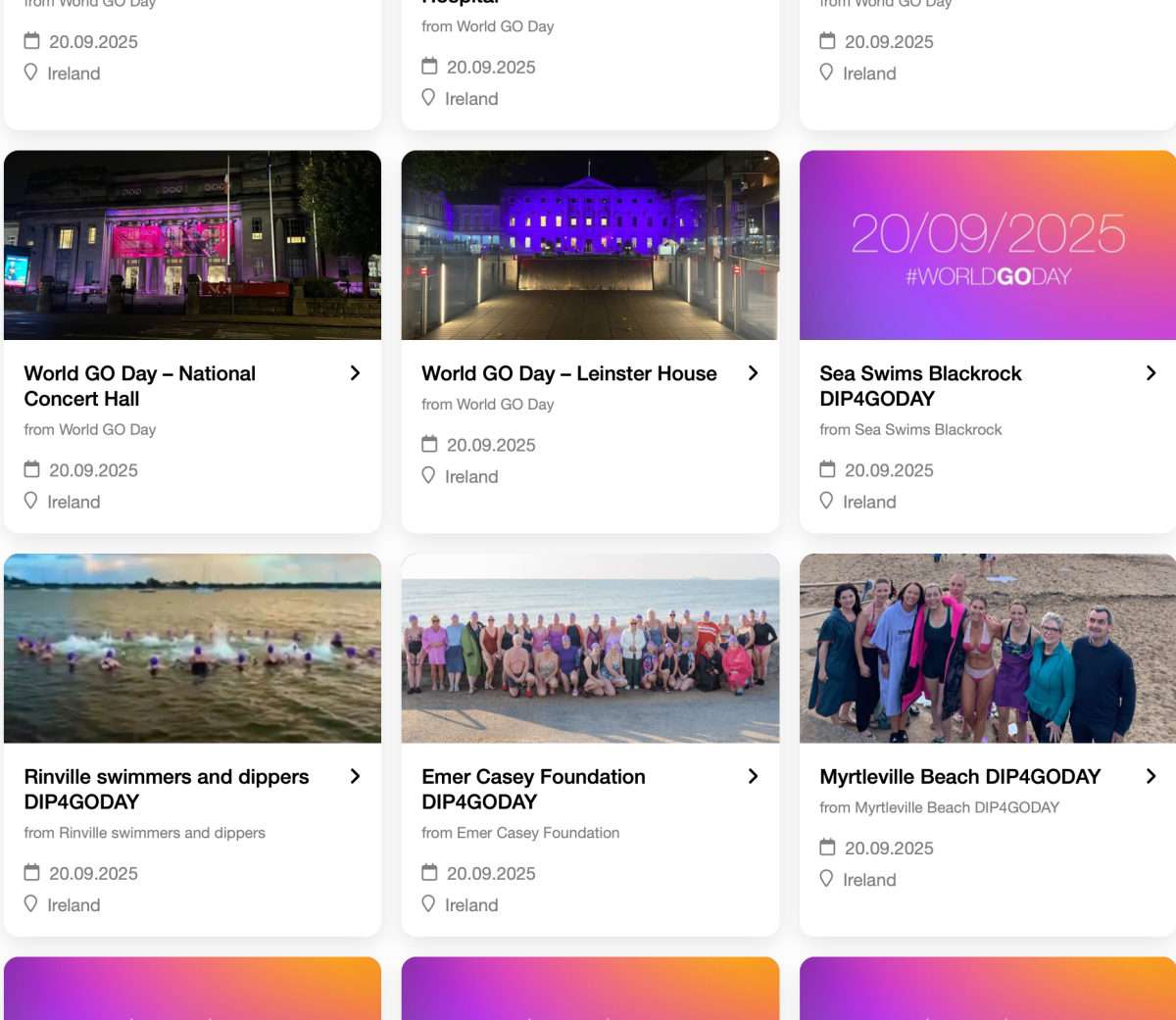
The aim of the group is to raise awareness of gynaecological cancers across the Island of Ireland. The group are part of an international effort for 2 major awareness events annually; World Ovarian Cancer Day on May 8th and World Gynaecological Oncology Day on September 20th.
This is a subject recently explored by a UK parliamentary inquiry.
Reporting its findings in December 2024, the Women and Equalities Committee found that doctors were too often dismissive of symptoms when women presented with reproductive health conditions such as endometriosis, adenomyosis, or heavy menstrual bleeding. The report also singled out the “harrowing experiences” of women in outpatient settings undergoing hysteroscopies and coil fitting as “one of the most troubling aspects of our inquiry.”
The committee learnt that women weren’t always informed about the potential pain that such procedures can induce; nor were they always able to get sufficient pain relief or stop a procedure once it was under way—all practices that, the committee noted, went against medical best practice and guidelines.
Most people believe that once a person is declared to be cancer-free that all is over.
Long after the doctor has given you this wonderful news, you still think about your journey and wonder if the cancer will come back. But, you keep these thoughts in your mind and live with this sense of fear always lingering in the back of your mind wondering if you just might be one of the very few for whom the cancer will return.
Being realistic, just about every survivor will think about this on occasion. When it comes time for yearly testing, you pray and hope beyond hope that nothing new will be discovered. This is perfectly natural but if you find yourself having these thoughts frequently, it is time to do yourself a favor and seek professional help.
Intrauterine procedures for outpatients, such as hysteroscopy, have attracted negative media and parliamentary attention for being poorly tolerated by some women, causing pain and even trauma.
In this BMJ feature, Adele Waters reports on how doctors are tackling the problem.






 Lynch Syndrome Ireland