A personalised online resource for womenimpacted by cervical cancer. If you have a partner in your life, this platform can also support them. If you are a health care provider working in the area this can also support you and your practice.
If you are newly diagnosed, receiving treatment, in surveillance or living well with and beyond cancer this has information that is tailored to meet your needs.
Also information on Ovarian, Uterine, Vulval and Vaginal cancers.
In addition a genetic pathway for those impacted by BRCA and Lynch Syndrome.
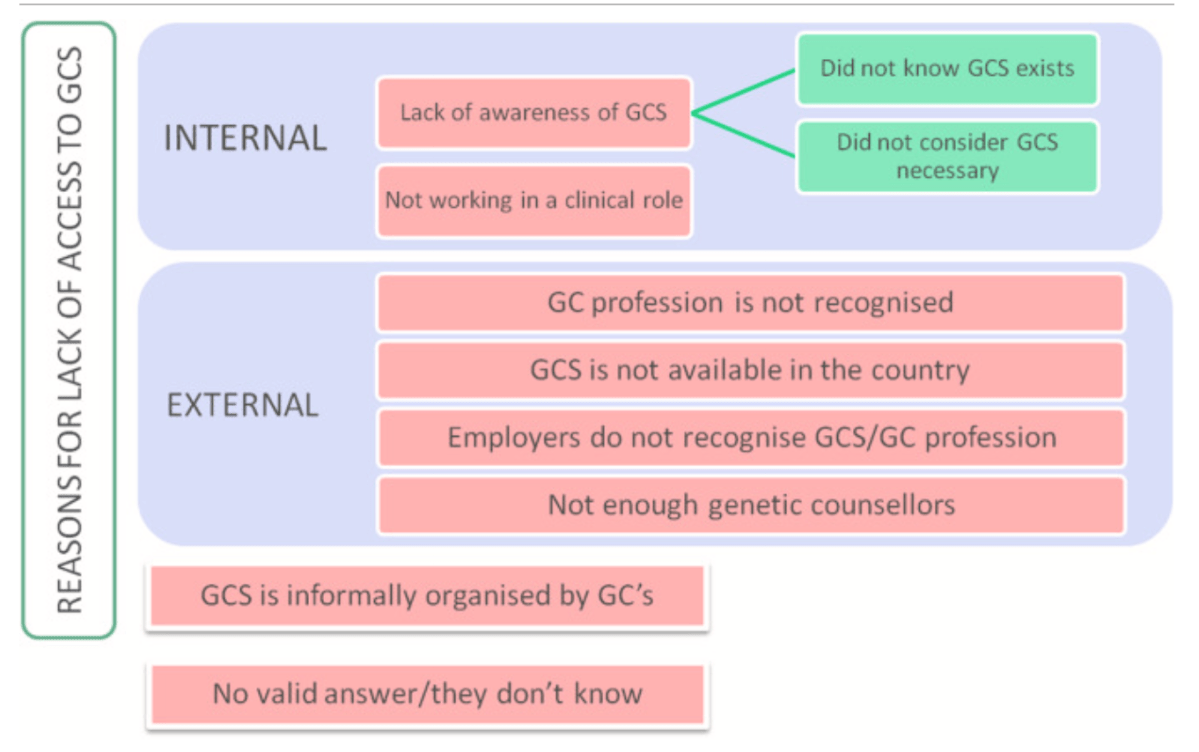
Genetic counselling is still a developing profession in Europe and this historical and current view of the European genetic counsellor pathways, allows for educational and professional standards to be examined as the profession evolves into the future.
This study may also contribute to strengthening the professional role and standards of genetic counsellors in many countries, as well as identifying the necessary mechanisms for the successful implementation of counselling supervision
Is the use of digital tools part of the answer to reducing Ireland’s long Genetic Testing waiting lists??
Alternative models of genetic counselling are needed to meet the rising demand for genomic sequencing. Digital tools have been proposed as a method to augment traditional counseling and reduce burden on professionals; however, their role in delivery of genetic counseling is not established. This study explored the role of the Genomics ADvISER, a digital decision aid, in delivery of genomic counseling.
Conclusion(2021) of this study
Overall, this study proposes that use of a digital tool in conjunction with tailored counseling from a genetic counselor can enhance patient-centered care in the delivery of genomic counseling.
This study demonstrates that their digital tool contributed to enhancing patient-centered care in the delivery of genomic counselling.
Disclosure of genetic information raises ethical issues, mainly concerning autonomy, confidentiality, duty of beneficence, moral responsibility, and feasibility. The rights and duties of patients, relatives, and healthcare professionals are intertwined.
We suggest that healthcare professionals experienced in genetic counselling can consider disclosing risk by direct letter to at-risk relatives while taking into account the benefits of a family-mediated first contact and that counselling must be easily accessed when relatives want to make contact.
Direct contact has to be implemented in a framework of ethical considerations and good practice and tailored for both the individual patient and relatives.
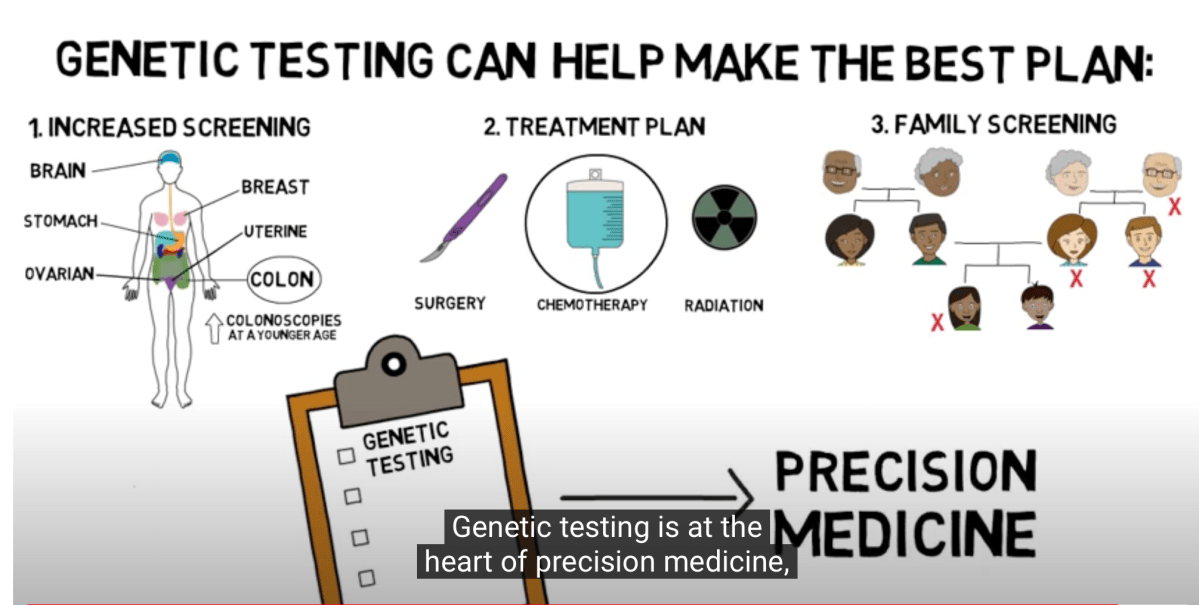
In recent years, breakthroughs in genetics and DNA testing have revolutionised healthcare, especially in cancer diagnosis, treatment, and care. By examining a person’s genes, we can now identify people at higher risk of developing certain cancers.
This allows healthcare providers to detect cancers at an earlier stage and make informed decisions about cancer management and surveillance. Crucially, they can also offer more effective personalised treatments and prevention strategies based on the patient’s genetic profile.
Report found:
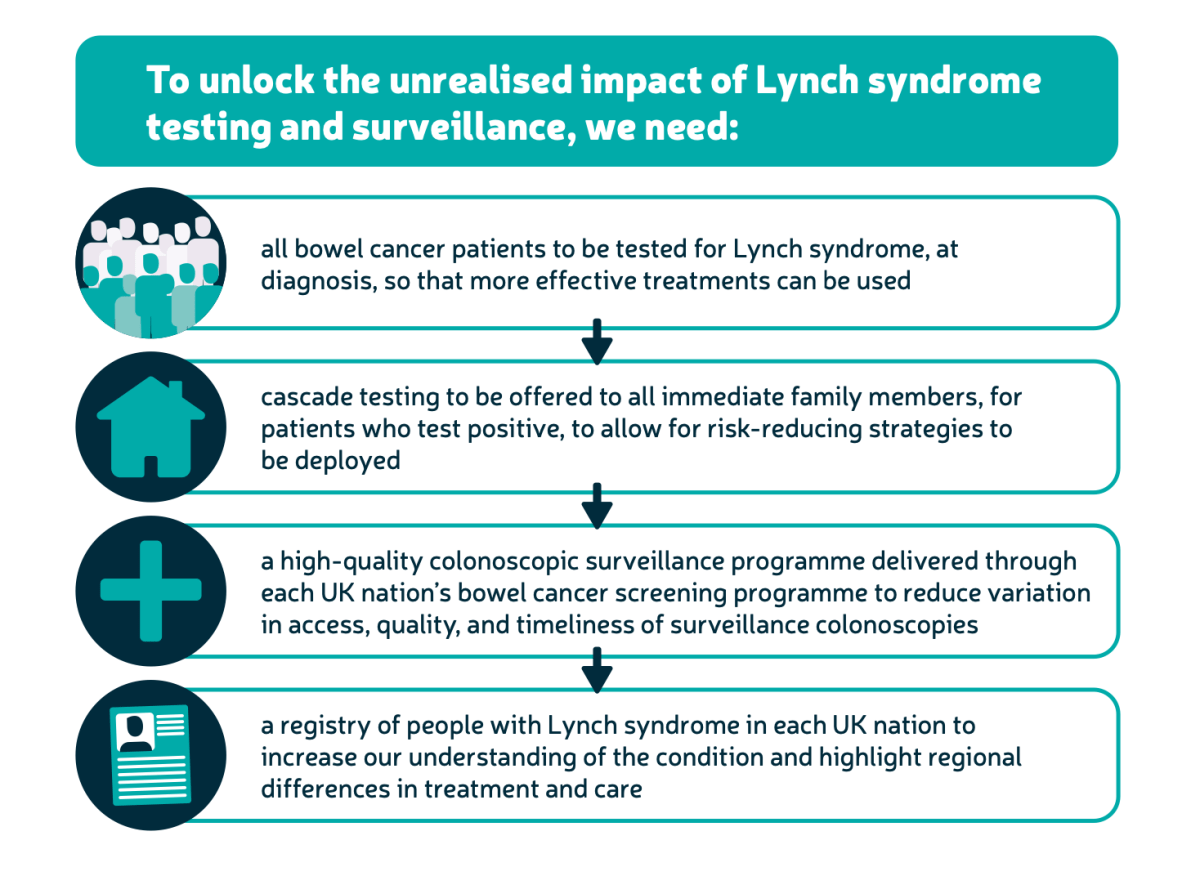
There have been significant improvements in genetic testing for bowel cancer patients, with an average of 9 in 10 newly diagnosed bowel cancer patients being tested over the last financial year, but workforce and capacity issues are still barriers.
Half of health authorities who responded, reported that family members of people with Lynch syndrome aren’t offered letters they can take to their GP, which is one route to accessing genetic counselling and testing.
A postcode lottery for life-saving routine surveillance colonoscopies exists. Although surveillance is offered to all Lynch syndrome patients in England through the Bowel Cancer Screening Programme, only 6 in 10 health authorities across Scotland, Wales and Northern Ireland offer surveillance colonoscopies in line with clinical guidance.
Major gaps in data collection and reporting on Lynch guidance and services are holding back Lynch syndrome care.
Testing all newly diagnosed bowel cancer patients for Lynch syndrome and implementing routine colonoscopic surveillance are crucial steps in meeting the early diagnosis goals set by governments and health services nationwide.
Often complicated by the parent’s ongoing adjustment to their mutation status, guilt at potential transmission of the mutation to the child, concern over inciting distress in children, and the varied capacities of children in the home to understand genetic information.
Optimally, communication about inherited cancer risk is an open, ongoing process within the family.
Survivor guilt is a complex emotion that often plagues those who have lost loved ones to illness.
I question myself with overwhelming questions often: “Why have I not developed cancer? Why have I outlived him? Why did he have to die?” And “What could we as a family have done differently?
I have turned my grief into action and strive to make a positive impact in the fight against Lynch syndrome and its devastating consequences — his death has not been in vain.






 Lynch Syndrome Ireland