Comparison of Universal Genetic Testing vs Guideline-Directed Targeted Testing for Patients With Hereditary Cancer Syndrome

Hereditary factors play a key role in the risk of developing several cancers. Identification of a germline predisposition can have important implications for treatment decisions, risk-reducing interventions, cancer screening, and germline testing.

Key Points:

Questions  Does universal genetic testing in patients with cancer identify more inherited cancer predisposition variants than a guideline-based approach, and what is the association between universal genetic testing and clinical management?

Findings  In this multicenter cohort study of 2984 patients with cancer, 1 in 8 patients had a pathogenic germline variant, half of which would not have been detected using a guideline-based approach. Nearly 30% of patients with a high-penetrance variant had modifications in their treatment based on the finding.

Meaning  Universal genetic testing detected more clinically actionable variants than a guideline-based approach, with a significant association with clinical management for the patients and their families.

https://jamanetwork.com/journals/jamaoncology/fullarticle/2772576/

Improving Cancer Outcomes with Better Lynch Syndrome Testing: A Cost-Benefit Study

While testing of colorectal cancer tumours for mismatch repair defects has been recommended for years, the majority of patients with abnormal results do not complete the next steps, including genetic testing.

Completed genetic testing would determine whether a patient had Lynch syndrome (LS), a hereditary marker for a higher-than-average predisposition for developing colorectal cancer as well as other cancers, including endometrial and ovarian. Early identification of LS in a patient’s family members has the potential to reduce their cancer risk and mortality, increasing the medical benefit of and thereby ultimately lowering testing costs, the study found.

https://medicine.yale.edu/news-article/improving-cancer-outcomes-with-better-lynch-syndrome-testing-a-cost-benefit-study/

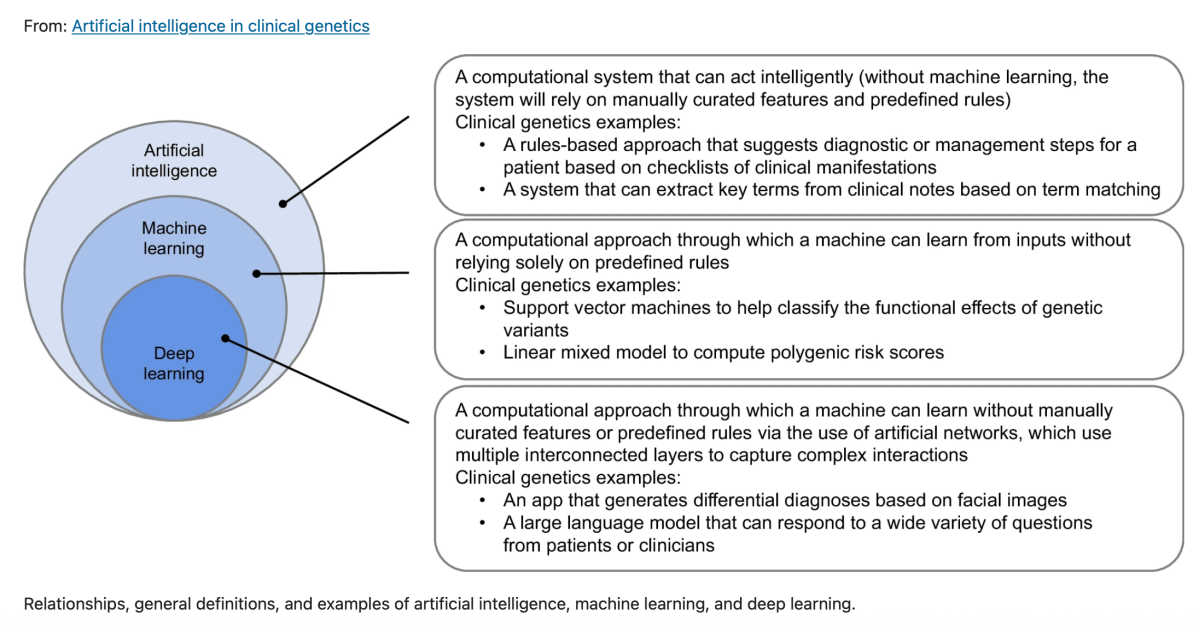
Artificial intelligence in clinical genetics

Artificial intelligence (AI) has been growing more powerful and accessible, and will increasingly impact many areas, including virtually all aspects of medicine and biomedical research. 

Overall, while the precise speed at which AI will continue to change clinical genetics is unclear, as are the overall ramifications for patients, families, clinicians, researchers, and others, it is likely that AI will result in dramatic evolution in clinical genetics.

It will be important for all those involved in clinical genetics to prepare accordingly in order to minimize the risks and maximize benefits related to the use of AI in the field.

https://www.nature.com/articles/s41431-024-01782-w#Abs1

Colectomy

Colectomy is a surgical procedure to remove all or part of your colon. Your colon, part of your large intestine, is a long tubelike organ at the end of your digestive tract. Colectomy may be necessary to treat or prevent diseases and conditions that affect your colon.

There are various types of colectomy operations:

  • Total colectomy involves removing the entire colon.
  • Partial colectomy involves removing part of the colon and may also be called subtotal colectomy.
  • Hemicolectomy involves removing the right or left portion of the colon.
  • Proctocolectomy involves removing both the colon and rectum.

Colectomy surgery usually requires other procedures to reattach the remaining portions of your digestive system and permit waste to leave your body.

https://www.mayoclinic.org/tests-procedures/colectomy/about/pac-20384631

Uptake and patient-related outcomes of mainstreaming genetic testing: a systematic review and meta-analysis

Mainstreaming genetic testing refers to genetic testing for cancer susceptibility genes following cancer diagnosis, which is provided by nongenetic health professionals of the cancer-treating team.

Mainstreaming can be used to guide cancer treatment and secondary cancer prevention in the patient and to identify carriers in the family members of patients who test positive through cascade testing. We aimed to assess uptake and patient-reported outcomes of mainstreaming genetic testing.

Conclusion

Mainstreaming genetic testing uptake is associated with high uptake and satisfaction and low decision conflict, regret, and post-test distress. Quality and quantity of evidence across different types of cancers vary significantly.

https://www.ajog.org/article/S0002-9378(25)00259-5/abstract

In Our Scope of Practice: Genetic Risk Assessment and Testing for GI Cancers and Polyposis in Gastroenterology

 Uptake of genetic testing remains underutilised. 

This is a missed opportunity to identify patients and family members who could benefit from genetic testing to diagnose cancer susceptibility syndromes for which surveillance and preventive interventions exist.

Barriers for integration of genetic testing in routine practice include:

lack of awareness about genetic conditions by patients and providers,

concerns about genetic testing costs and implications for insurability,

challenges in implementing algorithms for risk assessment and coordinated care in complex medical systems.

This review addresses current evidence and guidelines for cancer risk assessment, genetic testing and management to enable GI clinicians to identify and care for individuals with genetic cancer-predisposition syndromes in routine practice.

https://www.gastrojournal.org/article/S0016-5085%2825%2900841-8/abstract

Recent Advances in Lynch Syndrome Diagnosis, Treatment and Cancer Prevention

Conclusion:

The identification and management of individuals and families with Lynch syndrome has evolved rapidly during the past decade or so. Advances in molecular testing and NGS technologies now allow all patients with colorectal and endometrial cancers to reliably receive screening for underlying Lynch syndrome, whereas innovations in immuno-oncology promise to continue revolutionising the treatment of Lynch-associated cancers.

To continue moving the needle forward, expanded efforts to diagnose Lynch syndrome in healthy, cancer-free individuals are needed, rather than relying on the identification of Lynch syndrome through a new cancer diagnosis.

Identification of Lynch syndrome offers the potential to prevent cancer-related morbidity and mortality, and continued progress in understanding the immune system’s ability to recognize, eradicate, and intercept Lynch-associated neoplasia offers many intriguing possibilities for immune-based primary cancer prevention.

https://ascopubs.org/doi/10.1200/EDBK_208341

Precision Medicine

For decades, genetic testing was rationed, reserved only for patients who fit narrow, outdated clinical guidelines. But what happens when those guidelines leave countless people at risk?

In this episode, clinical geneticist and medical innovator Dr. Ed Esplin of LabCorp Genetics reveals how his team’s groundbreaking research exposed the flaws in restrictive testing policies. Through rigorous studies in breast cancer, colorectal cancer, and beyond, they proved that universal germline genetic testing identifies far more at-risk patients than guidelines ever predicted and fundamentally changes how we treat and prevent disease.

The data has forced a reckoning: when up to “50% of high-risk patients were being missed”, “standard of care” was anything but standard care.

From community oncology clinics to rare disease diagnostics, he makes the case that access to genetic insights should be driven by evidence, not just eligibility criteria.

Primary care: the ‘linchpin’ in Lynch syndrome

In most cases, a person will be diagnosed with Lynch syndrome following a cancer diagnosis.

People may also be identified with Lynch syndrome after a family member has been diagnosed with the condition (for example, cascade testing), or, less frequently, for those with a strong family history, by referral for genetic testing from their GP. 

Following a diagnosis of Lynch syndrome and treatment of any cancers, most of the contact for patients will be with the NHS Bowel Cancer Screening Programme and their primary care team.

Fragmentation of Lynch syndrome care

A persistent challenge reported by people with Lynch syndrome is a lack of consistent and coordinated health care to help support them to manage their condition generally.

Improved communication from secondary and tertiary care is needed to enable consistent coding of Lynch syndrome on patient health records and for primary care to fulfil its role as the ‘linchpin’ of comprehensive care.

https://bjgp.org/content/75/754/198