The English National Lynch Syndrome Registry

Comprising over 9,000 patients with Lynch syndrome….Aims to improve the treatment of all patients living with the genetic condition.

Researchers from the Institute of Cancer Research (ICR), in collaboration with the National Disease Registration Service, the NHS Genomic Medicine Service Alliances and the NHS Regional Clinical Genetics Services, have set up the UK’s first-ever comprehensive database registry for Lynch syndrome patients to prevent cancer.

 “By centralising patients’ genetic data, together with detailed information about the cancer diagnosis and treatments that these patients have received, researchers will gain crucial insights into Lynch syndrome… [unlocking] new opportunities for precision medicine and prevention, ultimately improving the lives of patients living with the condition.”

https://pharmatimes.com/news/icr-collaboration-forms-national-nhs-patient-database-registry-for-lynch-syndrome-patients/#:~:text=Researchers%20from%20the%20Institute%20of,Lynch%20syndrome%20patients%20to%20prevent

What I Do When My Doctors Don’t Listen

As much as I want to believe my doctors are beyond brilliant and can do anything, they are people too. Much like me, they have good days and not-so-great ones.

What are the signs your doctor isn’t listening?

  1. Constant interruptions.
  2. Fidgeting.
  3. There but not there.
  4. Aggressive body language.

I make sure my doctor is listening by:

  1. Being prepared.
  2. Being courteous.
  3. Rewinding the conversation.
  4. As a last step, change doctors.

Rather than shrink back from having a “tough” conversation with a doctor, it is critical to do just that. Often these types of conversations, rather than ending a relationship with a doctor, strengthen it.

A guide to LYNCH SYNDROME

Don’t wait, like me….until you develop cancer to discover that the predisposition to cancer called Lynch syndrome runs in your family.

Why does Lynch Syndrome increase the risk of some cancers?
In our cells, there are natural processes that defend us from cancer – from
repairing damaged DNA to destroying potentially dangerous cells. In Lynch
Syndrome, the ability to properly ‘proofread’ newly formed DNA is lost.

This means that any errors are not spotted or corrected. These errors can
build up, eventually affecting the bodily processes that usually prevent
cancer formation.
When this happens, an individual is at a greater risk of
developing cancer.

Not everyone who has Lynch syndrome will develop cancer.

Easy read guide…..

Managing menopause after cancer

Managing menopausal symptoms after cancer can be challenging, and more severe than at natural menopause. Menopausal symptoms can extend beyond hot flushes and night sweats (vasomotor symptoms). Treatment-induced symptoms might include sexual dysfunction and impairment of sleep, mood, and quality of life.

Menopausal hormone therapy is an effective treatment for vasomotor symptoms and seems to be safe for many patients with cancer.

When hormone therapy is contraindicated or avoided, emerging evidence supports the efficacy of non-pharmacological and non-hormonal treatments, although most evidence is based on women older than 50 years with breast cancer. 

https://www.sciencedirect.com/science/article/pii/S0140673623028027?dgcid=coauthor#fig2

What Is CMMRD?

CMMRD, like Lynch Syndrome, is a genetic condition that makes it more likely for a person to get certain types of cancer, except this time it occurs when a child has inherited mutated genes from both parents, and the cancer risk is even higher. PMS2 is the most commonly affected gene in CMMRD.

To illustrate this: my mum has one “good” copy of the gene and one bad copy, so I could have inherited her good gene or her bad gene. And the same goes for my dad. My sister inherited both of their good copies, and therefore doesn’t have Lynch Syndrome or CMMRD, and neither do her children. Whereas I inherited both of their bad genes and therefore have CMMRD. We believe my brother, who passed away many years ago, also had Lynch Syndrome or CMMRD.

As many as 1 in every 300 people may have Lynch Syndrome, while the odds of having CMMRD are one in a million – or 0.0001%. 

Genomics Toolkit: Gynae-Macmillan Cancer Support

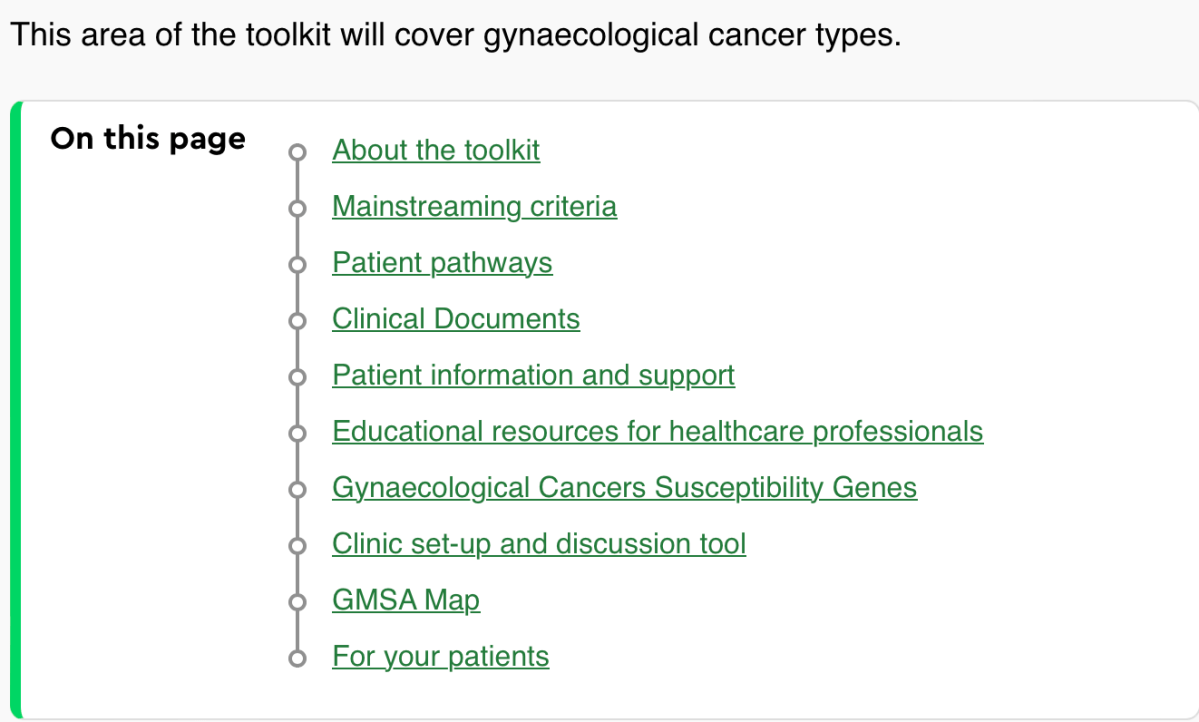
The Macmillan Genomics Toolkit is designed to guide healthcare professionals to multiple education resources, pathway guidelines, clinical documents, patient support information and case studies to demonstrate the ‘Gold Standard’ of care once genomics has been embedded into practice. It has been developed in collaboration with expert healthcare professionals and the NHS England National Genomics Education team.

https://www.macmillan.org.uk/healthcare-professionals/innovation-in-cancer-care/genomics-toolkit/gynae

Lynch Syndrome awareness week

Lynch syndrome is an inherited disease.

This means it is passed down from generation to generation, from parent to child. If one parent has Lynch syndrome and the other does not, there is a 50% chance that their child will have it.

It is among the most common hereditary cancer syndromes. It is estimated that 1 in 300 people have Lynch syndrome.

However, most people do not know they have it.

Indications that a family might have the disease is that on the same side of a family, there has been a diagnosis of cancer in multiple relatives. Besides, these cancers tend to appear at a young age.

This syndrome happens because of alterations passed down in genes that impact DNA repair, which is responsible for correcting cell DNA errors when copied. There are five genes implied in this, which are called:

  • MLH1, MSH2, MSH6, PMS2 and EPCAM.

Having Lynch Syndrome doesn’t mean you will definitely get cancer, but it does significantly increase your risk. Those with Lynch Syndrome who do get cancer, often do so before the age of 50.

Reliable Information….

Check out www.thisisGo.ie

An online personalised resource for you and yours who have been impacted by a gynaecological cancer.

Menopause is a unique experience for every women.

Getting the correct information is key. http://thisisGO.ie gives you relevant, up to date and factual information on all aspects. Reflecting national @MenoAfterCancer and international studies. Check us out!

Knowledge is only power when it is actionable….

Living with Lynch syndrome, the most prevalent hereditary cancer syndrome and the primary cause of hereditary colorectal cancer, has been a journey filled with unique challenges and exhausting uncertainty.

I gladly drink the colonoscopy prep so many people detest I view it as an enormous privilege, an advantage that so many who had died from colon cancer before us did not have. Each step of this process served as a poignant reminder of the privilege bestowed upon me—an advantage denied to countless individuals who succumbed to colon cancer without the opportunity for preventive care. 

https://www.curetoday.com/view/how-i-navigate-the-lynch-syndrome-labyrinth?fbclid=IwAR14JIGhnPmBWp-jzej1QO8FizS-SaS_WmHx_vydol7zSRb–3lsjaKf5HM

Lynch Decision Aid – Lynch Choices

Please help us to make sure families with Lynch are invited to complete a short digital patient survey to tell us what they think, before we roll this out into clinical practice: 

https://southampton.qualtrics.com/jfe/form/SV_1FvPJJEZPVX62aO

If you have an X/Twitter account, please see this post and share it if you can:https://x.com/kohut_kelly/status/1765675956159623324?s=20