How Holiday Conversations About Cancer Can Save Lives

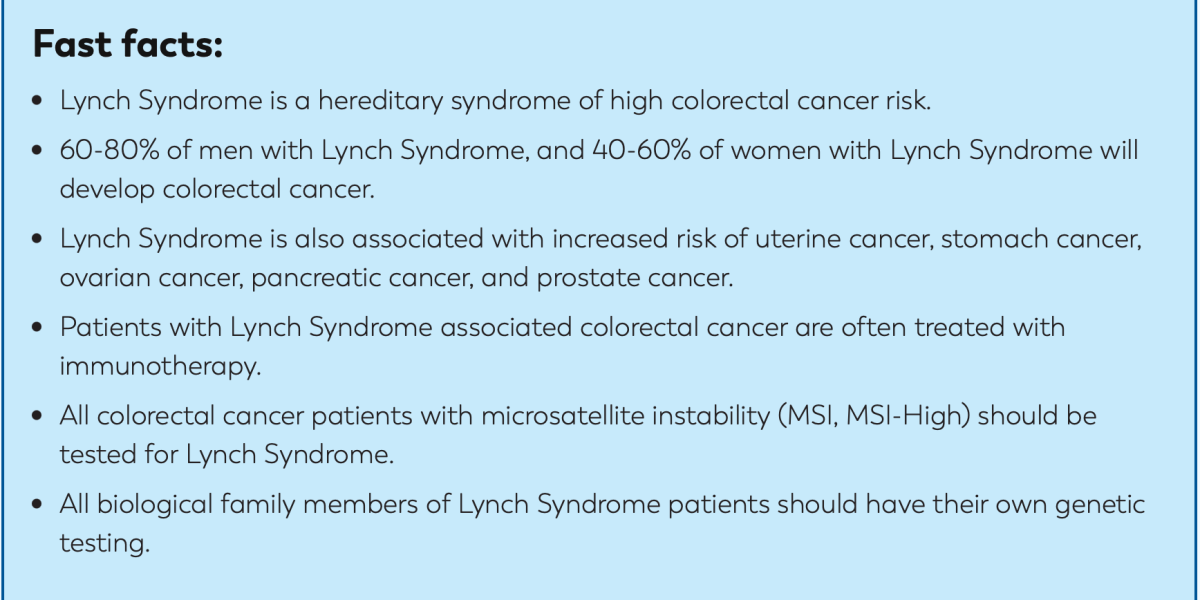
Knowing your family history of Lynch syndrome can be a life-saving intervention.

Broaching the topic of family history, especially when it involves sensitive issues like cancer diagnoses, can be challenging, particularly in families with strained relationships or a history of familial dysfunction. It’s crucial to remember that discussing family history is not to dredge up painful memories or assign blame but to gain a deeper understanding of our collective past and make informed decisions about our health.

Silently plaguing our family is Lynch syndrome, a hereditary cancer syndrome that increases the risk of developing various cancers. This genetic predisposition often goes undetected, affecting approximately 1 in 279 Americans. Lynch syndrome arises from mutations in genes responsible for DNA error repair, potentially leading to tumor formation and triggering cancer.

https://www.curetoday.com/view/how-holiday-conversations-about-cancer-can-save-lives

Genetic Counsellors? are they recognised by the HSE???

They are an internationally recognised group of highly skilled healthcare professionals with training and expertise in genomic and genetic medicine and counselling skills.

Their role involves, but is not limited to, interpreting family and medical history to assess whether an inherited genetic condition may be present in a family and whether testing is appropriate. Education about inheritance, genetic testing, screening, and management.

Coming to terms with a genetic illness in the family can leave a person with many questions. What does this mean for me? What does this mean for my child? Will my family be affected?

Genetic counselling is about trying to explain the condition, how it’s inherited and explain any genetic testing results and also to ensure that people as a family understand what is happening.

Genetic counselling is embedded into some hospital departments in Ireland.

Recognition of the profession is also important…are they really recognised by the HSE???? At present, genetic counsellors in Ireland are registered in the UK or at a European level.

The Government needs to step up and fund the genomics/genetics strategy that includes provision for genetic counselling recognition, training and employment of genetic counsellors in the different mainstream models of healthcare.

Genetics is now recognised asa growing and integral part of cancer care, with a role across treatment, early detection and risk reduction.

Prospective Lynch Syndrome Database (PLSD)

The Prospective Lynch Syndrome Database (PLSD) is the largest worldwide database on Lynch Syndrome. 
PLSD collates information on carriers of pathogenic or likely pathogenic MMR variants (path_MMR) who are receiving medical follow-up, including colonoscopy surveillance, which aims to achieve early diagnosis and treatment of cancers.

plsd.eu

image caption

The Six Questions Every Cancer Patient Should Ask Before Choosing Treatment

  1. What is the goal of the recommended treatment? Cure, prolong survival, maintain quality of life?
  2. What is my chance of achieving the goal if I do nothing?
  3. How does the recommended treatment improve the chance of reaching the goal?
  4. What are the side effects of the recommended treatment – many are minimal today?
  5. What is the role of clinical trials in the management of my cancer?
  6. If my cancer comes back, what is the goal and how should i best prepare for it now?

Until recently we thought of cancer as being defined by its location in the body – moving forward it will be defined by the cancer’s unique growth driving mutations and biomarkers. In effect, the genetics – biomarker define the cancer rather than the organ where the cancer began.

IS ANYONE LISTENING?

In health care, continuity of care can be defined both in terms of the patient’s experience (i.e., how well the patient feels they were treated) and in clinical quality—how well the sequence of patient services is delivered in the most effective, efficient way, according to clinical best practices, through “integration, coordination and the sharing of information between different providers.”

As patients’ health care needs are now rarely met by a single professional, multidimensional models of continuity have had to be developed to accommodate the possibility of achieving both ideals simultaneously. 

Can we be secure in the knowledge that someone is always listening to us in the healthcare system?

Not only applies to the Emergency Services but also to the medical profession on a successful approach to patient care: the concept of “continuity of care.”

https://www.iaedjournal.org/is-anyone-listening

Lynch Syndrome? Why it’s important to know about it

Lynch syndrome is caused by an inherited mutation in one of these genes:

People with Lynch syndrome have an increased risk for colorectal, endometrial and other cancers. The cancer risk varies by gene mutation, therefore it is important for people with Lynch syndrome to know which gene mutation they have.

In the past, the risk-management guidelines were the same for people with an inherited mutation in any of the Lynch syndrome genes. As more research has shown different cancer risks for each gene, experts have started to separate the risks and medical options for each individual mutation. Despite these differences, some references discuss Lynch syndrome as though inherited mutations in these genes carry the same risks. 

If you have been told that you have Lynch syndrome, it is important to know which gene has a mutation, so that you can make informed decisions about your medical care. 

In the past, Lynch syndrome was also referred to as “hereditary nonpolyposis colorectal cancer” (HNPCC). This term has fallen out of favour because mutations in these genes also increase the risk for other cancers besides colorectal cancer. 

Patience…A form of Action?

Can learning patience actually be an active effort? A 3 minute Side Trip with some reflection on my(Pat Wetzel) personal path to learning patience.

https://bumpintheroad.us/side-trips/

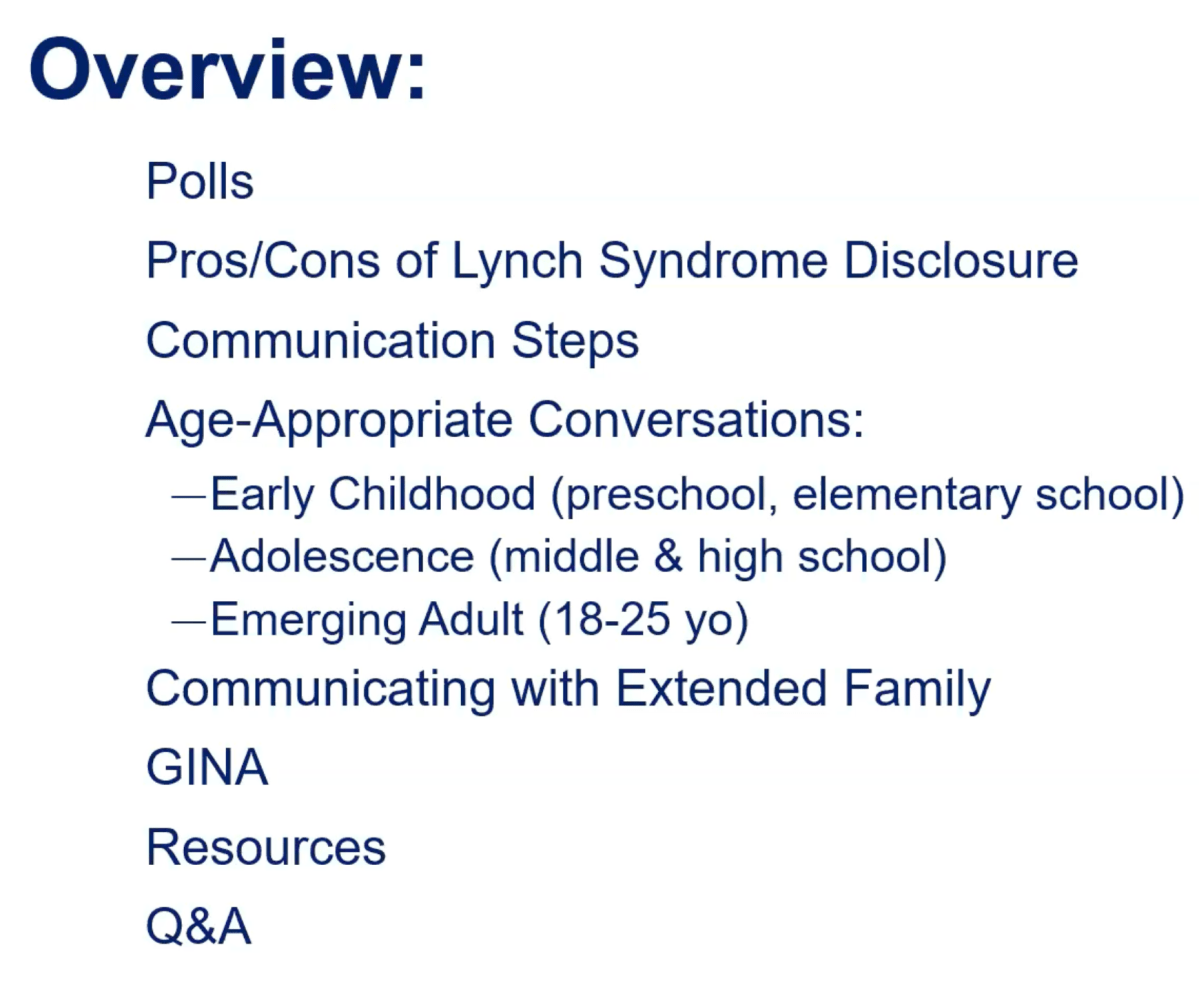
Talking about Lynch Syndrome: Strategies for discussing with your children and family

https://mediasite.med.upenn.edu/mediasite/Play/715eda4a78244812936fee9f1779b4a41d?fbclid=IwAR1YFxzFeR3JZZh3C394ENf0KcFWU_IV7-SEM1R_nx3zZI8_nWd9mnBpDq8