Patients’ satisfaction w/Lynch syndrome providers

This episode is the first in a series featuring former CGA-IGC research grant recipients.Features Dr. Allison Burton-Chase, MD from the Albany College of Pharmacy and Health Sciences. Dr. Burton-Chase was the first recipient of the CGA-IGC research grant in 2014 for her work entitled “Factors Impacting the Decision of an Individual with Lynch Syndrome to Terminate a Health Care Provider Relationship”.

The majority of patients who terminated their patient-provider relationships did so due to negative interactions, such as the provider having a lack of Lynch syndrome-specific knowledge or not being open to improving their knowledge on Lynch syndrome.

https://www.cgaigc.com/post/patients-satisfaction-w-lynch-syndrome-providers-interview-w-2014-cga-igc-research-grant-recipient

Performance of the Fecal Immunochemical Test(FIT) in Detecting Advanced Colorectal Neoplasms and Colorectal Cancers in People Aged 40–49 Years: 

Recently, the cases of colorectal cancers has been rising in younger age (<50) individuals. Although current guidelines recommend colorectal cancer screening should be initiated at age 45 instead of 50, the optimal approach of colorectal cancer screening is not clear.

This article investigates the efficacy of fecal immunochemical test (FIT), which detects occult blood in stool, in predicting advanced colorectal polyps and tumors among people aged 40–49.

The findings suggest FIT is useful to identify such people with high risk to have advanced colorectal lesions. Hence, FIT may be considered as the first-line screening tool for these people, and further comparative study between FIT and colonoscopy will be of great value.

The detection rate of ACRN(advanced) and CRC based on FITs in individuals aged 40–49 years is acceptable, and the yield of ACRN might be similar between individuals aged 45–49 and 50–59 years. Further comparative and cost-effective analysis of colonoscopies is mandatory to guide its use in EOCRC screening.

https://www.mdpi.com/2321922

How to detect colon cancer without a colonoscopy

A colonoscopy is the gold standard test in the United States for colon cancer screening, but there are other tests available. Some of these include:

  • Fecal immunochemical test (FIT):
  • Stool FIT/DNA test:
  • Virtual colonoscopy:

Watch out for these colon cancer symptoms

If you experience blood in your stool, abdominal pain or a change in bowel habits, see your doctor right away. These could be the first symptoms of colon cancer.

“The most common symptom of colon cancer is no symptom at all, until late-stage colon cancer,”

https://www.mdanderson.org/cancerwise/how-to-detect-colon-cancer-without-a-colonoscopy.h00-159617856.html

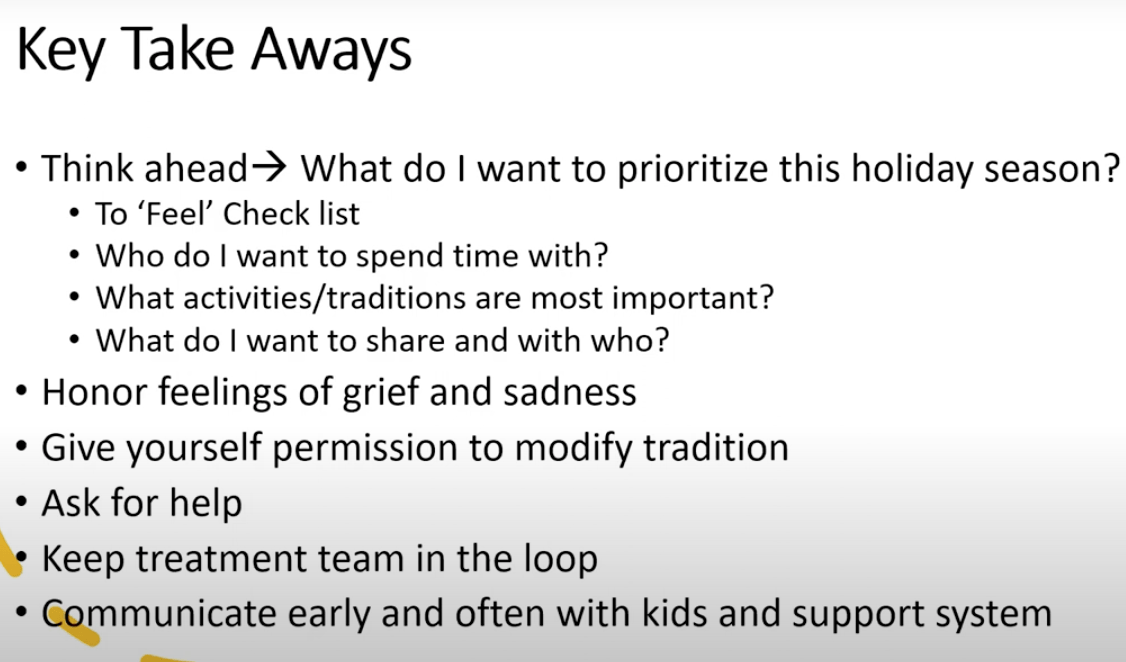
Coping Through the Holidays and Cancer: Presented by the Young-Onset Colorectal Cancer Center(Dana Faber)

What is the future of immunotherapy?

Immunotherapy represents a new paradigm in cancer care. It’s really an entirely new mechanism for treating cancer. We’re not targeting the tumor cells; instead, we’re targeting the immune system.

I encourage patients to talk with their physicians about innovative treatment options and consider participating in clinical trials so we can move the field forward. Together, we can unlock the promise of immunotherapy.

https://www.mdanderson.org/cancerwise/what-is-the-future-of-immunotherapy.h00-159538167.html

Social media platforms

Social media are not neutral: their governance and structure impact how and what content is shared on them.

Research has shown that a range of ‘platform mechanisms’ increasingly influences the way stories are told, information circulated and connections made online. 

Yet, little is known about how platforms’ privacy settings and users’ awareness of them influence which personal narratives (e.g., harrowing, heartening) are more likely to be posted online in relation to genetic conditions.

https://sites.google.com/sheffield.ac.uk/previvorship/resources/social-media-platforms

A Focused Clinical Review of Lynch Syndrome

The results of germline testing for LS can be complicated and the diagnostic pathway is not always clear. Furthermore, by testing only those with cancer for LS we fail to identify these individuals before they develop potentially fatal pathology.

Given the benefits to discovering that someone has LS, not just for the patient but for their immediate family members, it is expected that most people would welcome genetic testing for LS. In fact, there is good number of studies that suggest that hypothetically there is a high interest in finding out this information.By contrast, there are good reports that show that there is a high number of people that decline testing.

In summary, LS care has come a long way over the last twenty years. We now understand the individual cancer risk to inform consent, tests to accurately diagnoses LS and ways by which we can reduce cancer risk. However, more needs to be done to find those who are undiagnosed, develop less invasive cancer surveillance methods and develop new vaccinations and treatments.

https://www.dovepress.com/a-focused-clinical-review-of-lynch-syndrome-peer-reviewed-fulltext-article-CMAR

Understanding Lynch Syndrome and Associated Cancer Risk: Epidemiology

Lynch syndrome is the most commonly inherited colon cancer syndrome, and it accounts for approximately 3% of all newly diagnosed cases of colorectal cancer.

The genetics of both the tumor and the germline have an important role in the development and diagnosis of Lynch syndrome. 

Mortality by age, gene and gender in carriers of pathogenic mismatch repair gene variants receiving surveillance for early cancer diagnosis and treatment:

A report from the prospective Lynch syndrome database: The PLSD(www.PLSD.eu) is a prospective observational study without a control group that was designed in 2012 and updated up to October 2022. Data for 8500 carriers of path_MMR variants from 25 countries were included, providing 71,713 years of follow up.

Interpretation

The current study found low CRC mortality in path_MMR carriers who receive colonoscopy surveillance while some extracolonic cancers were associated with high mortality. Further improvement of survival in LS may require a focus on the prevention and treatment of non-colorectal cancers, likely including approaches based upon the immune response to MSI pre-cancerous lesions and cancers.

https://www.thelancet.com/journals/eclinm/article/PIIS2589-5370(23)00086-X/fulltext#secsectitle0095

Do people with hereditary cancer syndromes inform their at-risk relatives?

Conclusion: Nearly one-third of at-risk relatives remain uninformed of their risk of carrying a cancer-associated pathogenic variant. Even among those informed, fewer than half subsequently complete genetic testing, representing a critical missed opportunity for precision cancer prevention.

Innovation: Five studies evaluating interventions to improve disclosure rates were generally ineffective. Urgent work is needed to elucidate barriers to relative disclosure by probands (a person serving as the starting point for the genetic study of a family) to develop targeted interventions that can optimize proband-mediated cascade genetic testing rates.

https://pubmed.ncbi.nlm.nih.gov/37214514/