Sometimes we need permission to be grumpy 

Sometimes we need permission to be grumpy and ungrateful and selfish. We need to allow ourselves the opportunity to take a day off from being a better person. 

Then we can wake up again the next day and marvel at the wonder of a perfect soft-boiled egg.

COPING WITH CANCER: SEEING A COUNSELLOR

I never felt like “it” couldn’t happen to me. It’s just genetics. Luck of the draw. It’s how the universe works. Not to make light of things, but in a phrase it is what it is.”

“Neither did I feel the the need for a support group. The last thing I wanted to do when I wasn’t being a cancer patient is be a cancer patient.”

Cancer-Related Fatigue

Fatigue is a common side effect that may linger for years following cancer treatment. Experts and survivors talk about ways to help find a balance between life and fatigue.

The best way to describe it is the fatigue someone feels when they have the flu..

Cancer-related fatigue is a common side effect, especially because it can be caused by both the cancer and its treatment, according to guidelines from the National Comprehensive Cancer Network. This type of fatigue may last months to years after the end of treatment and “does not improve with normal amounts of rest or sleep and disrupts daily life,” the guidelines state.

A significant intervention that has been shown to help with managing cancer-related fatigue is exercise or a type of physical activity.

If people have cancer-related fatigue, energy conservation is something we talk about a lot, try to conserve your energy to do the things you would like to do….. 

https://www.curetoday.com/view/focusing-energy-on-cancer-related-fatigue

15 Common Types of Fear People With Chronic Illness Experience (and How to Cope)

Evaluation of a Mindfulness-based Stress Reduction Programme on the Quality of Life of Survivors living with secondary cancer

This study reports that the MBSR program had a retained effect on wellbeing through continued use of mindfulness practices after the course, and an integration of these practices into the lives of those living with advanced cancer. The monthly mindfulness meetings are a very valuable addition to the MBSR programme.

The practice of mindfulness instructs participants to deliberately focus on the present and monitor their experiences at the time without passing judgment. As a result, participants experience some of the benefits through the mind-body connection, focusing on the positive as well as improved peer support from their peers in the groups. The monthly mindfulness meetings were also a valuable addition to the programme.

This study also showed that the MBSR program had a retained effect on wellbeing after ending the programme through continued use and integration of mindfulness techniques into the lives of those living with advanced cancer.

Although there are limitations...They concluded that the MBSR Programme is both feasible and beneficial for people living with secondary cancer.

Patience…A form of Action?

Can learning patience actually be an active effort? A 3 minute Side Trip with some reflection on my(Pat Wetzel) personal path to learning patience.

https://bumpintheroad.us/side-trips/

How I Deal With My Lynch Syndrome Diagnosis

“Being proactive with my daily health has been important throughout my Lynch journey. Taking control of my health by exercising, maintaining my weight and eating well is essential and helps me feel like I can control some aspects of my life. “

“Living with Lynch syndrome can be challenging, but prioritising self-care, seeking professional support, connecting with others, and practicing mindfulness and stress reduction techniques have helped me manage the emotional impact of this condition.”

https://www.curetoday.com/view/how-i-deal-with-my-lynch-syndrome-diagnosis

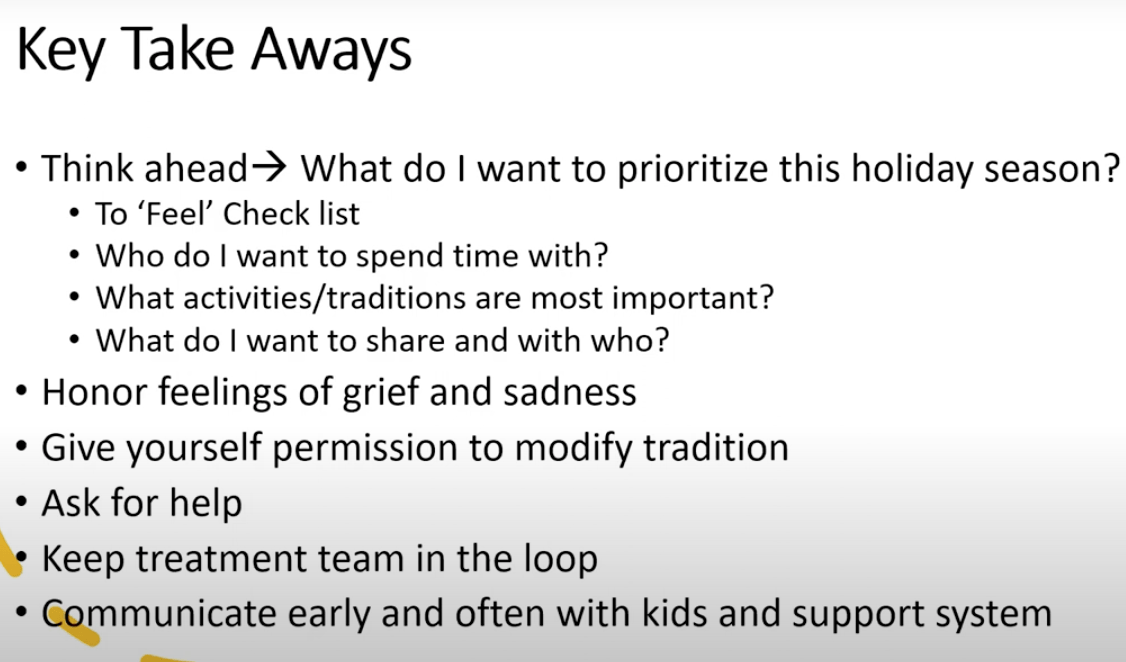
Coping Through the Holidays and Cancer: Presented by the Young-Onset Colorectal Cancer Center(Dana Faber)

Bringing you mindfulness

Self-compassion is good for you. That’s a fact. Across a whole range of areas,

including anxiety, depression, relationships, motivation and making healthy choices, self-compassion has been found to have positive and really healtheffects.  (from my book Kindfulness).

Try: Next time you are criticising yourself, take the point of view of a good friend rather than a harsh critic.

The quite short guide to mindfulness: