Latest research highlights lack of awareness of the symptoms of Ovarian Cancer
- Four in five not confident of noticing symptoms
- One in three mistakenly believe cervical screening checks for all gynaecological cancers
- One in five feel ‘too busy’ to make time to go to the doctor
- Ovarian Cancer incidence projected to increase by 80% in Ireland in next 20 years1
Dublin, Wednesday, 8th May 2024 – New research carried out in April 2024 amongst adult women in Ireland, has highlighted that one out of five women in Ireland are reluctant to address the symptoms of cancer with a healthcare professional as they ‘don’t want to make a fuss’. The study was commissioned by the Irish Network for Gynaecological Oncology (INGO) to mark World Ovarian Cancer Day on Wednesday 8th May 2024. The INGO are deeply concerned about the lack of awareness of symptoms among women in Ireland, with four in five not confident of identifying symptoms.
Alarmingly the research also shows that one in five women would not attend their doctor with possible symptoms because they are worried about what it might unearth, and one in five would not attend because they are ‘too busy’. Unfortunately, more than three quarters of patients with ovarian cancer are diagnosed when the disease is at a late stage. This is partly due to the vagueness of symptoms and similarity with other conditions such as irritable bowel syndrome, and in some cases, symptoms may not always be obvious or present at all.
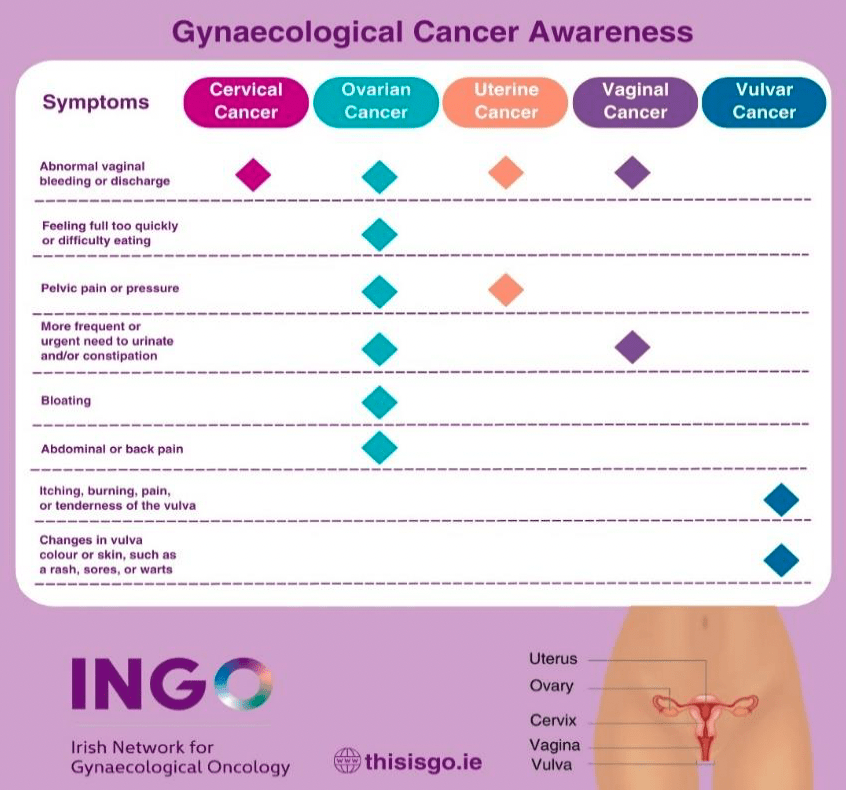
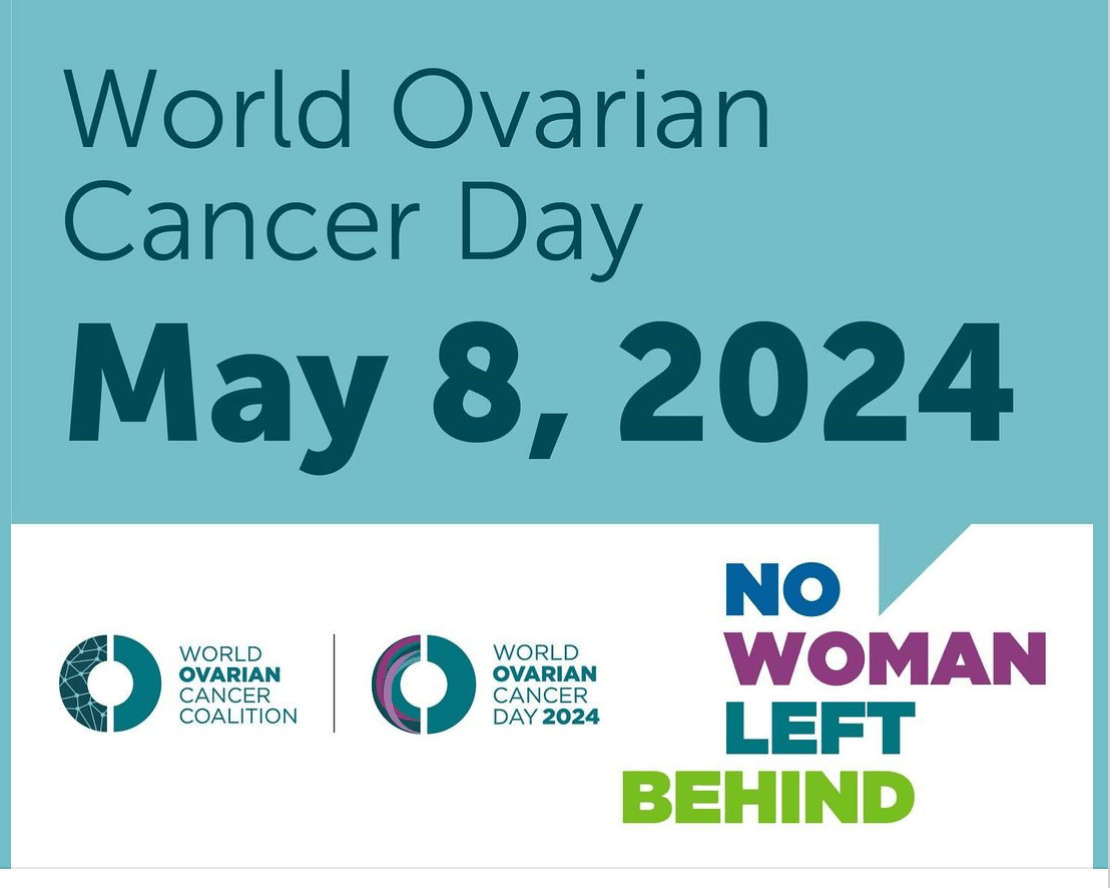
To mark World Ovarian Cancer Day on Wednesday 8th May 2024the INGO has launched a campaign to raise awareness of the symptoms of ovarian cancer and encourage women to contact and explain their symptoms to their GP if they are worried, as early diagnosis can save lives. The campaign emphasises the BEAT symptoms:
• Bloating that is persistent and doesn’t come and go
• Eating less and feeling full more quickly
• Abdominal and pelvic pain you feel most days
• Toilet changes in urination or bowel habits
The clear message is that if a woman experiences any of these symptoms for three weeks or more, she should contact her GP.
INGO have partnered with Brazilian street artist Brutto, who created an impressive mural on Grafton Street last Saturday depicting BEAT messaging and educating passersby on ovarian cancer symptoms. Several notable landmarks across the country will also light up in teal, World Ovarian Cancer Day’s official colour, on the 8th of May, including Leinster House in Dublin, the Titanic Museum Belfast and City Hall in Cork.
Orla Dolan, CEO of Breakthrough Cancer Research commented:
“The evidence is clear that women do not have good awareness of the symptoms of ovarian cancer or feel comfortable approaching healthcare professionals with relevant concerns. For other cancers like skin cancer, national campaigns have changed knowledge and behaviours and we need to see this for Gynaecological cancers too. Amazing Irish researchers are currently working on ways to better detect and treat these cancers but finding them early makes a huge difference in terms of survival. We need to educate and empower people with the signs and symptoms to look for.”
Annually, approximately 400 women are diagnosed with ovarian cancer, and almost 300 women die from this disease in the Republic of Ireland2. In Northern Ireland, almost 300 are diagnosed and 128 women die3. Ovarian cancer is the fourth leading cause of cancer death in women in Ireland, after lung, breast, and colorectal cancer.
There is no standard screening test to pick up ovarian cancer in women who don’t have symptoms. Early diagnosis can significantly improve survival – 88% of patients diagnosed with stage one ovarian cancer are alive five years after diagnosis compared to 17% with stage four ovarian cancer.
The campaign also seeks to dispel the myth that cervical screening detects ovarian cancer. The research showed that one in three mistakenly believe that CervicalCheck Screening Programme checks for all five gynaecological cancers (ovarian, cervical, uterine, vulva and vaginal). It is important for women to understand that cervical screening only checks whether a woman is at risk of having cervical cancer and no other cancer type.
Ovarian cancer patient and BRCA gene carrier Orla Hyland said:
“Looking back I might have spotted the symptoms earlier. I may have been eating less and have felt fuller earlier but, being a bit of an emotional eater I would have been happy to have been eating less. One great thing about cancer is how many people are wholeheartedly researching new routes to a cure. I’m grateful to have a wonderful oncologist in whom I feel great confidence.”
Christine Campbell, Ovarian Cancer Patient said:
“Women’s bodies go through so many changes in our lifetime that I believe we instinctively know when something does not feel right. This was my experience when the classic symptoms of Ovarian Cancer first started to appear in Nov 2020 before my diagnosis in April 2021. Symptoms such as bloating, loss of appetite, severe fatigue, bleeding after menopause.”
Dr. Karen Cadoo, Medical Oncologist and Cancer Geneticist in St James’s Hospital said:
“While the median age for diagnosis is 65 years, this can also be younger for those who have a genetic predisposition. Although it is difficult to find out that there is increased cancer risk in a family, this information provides a huge opportunity to intervene and prevent cancers. Thankfully there has been increased genetic testing in women with ovarian cancer over recent years but we still have a lot of work to do. More awareness, education and acceptance of genetic testing is needed and all women with a current or past diagnosis of ovarian cancer should talk to their doctor about genetic testing.”
INGO are delighted to have the support of the Ladies Gaelic Football Association, Peter Mark and Press Up hospitality for their support in highlighting BEAT symptoms among their networks.
Spread the message using the hashtags #WOCD2024 #NOWOMANLEFTBEHIND #thisisgo
// ENDS
1 Demographic projections (NCRI 2019)
2 National Cancer Registry Ireland
3 Norther Ireland Cancer Registry
Support
OvaCare and Cancer Cancer Support are grateful for the support received from AstraZeneca and GlaxoSmithKline towards the World Ovarian Cancer Day campaign. The INGO acknowledges the support of Breakthrough Cancer Research who commissioned the research survey for the campaign. The INGO are grateful for the support of the National Cancer Control Programme.
World Ovarian Cancer Day Activities
- As part of World Ovarian Cancer Day activities OvaCare, an ovarian cancer support charity will be hosting a coffee and chat event in the Radisson Hotel, Letterkenny from 11am to 1pm on Sat 11th May 2024. Please visit https://ovacare.ie/events/event-registration/ to register.
- On Monday 6th May, Aideen McCabe completed a 10km charity swim at Leisure World in Bishopstown with proceeds going to OvaCare and Look Good Feel Better.
- Buildings will also be lighting up teal on the 8th of May including; Ballinasloe Monument, Cavan Courthouse, City Hall Cork, Convention Centre Dublin, Coombe Hospital, Daly’s Shakey Bridge Cork, East Galway and Midlands Cancer Support Centre, Laois County Council, Leinster House, Limerick City & County Council Corporate Headquarters, Limerick City & County Council, Mansion House Dublin, Rock of Cashel, St. James’s Hospital, UCD Water Tower.
The Irish Network for Gynaecological Oncology (INGO) Members
The Irish Network for Gynaecological Oncology is a voluntary coordination body and consists of thirty of Ireland’s foremost gynaecological cancer campaigners, researchers, and patient advocates, listed below. The aim of the group is to raise awareness of gynaecological cancers across the island of Ireland. The group participates in two major international events annually: World Ovarian Cancer Day on May 8th and World Gynaecological Cancer Day on September 20th.
ARC Cancer Support Centres, Dublin; Answers for Cancer Podcast team; Breakthrough Cancer Research; Cancer Care West; Cancer Trials Ireland; CERVIVA; Circle of Friends Cancer Support Centre; Coombe Hospital, Dublin; Cork ARC Cancer Support; Cork Cancer Care Centre; East Galway and Midlands Cancer Support Centre; Emer Casey Foundation; Irish Cancer Society; Irish Society of Gynaecological Oncology; Karen Fenton Ovarian Cancer Fund; Lynch Syndrome Ireland; Marie Keating Foundation; Mater Hospital Dublin; National Cancer Control Programme; National Immunisation Office; National Women’s Council of Ireland; OvaCare; Hive Cancer Support, Derry; Purple House Cancer Support; Queens, Belfast; Sláinte an Chláir; Sligo Cancer Support; SOCK; Swell Fermanagh Cancer Survivorship Group; St. James’s Hospital Foundation (GynaeCancerCare); Trinity College Dublin; Trinity St. James’s Cancer Institute; University College Dublin School of Medicine; University College Dublin Gynaecological Oncology Group and 221+ CervicalCheck Patient Support Group.
World Ovarian Cancer Day
World Ovarian Cancer Day was established in 2013 and is the flagship awareness day of the World Ovarian Cancer Coalition. It is a global movement bringing women living with ovarian cancer, their families and supporters, patient advocacy organisations, medical practitioners and researchers together each year on the 8th May to raise awareness of ovarian cancer.
Behaviour & Attitudes Survey Research Methodology
The ovarian cancer research was conducted by Behaviour & Attitudes and is the third annual study since launch in April 2022 on the state of knowledge in Ireland on ovarian cancer. Fieldwork on the study ran from 11/4/2024 to 22/4/2024. The identity of the commissioning client was not disclosed to enhance objectivity.
Participants in the survey were interviewed online. Quota controls were used to ensure the survey is representative of all women over the age of 18 in Ireland. Quota parameters (gender, age group, region, and area) were established based upon the latest census of population as well as industry-agreed estimates in respect of socio-economic status. Survey participants are members of Behaviour & Attitudes Acumen online panel. At a sample size of 553, the data can be deemed accurate to within a margin of error of +/- five percentage points.
For more information, please visit:
http://www.isgo.ie
www.thisisGO.ie
For further information and interview requests please contact
Susie Dardis, susie@thereputationsagency.ie, mobile 086 827 7993



 Lynch Syndrome Ireland