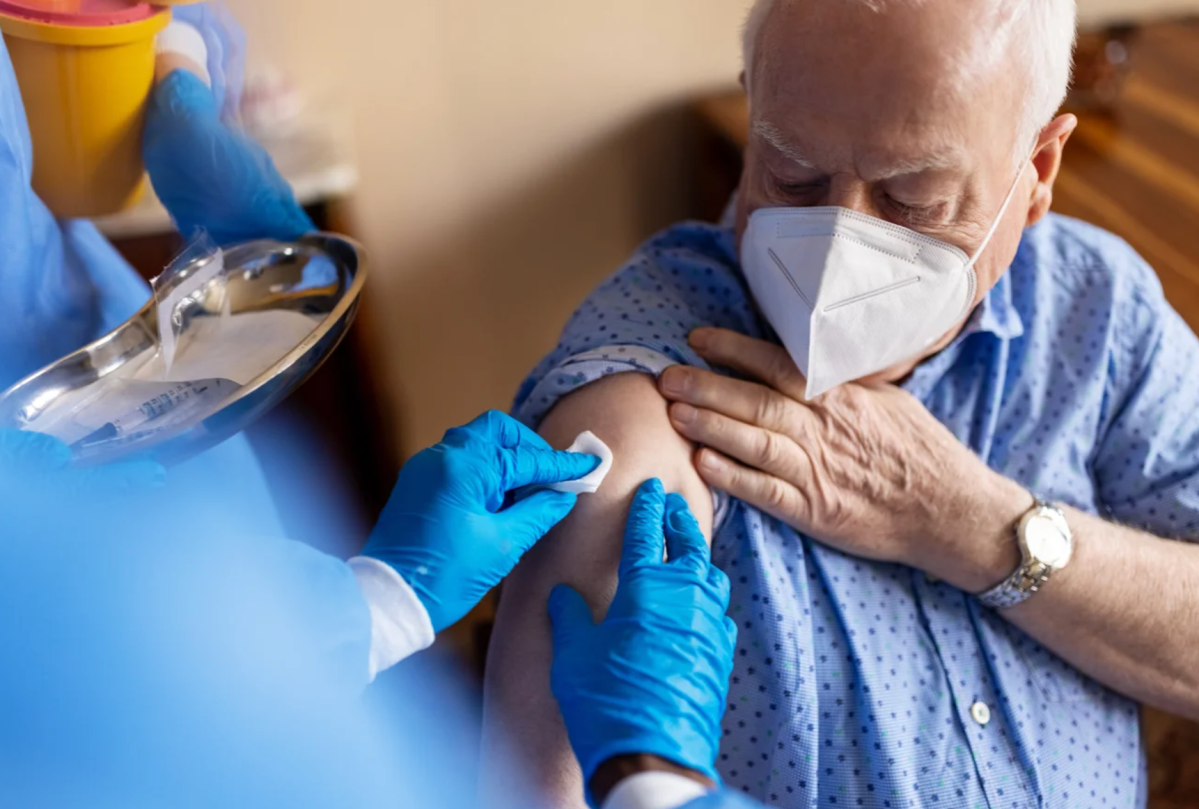
Annual COVID Vaccines Protect People against Severe Disease, Even with Prior Immunity

A new study shows that receiving an updated COVID vaccine reduced people’s risk of severe disease and death in all age groups.

💉Reduced people’s risk of ER by 29%

💉Reduced risk of hospitalisations by 39%

💉Reduced the risk of death by 64%

💉Vaccination was effective in all age groups and “in persons with or without major chronic conditions.”

Just 21 percent of the adult U.S. population got vaccinated against COVID last year—a proportion that has been steadily declining. With less vaccine-induced immunity, Perlman says, more people “would benefit even more from getting vaccinated this year.”

https://www.scientificamerican.com/article/new-study-finds-annual-covid-vaccines-protect-people-against-severe-disease/

Prevention is better than Cure

Cancer came as no surprise for one survivor.

Learn how the family history and a genetic syndrome put them at high risk.

Delving into the role of genetic counsellors in cancer care.

And the hope for a vaccination.

Lynch Syndrome

Lynch syndrome is an inherited condition that increases the risk of developing certain cancers, including colorectal, endometrial, and ovarian cancer.

On this page

https://www.canceraustralia.gov.au/impacted-by-cancer/lynch-syndrome#what-is-lynch-syndrome

Cancer Needs Trials

Cancer Trials: Better Treatments, Smarter Spending

For every hundred people who hear the words “you have cancer” in an Irish doctor’s office, only three or four will get onto an interventional clinical trial.

That’s not enough 
— and it’s something we can change.

By adding your name below, you’re helping us push for the funding needed to open more cancer trials in Ireland. You’re standing up for every patient and every family who deserves access to the very best care.

Gynaecological cancers: ‘What strikes me is how easy it would have been to dismiss that one symptom’

Úna Kealy didn’t have any of the typical symptoms of a gynaecological cancer before she was diagnosed with stage one cervical cancer in 2016 at age 43.

Kealy says she is “living proof” that early intervention works and believes other women should be aware of their bodies and seek medical advice if any changes or concerns.

https://www.irishtimes.com/health/2025/09/19/gynaecological-cancers-what-strikes-me-is-how-easy-it-would-have-been-to-dismiss-that-one-symptom/

Therapeutic targeting of mismatch repair-deficient cancers

Key points
  • Immune-checkpoint inhibitors (ICIs) confer remarkably durable clinical benefit in many patients with DNA mismatch repair-deficient (MMRd) tumours.
  • MMRd tumours are thought to be responsive to ICIs because they harbour many single-base substitutions and frameshift mutations, which, if expressed, have the potential to encode tumour-specific immunogenic neoantigens.
  • Immune-mediated killing of MMRd cancer cells can be orchestrated by various effector cells, enabling MMRd tumours to respond to ICIs despite major histocompatibility complex (MHC) class I loss.
  • Most patients with MMRd tumours derive benefit from ICIs, although a substantial number have primary resistance and many more develop acquired resistance.
  • Many potential predictors of response and resistance to ICIs are under active investigation, but none are currently ready for clinical implementation.
  • The accurate diagnosis of MMRd status is an important determinant of ICI response. This is best achieved through a multimodal approach that involves immunohistochemical analysis of mismatch repair protein expression and microsatellite profiling.

MMRd seems to be acquired early during oncogenesis and is followed by the progressive accumulation of mutations and neoantigens, which ultimately predispose to immune sensitivity. 

https://www.nature.com/articles/s41571-025-01054-6

Patient-Centred Care,

I get worried when I see this term used……

Ideally, all patient care should be patient-centred, focusing on individual preferences, needs, and values, but the term “patient-centred care” highlights a shift from older, more physician-driven models to a partnership where the patient is a key decision-maker. This approach ensures care is coordinated, respectful, and empowering, leading to better patient satisfaction and health outcomes. 

What Patient-Centred Care Entails

  • Respect for Values and Needs: Healthcare professionals respect and respond to a patient’s unique values, preferences, and needs. 
  • Shared Decision-Making: Patients are actively involved in care planning and decisions, rather than having a one-size-fits-all solution imposed on them. 
  • Holistic Approach: Care extends beyond symptoms to include emotional, social, and spiritual concerns, recognising the whole person. 
  • Clear Communication: Information is shared clearly and openly, enabling patients to be informed and engaged. 
  • Coordination and Integration: Care is coordinated across different providers and settings to ensure a seamless experience. 

Why It’s a Shift from the Past

  • Past vs. Present: Historically, healthcare often followed routines and practices deemed most appropriate by professionals, with patients expected to conform. 
  • Empowerment: Patient-centred care empowers individuals, giving them a say in their health and promoting greater responsibility for their well-being. 

Benefits of Patient-Centred Care 

  • Improved Outcomes: Patients who are more engaged and informed tend to have better health outcomes.
  • Increased Satisfaction: Patients are more likely to be satisfied with their care when they feel their needs and preferences are met.
  • Enhanced Engagement: Patients feel more motivated to make healthy lifestyle choices when they are active participants in their care.
  • Greater Independence: By enhancing the quality of care, patients can often remain independent for longer.

THISISGO.IE

The platform (on-line portal) which was developed ‘by patients for patients’ in partnerships with healthcare professionals, was launched in Sept 2021 and is aiming to change the landscape in how we support those with gynaecological cancers, including cervical, ovarian, endometrial, vulval and vaginal cancers.

Currently there are still significant deficits in the provision of information and support for women affected by gynaecological cancer the team at thisisGO.ie are working, whilst acknowledging the power of cooperation and collection action, to provide this one-stop shop for these women, their families and Health Care Providers via thisisGO.ie

The platform includes articles, videos, podcasts, useful resources, symptom tracker, decoding the science and service directory content. These materials address every stage of the specific cancer diagnosis, treatment and life with and after this cancer. The platform also supports Health Care Professionals in their clinical practice, offering useful articles such as How to Break Bad News and How to take a Sexual History from a Patient.’

thisisGO.ie is kindly supported by the Irish Cancer Society through its Women’s Health Initiative and by UCD Clinical Research Centre (CRC), OvaCare, GSK, Pfizer and patient donations.

Please see https://thisisgo.ie/

IRISH NETWORK OF GYNAECOLOGICAL ONCOLOGY

The Irish Network for Gynaecological Oncology comprises over 30 of Ireland’s foremost gynaecological cancer campaigners, researchers and patient advocates.

The aim of the group is to raise awareness of gynaecological cancers across the Island of Ireland. The group are part of an international effort for 2 major awareness events annually; World Ovarian Cancer Day on May 8th and World Gynaecological Oncology Day on September 20th.

http://www.thisisgo.ie

Is It Advisable to Use Probiotics Routinely After a Colonoscopy? (A Rapid Comprehensive Review of the Evidence)

About 5–20% of patients who undergo colonoscopy, in the days and weeks following the procedure, develop various symptoms (abdominal pain, bloating, and bowel alteration) mainly related to dysbiosis(imbalance in bacterial composition) induced by the propaedeutic intestinal preparation. 

Conclusion: more prospective multi-arm case-control studies on large case series are certainly needed to establish the real efficacy and necessity of probiotic treatments after colonoscopy. There is a wide variability of proposed treatments that have not been compared with each other and no cost-effectiveness analysis is yet available in the literature. Therefore, we are still far from being able to suggest a routine probiotics treatment after colonoscopy.

https://pmc.ncbi.nlm.nih.gov/articles/PMC12194910/#:~:text=To%20date%2C%20to%20our%20knowledge,10%2C11%2C12%5D.