Talking with Children About Adult-Onset Hereditary Cancer Risk:

Often complicated by the parent’s ongoing adjustment to their mutation status, guilt at potential transmission of the mutation to the child, concern over inciting distress in children, and the varied capacities of children in the home to understand genetic information.

Optimally, communication about inherited cancer risk is an open, ongoing process within the family. 

https://www.researchgate.net/publication/322811101_Talking_with_Children_About_Adult-Onset_Hereditary_Cancer_Risk_A_Developmental_Approach_for_Parents

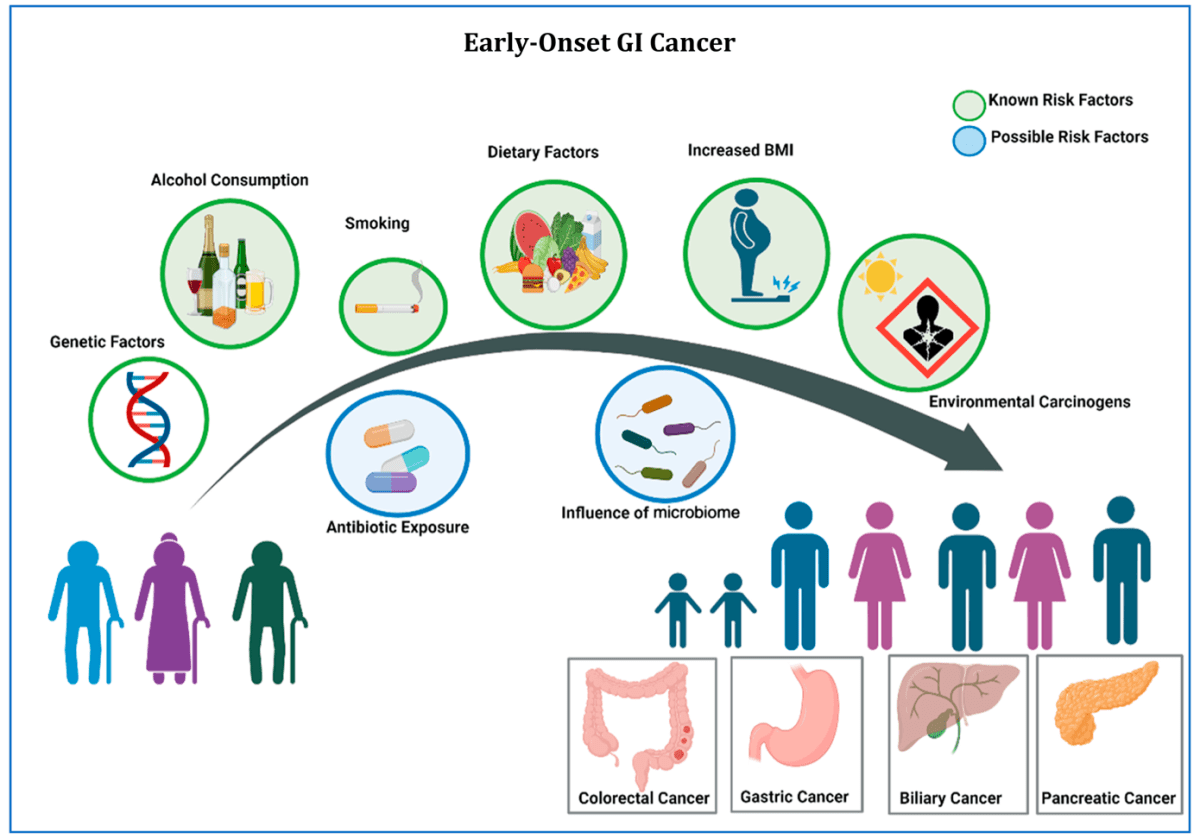
Early-Onset GI Cancers: Rising Trends, Genetic Risks, Novel Strategies, and Special Considerations

Understanding the complex interplay between host factors such as gPVs (Germline Pathogenic Variant), gut microbiome, and extrinsic environmental factors will be critical to mitigate the rising incidence of EO cancer globally, particularly across the spectrum of GI cancers.

Practical Applications

Awareness of the early-onset (EO) cancer epidemic should prompt heightened vigilance among health care providers caring for patients who would not be historically considered at high risk for cancer.

Early detection of symptoms with appropriate diagnostic testing is critical to obtaining a cancer diagnosis in earlier stages which may allow for a greater chance of curative approaches.

Multidisciplinary management of patients with EO cancers is critical to address unique and challenging issues that younger populations must navigate, including family, social, career, and financial stress.

Genetic counselling and testing are critical components to multidisciplinary care and may elucidate mechanisms of EO cancer development.

https://ascopubs.org/doi/full/10.1200/EDBK_398068

Remembering My Brother Who Died of Cancer

Survivor guilt is a complex emotion that often plagues those who have lost loved ones to illness.

I question myself with overwhelming questions often: “Why have I not developed cancer? Why have I outlived him? Why did he have to die?” And “What could we as a family have done differently?

I have turned my grief into action and strive to make a positive impact in the fight against Lynch syndrome and its devastating consequences — his death has not been in vain.

https://www.curetoday.com/view/remembering-my-brother-who-died-of-cancer

Landmark national study supports use of whole genome sequencing in standard cancer care(UK)

In the largest study of its kind, scientists today report how combining health data with whole genome sequence (WGS) data in patients with cancer can help doctors provide more tailored care for their patients.

This research uncovered significant findings across different cancer types, such as: 

  • Over 90% of brain tumours and over 50% of colon and lung cancers showed genetic changes that could affect how patients are treated, guiding decisions about surgery or specific treatments they might need. 
  • In more than 10% of sarcomas, larger DNA changes, known as structural variants, were identified that can impact clinical care and treatment. 
  • In over 10% of ovarian cancers, the study pinpointed inherited risks offering crucial insights for clinical care.

The findings show the value of combining genomic and clinical data at scale to help healthcare professionals make the best treatment decisions with their patients.

https://www.genomicsengland.co.uk/news/landmark-national-study-supports-use-of-whole-genome-sequencing-in-standard-cancer-care

Knowing your family history

Preventative screening just part of our lives….

Coping with a Lynch Syndrome Diagnosis

What do you need to do to get yourself from getting a cancer…

Understanding what it means and educating yourself…

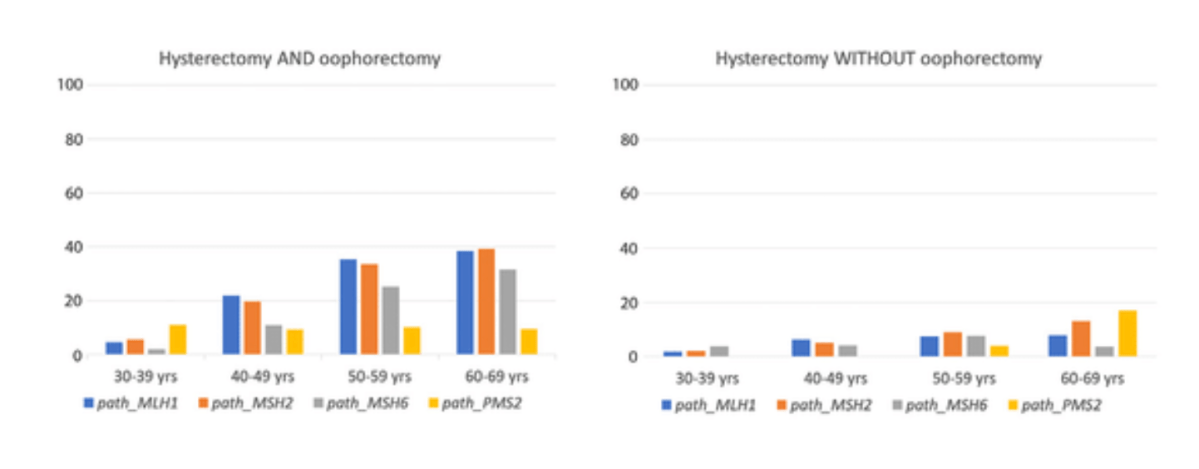
Uptake of hysterectomy and bilateral salpingo-oophorectomy in carriers of pathogenic mismatch repair variants: a Prospective Lynch Syndrome Database report(2021)

Conclusion:

Uptake of RRS before 50 years of age was low, and RRS was rarely undertaken in association with surgical treatment of CRC.

Uptake of RRS aligned poorly with gene- and age-associated risk estimates for endometrial or ovarian cancer that were published recently from PLSD and did not correspond well with current clinical guidelines.

The reasons should be clarified. Decision-making on opting for or against RRS and its timing should be better aligned with predicted risk and mortality for endometrial and ovarian cancer in Lynch syndrome to improve outcomes.

https://www.ncbi.nlm.nih.gov/pmc/articles/PMC8916840/

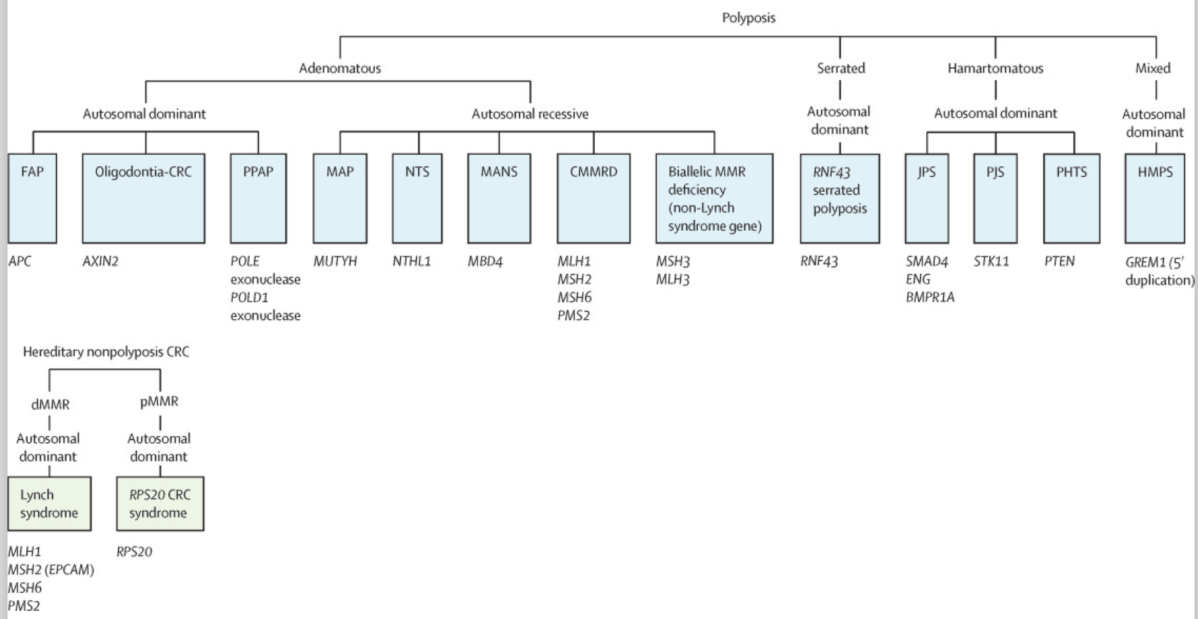
Genetic predisposition to gastrointestinal polyposis:

https://www.thelancet.com/journals/langas/article/PIIS2468-1253(23)00240-6/fulltext

This Review provides an overview of the known syndromes and genes, genetic testing, and clinical management of patients with polyposis, and recent advances and challenges in the field of gastrointestinal polyposis.

How Holiday Conversations About Cancer Can Save Lives

Knowing your family history of Lynch syndrome can be a life-saving intervention.

Broaching the topic of family history, especially when it involves sensitive issues like cancer diagnoses, can be challenging, particularly in families with strained relationships or a history of familial dysfunction. It’s crucial to remember that discussing family history is not to dredge up painful memories or assign blame but to gain a deeper understanding of our collective past and make informed decisions about our health.

Silently plaguing our family is Lynch syndrome, a hereditary cancer syndrome that increases the risk of developing various cancers. This genetic predisposition often goes undetected, affecting approximately 1 in 279 Americans. Lynch syndrome arises from mutations in genes responsible for DNA error repair, potentially leading to tumor formation and triggering cancer.

https://www.curetoday.com/view/how-holiday-conversations-about-cancer-can-save-lives

Genetic Counsellors? are they recognised by the HSE???

They are an internationally recognised group of highly skilled healthcare professionals with training and expertise in genomic and genetic medicine and counselling skills.

Their role involves, but is not limited to, interpreting family and medical history to assess whether an inherited genetic condition may be present in a family and whether testing is appropriate. Education about inheritance, genetic testing, screening, and management.

Coming to terms with a genetic illness in the family can leave a person with many questions. What does this mean for me? What does this mean for my child? Will my family be affected?

Genetic counselling is about trying to explain the condition, how it’s inherited and explain any genetic testing results and also to ensure that people as a family understand what is happening.

Genetic counselling is embedded into some hospital departments in Ireland.

Recognition of the profession is also important…are they really recognised by the HSE???? At present, genetic counsellors in Ireland are registered in the UK or at a European level.

The Government needs to step up and fund the genomics/genetics strategy that includes provision for genetic counselling recognition, training and employment of genetic counsellors in the different mainstream models of healthcare.

Genetics is now recognised asa growing and integral part of cancer care, with a role across treatment, early detection and risk reduction.